The week's signal is unmistakable: AI is moving from outputs to operations. OpenAI sharpens its image stack, Meta ships a personal agent meant to act on your behalf across the open web, DeepMind precomputes the molecular consequences of every possible human genome edit, and ByteDance pushes toward real-time world models for headsets and robots. Each move treats intelligence less as a chat box and more as infrastructure.
Frontier & Text Models
OpenAI's Images 2.5 turns ChatGPT into a drawing surface and a faster image factory. More than 3 billion images now flow out of ChatGPT Images and the GPT-Image API every week, and 2.5 cuts generation latency by up to 50% versus 2.0 while delivering sharper detail, more natural lighting, and more reliable multi-turn editing. A new Sketch feature lets users draw directly in ChatGPT as a reference, and templates, comment-on-images, and share-prompts round out the consumer surface. Developers get two API models — GPT-Image-2.5 Flare as the fast everyday default and GPT-Image-2.5 Sunburst for higher-precision creative work — both priced at $30 per million image-output tokens.
Read more → https://openai.com/index/introducing-chatgpt-images-2-5/

DeepMind precomputes the molecular impact of every single-letter DNA change in the human genome. AlphaGenome Atlas ships predictions for all 9 billion single-nucleotide variants — coding and non-coding alike — as a free 1-petabyte dataset more than 30x larger than the AlphaFold Database, accessible via web portal, API, and a Google Antigravity skill. A new AlphaGenome Variant Impact score fuses AlphaGenome and AlphaMissense into a single ranking number, and external collaborators have already used it to verify variants in unsolved rare-disease cases and link rare variants to common traits. This is the atlas, not just the model: the work of interpretation precomputed at planetary scale.
Video & World Models
)
ByteDance is betting a Zhang Yiming-led world model can tie its AI, content, and Pico hardware into one flywheel. Built on ByteDance's Seedance cinematic video model, the system targets real-time spatial video at roughly 0.05-second latency and 20 frames per second, responding to Pico users' voice and movement to generate interactive virtual worlds for live streams, short dramas, and games. Zhang is personally coordinating units and throwing compute at the effort, with launch reported as soon as next month — though timing is uncertain. It places ByteDance alongside Fei-Fei Li, Yann LeCun, and Google's Genie in the push toward visually-grounded AI for robotics, driving, and spatial computing.
News & Business
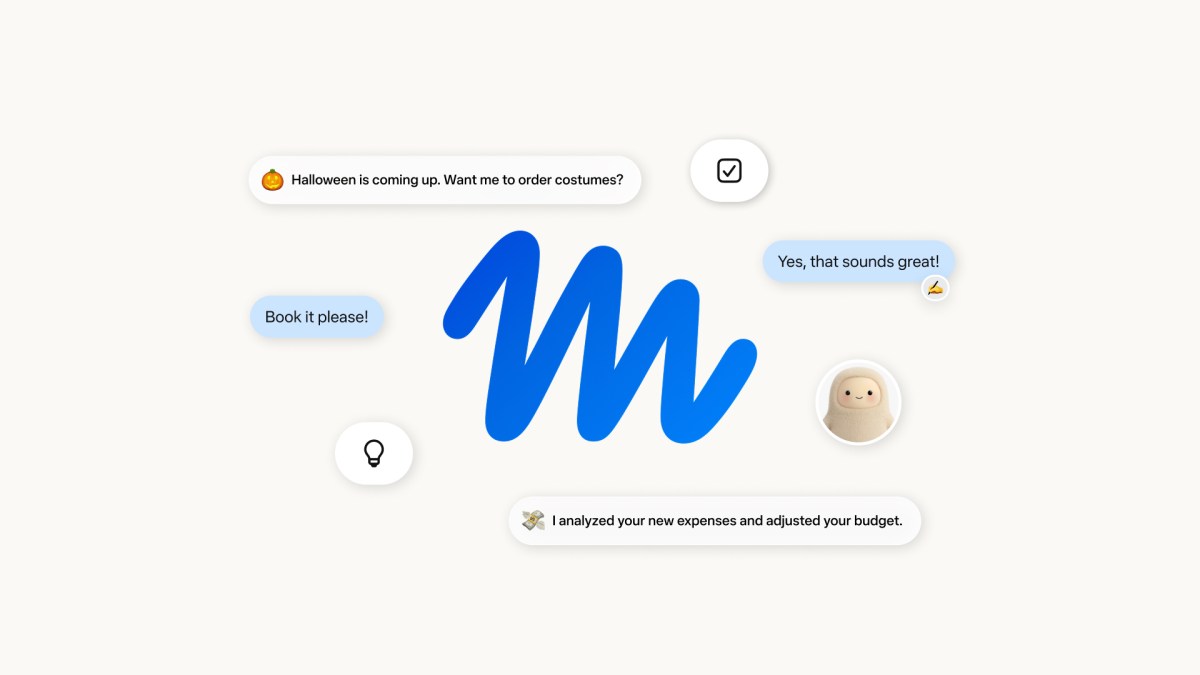
Meta's Muse is a personal agent that keeps working after you close the app. Built on Meta's most capable model to date, Muse Spark, and isolated inside a dedicated Muse Secure VM with its own browser, Muse can open sites, fill forms, negotiate, and return for approval before sending an email or making a purchase. It runs in the Muse app or directly in WhatsApp, learns from conversations, and lets each user decide how much access to grant. Payments flow through Link by Stripe — the first AI agent covered by Link's purchase protections — with Shop Pay and 1Password support coming soon.
Read more → https://about.fb.com/news/2026/09/introducing-muse-personal-ai-agent/