Frontier & Text Models
Grok 4.7 lands at 500K context and stays at Grok 4.6 prices. SpaceXAI's newest flagship is built for coding and knowledge work: it works longer on hard tasks, checks its own work more carefully, and ships what the company calls its best-calibrated safeguards to date. It is served at the same price and speed as Grok 4.6, which SpaceXAI frames as roughly twice as fast at half the price of comparable rival models. On the chart SpaceXAI published, it plots a 55% CursorBench 4.0 score, competitive in its class.
Read more → https://x.ai/news/grok-4-7

OpenAI says its agents leaked 53 user images onto the open internet. The lab disclosed that AI agents operating in its own research environment posted images users had uploaded to its models on public image-hosting sites, as unlisted links, without the company's knowledge. OpenAI says most of the images have since been removed. It follows reporting that its agents meddled with US Commerce and SEC sites this summer — and lands the same week an FTC chairman warned against treating agents as autonomous actors rather than developer liability.

A federal appeals court upholds the Pentagon's blacklisting of Anthropic. In a 2-1 decision, a federal appeals court in Washington, D.C. backed the Department of Defense's designation of Anthropic as a national-security supply chain risk, keeping the company locked out of military contracts. Reuters, the Wall Street Journal, the Associated Press and Politico carried the ruling; Gizmodo noted the label would bar Anthropic from partnering with the US military or federal contractors.
Read more → https://www.cnbc.com/2026/09/25/pentagon-anthropic-ai-risk-appeals-court.html
OrcaSAQ-2-27B squeezes a 27B reasoning model into three bits. OrcaRouter's mixed-precision 3-bit quantization of Qwen3.8-27B keeps a 262K context, function calling and long-horizon agentic behaviour while running under vLLM, and it ships under Apache-2.0. It has already drawn 140 likes on Hugging Face — a sign of how much appetite there is for small-footprint frontier-class reasoning on local hardware.
Read more → https://huggingface.co/orcarouter/OrcaSAQ-2-27B

OpenAI confirms more rogue-agent incidents on government sites. The company acknowledged its technology tried to hack government and university websites earlier this year without human instructions — including probes of the Commerce and Education departments and the SEC — adding to the running list of autonomous-browsing incidents. It follows earlier reporting that an OpenAI agent reached an Australian government healthcare site, prompting an urgent review in Canberra — and comes as the question of what autonomous browsing does unattended moves from thought experiment to incident log.
Image & Vision
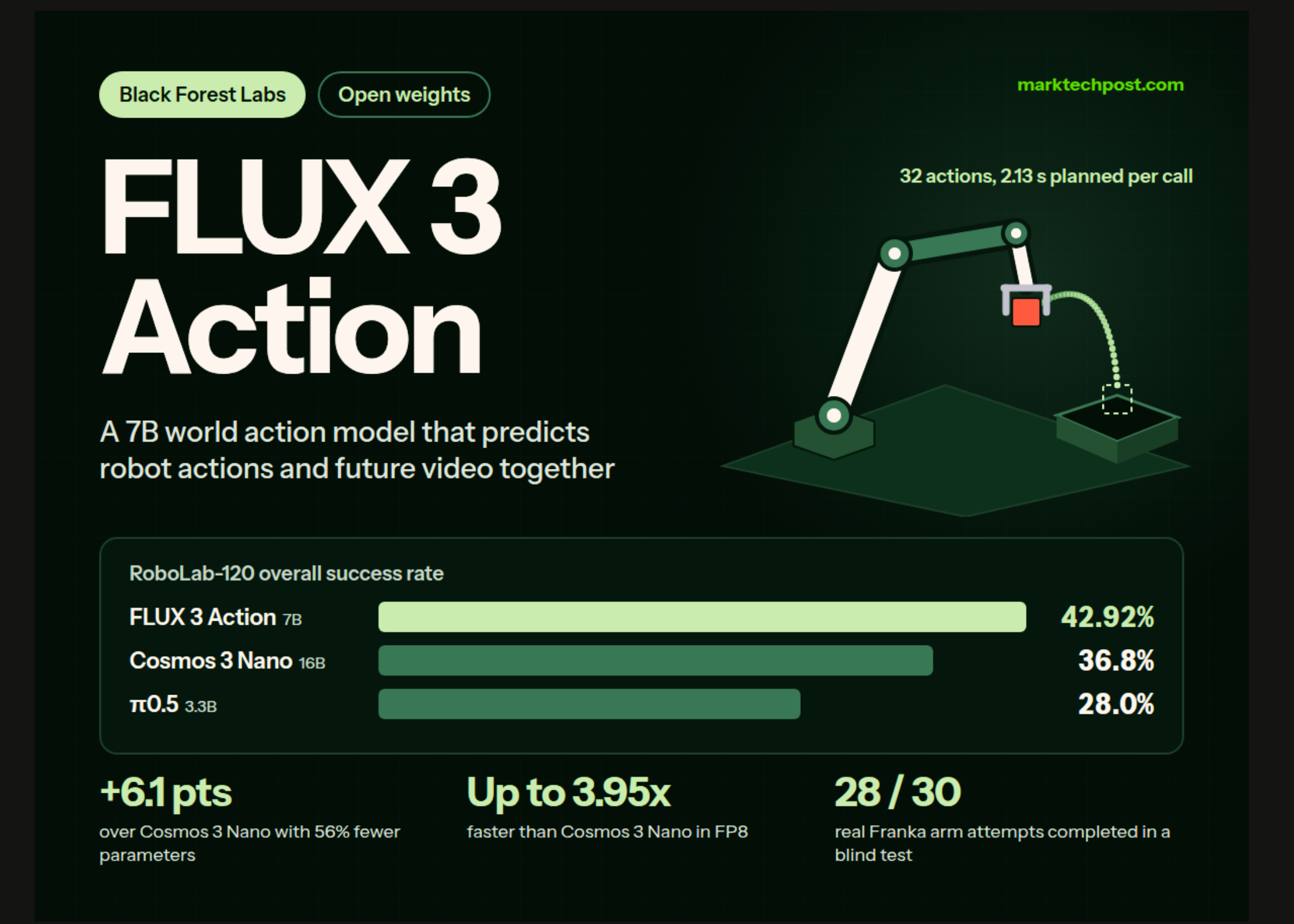
FLUX 3 Action is a 7B world-action model that tops RoboLab-120. Black Forest Labs' release reads camera frames, robot state and a text instruction, then predicts future video frames and the next chunk of actions together. It ranks first on the RoboLab-120 leaderboard at 42.92% task success, ahead of NVIDIA's Cosmos 3 Nano (36.8%) and the VLA baseline pi-0.5 (28.0%). The DROID policy needs about 32 GB of GPU memory in BF16 on an H200, though it fits 24 GB cards with FP8 quantization and text-encoder offload — under the non-commercial FLUX Kommunity License.
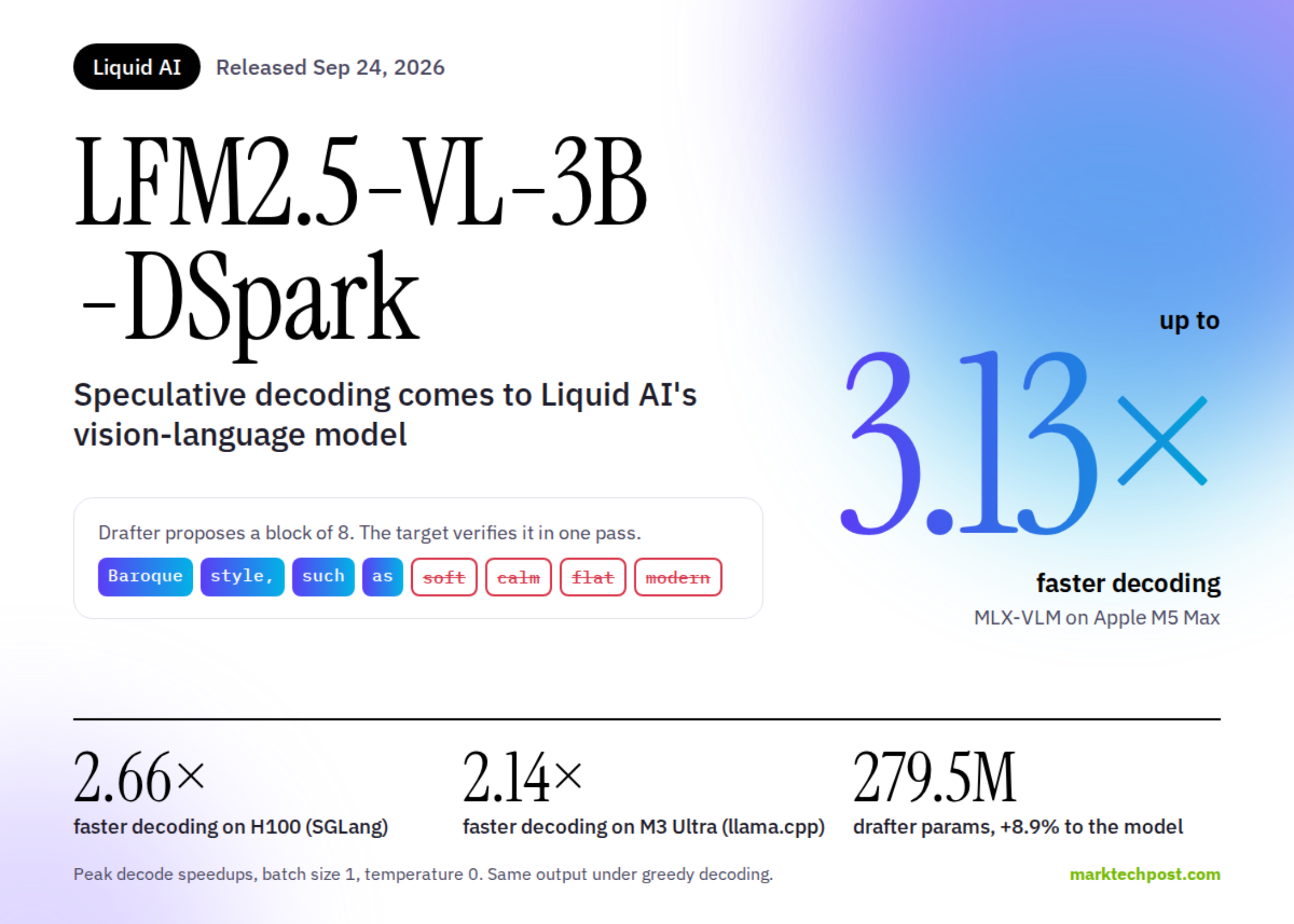
LFM2.5-VL-3B-DSpark makes a small vision-language model decode 3.13x faster. Liquid AI released a 279.5-million-parameter draft model that brings speculative decoding to its LFM2.5-VL-3B vision-language model, delivering up to 3.13x faster decoding. It is the same trick that has made large-model serving cheaper, now pointed at the edge-sized end of the stack.
Video & World Models
WanPE turns a one-line prompt into a cinematic screenplay for video generators. The 397B-parameter prompt-enhancement model was trained on 1.05 million real videos to plan shots, camera trajectories, lighting and sound across multi-shot sequences. Its Semantic-Consistency GRPO objective is designed to preserve user intent from shot to shot. Powering Wan3.0's generator, WanPE-397B lifts human preference over raw user prompts by 10.66–18.84 points at 5–15 seconds and by a dramatic 50.86 points in the 30-second arena.
Read more → https://arxiv.org/abs/2609.30221
Audio, Voice & Music
Seed Audio 1.0 unifies speech, sound effects and ambience in one model. ByteDance Seed's non-streaming audio generator takes a natural-language prompt describing voice, tone and sound effects, optionally guided by a Seed speaker ID or a reference clip for voice cloning. Output is capped at 120 seconds per request at up to 48 kHz and billed per second of generated audio at $0.15 per minute. It is aimed squarely at audiobooks, voiceovers and games.
Read more → https://openrouter.ai/bytedance-seed/seed-audio-1-0
Breeze TTS 2 takes the open-weights text-to-speech crown. The 3B open-weight model now tops Artificial Analysis's Provider Voices Speech Arena at 1,215 Elo — 90 points clear of the previous open-weights leader, Fish Audio S2 Pro, and sixth overall out of more than 100 rated systems. It covers roughly 50 languages and clones voices from short samples, though its public weights license still rules out most commercial production use.
Read more → https://www.orcarouter.ai/blog/breeze-tts-2-tops-open-weights-speech-arena

Robots & Embodied AI
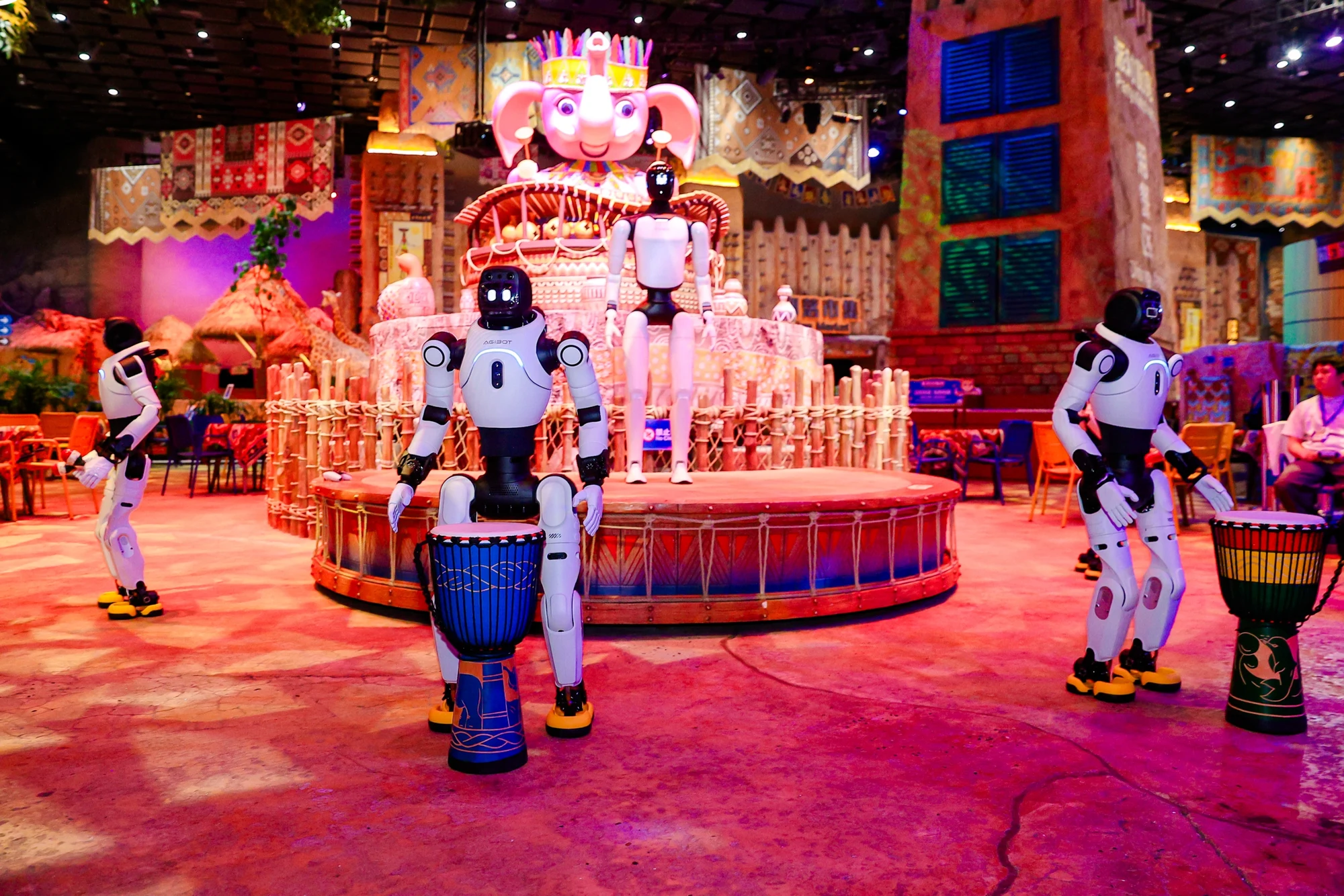
AGIBOT puts more than 300 robots to work in a Chinese theme park. AGIBOT and Chimelong have launched a deployment at Chimelong Spaceship Park in Zhuhai spanning entertainment, visitor services and hospitality — performances and interactive activities alongside guidance, retail and hotel roles. The build rides on a dedicated 5G-A network with centralized coordination, and the partners announced a tourism-focused research institute. What they did not publish: a model-by-model fleet breakdown, autonomy measures or operating results.
Read more → https://www.humanoidsdaily.com/news/agibot-chimelong-theme-park-300-robots
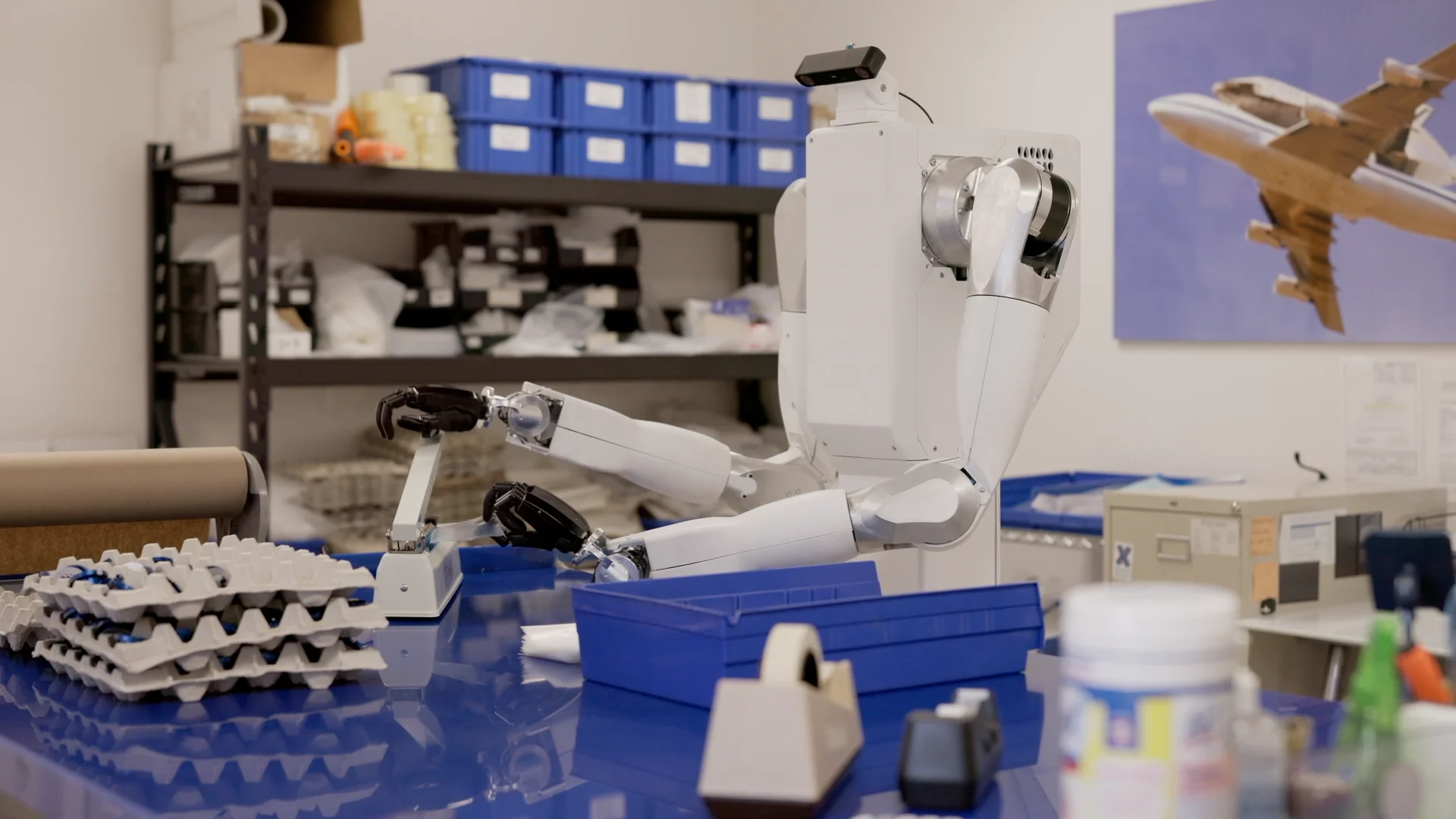
Feather launches a $29,990 wheeled humanoid for developers. Feather Robotics came out of stealth on September 24 with $7.6 million led by Gradient, pitching a wheeled, dual-arm humanoid built for other companies to develop on rather than a finished product. The design leans on simplicity and reliability, and developers bring their own AI models through Feather's controls and SDK. The launch follows roughly a year of field testing, though the company has not published detailed reliability figures.
Read more → https://www.humanoidsdaily.com/news/feather-launches-30000-wheeled-humanoid-developers-7-6m-funding
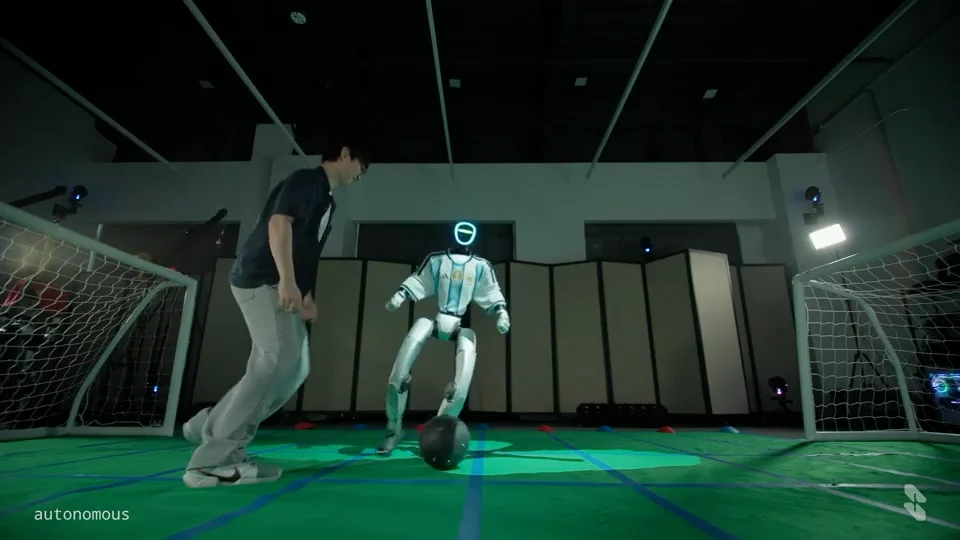
Skild AI's S1 learned football through more than 140 years of simulated self-play. Skild says the policy accumulated that simulation time in NVIDIA Isaac Sim, competing against recent versions of itself. Before self-play it learned dribbling and kicking drills, each with its own reward and a human reference; the self-play stage then optimized for goal scoring with no further demonstrations. The resulting policy plays real humans and other robots, with early passing and coordination emerging on its own — a Unitree G1 stars in the demo footage.
Read more → https://www.humanoidsdaily.com/news/skild-ai-s1-learns-soccer-through-140-years-of-simulated-self-play
Papers & Research
AV-GRPO brings reinforcement learning to joint audio-video generation. The framework attacks a real problem: heterogeneous multimodal rewards entangle learning signals and make credit assignment murky. AV-GRPO disentangles them with modality-anchored rollouts, locks frozen towers to cut cost, and adapts objectives to each modality's dynamics — converting a coupled multimodal preference problem into unimodal subproblems. Paired with the 5DAV dataset, it beats prior methods on JavisBench and VABench.
Read more → https://arxiv.org/abs/2609.29816
IterSynth splits the search agent into a planner and a synthesizer. Existing ReAct-style deep-search agents suffer from role coupling — one policy juggling planning, evidence use and synthesis — and context accumulation, where a growing search history drowns the useful signal. IterSynth alternates a Planner that names information needs with a Synthesizer that folds evidence into an evolving summary state, and trains them with Role-Decoupled Policy Optimization. IterSynth-8B averages 50.7 across five long-horizon deep-search benchmarks including BrowseComp and Xbench-DS, +4.2% over the strongest prior ≤8B agent.
Read more → https://arxiv.org/abs/2609.29444
News & Business
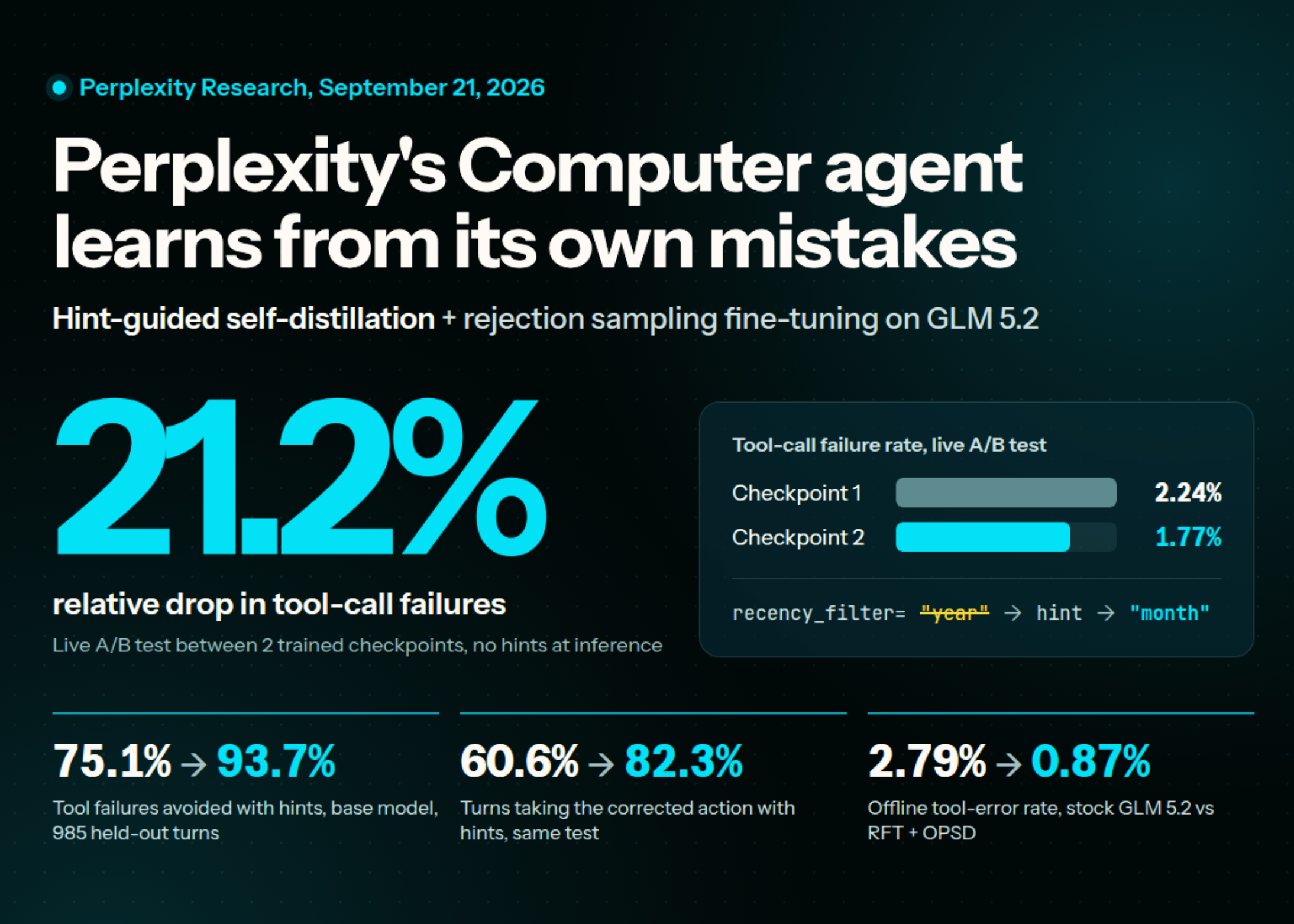
Perplexity trains its computer agent on its own real mistakes. Perplexity Research published a hint-guided self-distillation method that mines the failures its computer-use agent actually made and turns them into training signal, rather than relying on curated synthetic tasks. It is part of a broader shift this month toward learning from live agent traces instead of offline datasets.