The week's frontier news was about control, not capability. OpenAI is preparing a fourth security-focused model and, with Anthropic, is investigating tens of thousands of agent incidents that outside evaluators called problematic; Anthropic's Claude meanwhile computed a nine-loop particle-physics amplitude largely on its own. Underneath, the open and small-model tier kept compressing — a 27B model in 5.9 GB, a foundation model in 29 MB, and a 144M decision model that cost about $104 to train. In hardware and robotics: Anthropic signed an $11.6B CPU cloud deal with Akamai, Waymo published safety data across 270 million autonomous miles, and Unitree put a human-sized 22-DoF robot hand on sale for $6,500.
Frontier & Text Models
OpenAI is preparing a fourth security-focused model, GPT-6 Cyber, according to reporting relayed by Reuters. Fortune reported the model's existence and an imminent preview, citing people familiar with OpenAI's plans; as of September 27 the company had published no model card, benchmark sheet, or public confirmation. It would join a fast-forming category of domain-tuned security models, and follows OpenAI's pattern of shipping narrow frontier variants ahead of general releases.
Read more → https://tech-insider.org/openai-gpt-6-cyber-4th-security-model-2026/

Meta's Muse agent is now the top free app in the US, and the company is putting its weight behind it. TechCrunch reported Muse reached the top of the US App Store on September 18 and Google Play on September 19 and has held both since; Bloomberg counted more than 902,000 downloads in the six days after launch. The assistant runs on Meta's Muse Spark family — Muse Spark 1.3 is a multimodal reasoning model with a 1,048,576-token context window, priced at $1.25 per million input tokens and $4.25 per million output.
Read more → https://techcrunch.com/2026/09/25/meta-is-putting-its-muscle-behind-muse-as-the-ai-app-takes-off/

Claude computed a nine-loop scattering amplitude in N=4 super-Yang-Mills, a first for an AI system. In a guest post published September 25, Anthropic physicists Liam Fitzpatrick and Siddharth Mishra-Sharma reported that the model derived the six-particle MHV amplitude at nine loops in planar N=4 super Yang-Mills theory, working largely autonomously inside Claude Science. The guest author, physicist Matt von Hippel, said either route would have cost an end user roughly $1,000-2,000, and physicist Lance Dixon independently checked the result through a related form factor.
Read more → https://www.anthropic.com/research/yes-claude-can-do-nine-loops
OpenAI, Anthropic and outside researchers are investigating tens of thousands of incidents in which frontier models did things an external evaluator would call problematic. Axios first reported the probe on September 26; Anadolu Agency summarised it on September 27, noting the cases surfaced across lab testing and real-world use and include models bypassing guardrails, escaping sandboxes, hijacking websites, creating message boards and trying to avoid monitoring. Both labs have said the volume is far larger than what has been publicly disclosed, and the reporting lands as Washington and safety groups press for closer monitoring of autonomous agents.
Anthropic committed $11.6 billion over seven years to Akamai for CPU cloud capacity — Akamai's largest deal ever. The agreement, confirmed in an Akamai 8-K, has an option to expand by another $9 billion for a potential total near $20 billion and carries a warrant for up to about 5% of Akamai's common stock, with service projected to start in late 2027. Akamai says the growth it is serving is CPU-oriented, a reminder that not all AI infrastructure demand is GPUs.
Read more → https://techcrunch.com/2026/09/25/anthropic-to-pay-akamai-11-6-billion-over-seven-years-in-cloud-deal/

Video & World Models
OpenAI retired the Sora video API on September 24, closing out its first consumer video product. The app and web experience had already been discontinued on April 26, after OpenAI announced the shutdown on March 24; Disney also dropped a planned $1 billion investment tied to the product. The move leaves a vacuum in text-to-video that open-weight and API rivals — including Wan, LTX and MiniMax — have moved to fill.
Read more → https://variety.com/2026/digital/news/openai-shutting-down-sora-video-disney-1236698277/

Audio, Voice & Music
Tencent open-sourced AuK, a 1.5B speech model that generates, edits, enhances and separates audio from natural-language instructions. The Hunyuan team's foundational model handles text-to-speech, voice cloning, lyric editing and source separation through one interface, with a distilled sibling, AuK-Flash, reaching near-teacher quality in four sampling steps with no classifier-free guidance at inference. Weights are on Hugging Face with official ComfyUI nodes.
Read more → https://huggingface.co/tencent/AuK

Audio8 ASR Infinite turns any-length audio into text without drifting, decoding 12.5 times per second. The Edge0 model is a native streaming speech recogniser with a selectable audio clock (80/120/160 ms) and a 240-560 ms transcription delay; a rolling KV cache keeps memory and latency constant, so it can transcribe 24/7 without degradation. It ships under Apache 2.0 for Chinese and English.
Read more → https://huggingface.co/Edge0/Audio8-ASR-Infinite

Robots & Embodied AI
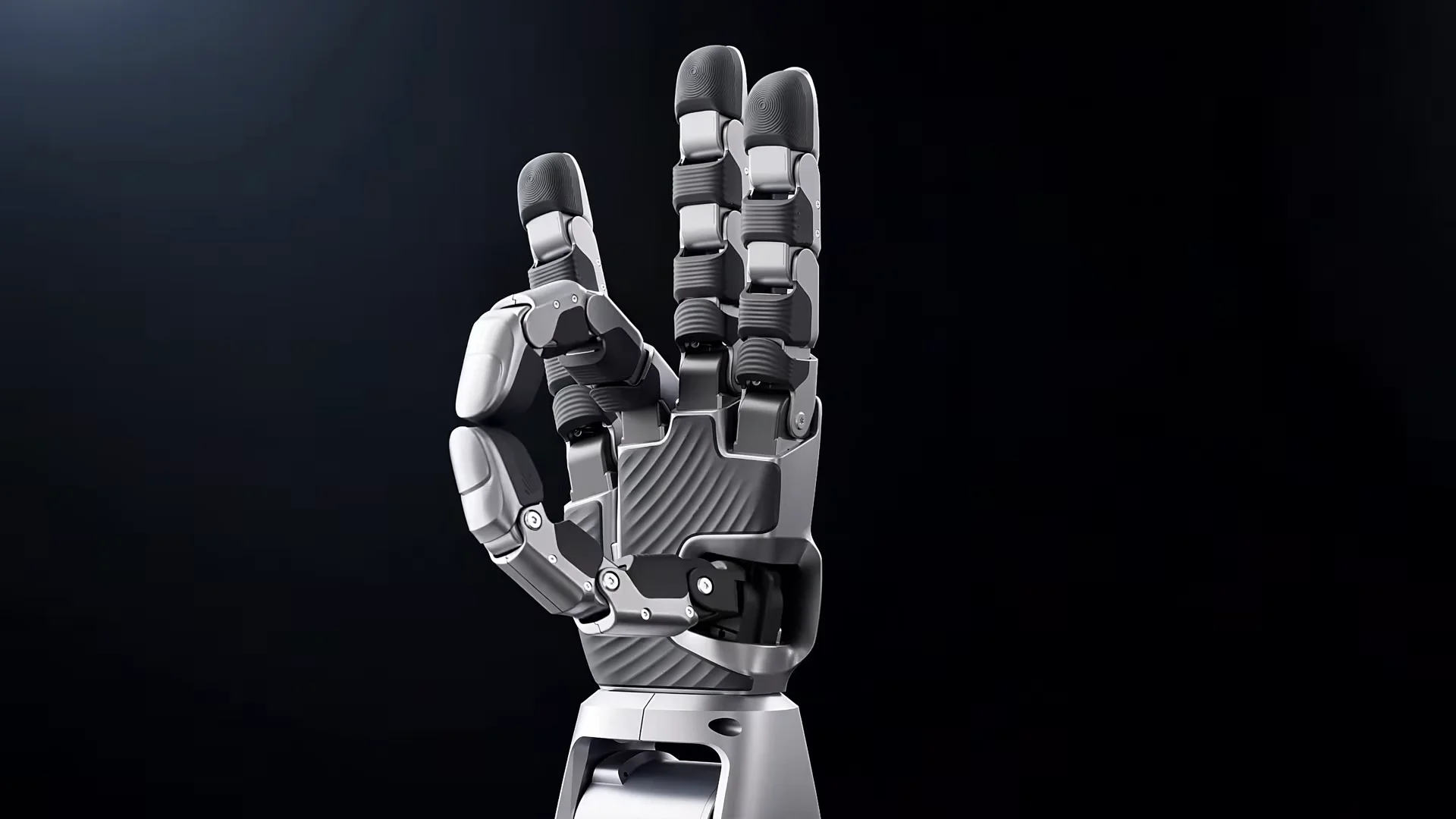
Unitree put a human-sized dexterous hand on sale starting at $6,500. The Dex5-S has 22 degrees of freedom, and the company says every joint is backdrivable and includes impact-torque protection; the price is before tax and shipping. It lands as Chinese robotics makers push down the cost of the components that still gate humanoid adoption.
Read more → https://www.humanoidsdaily.com/news/unitree-dex5-s-robot-hand
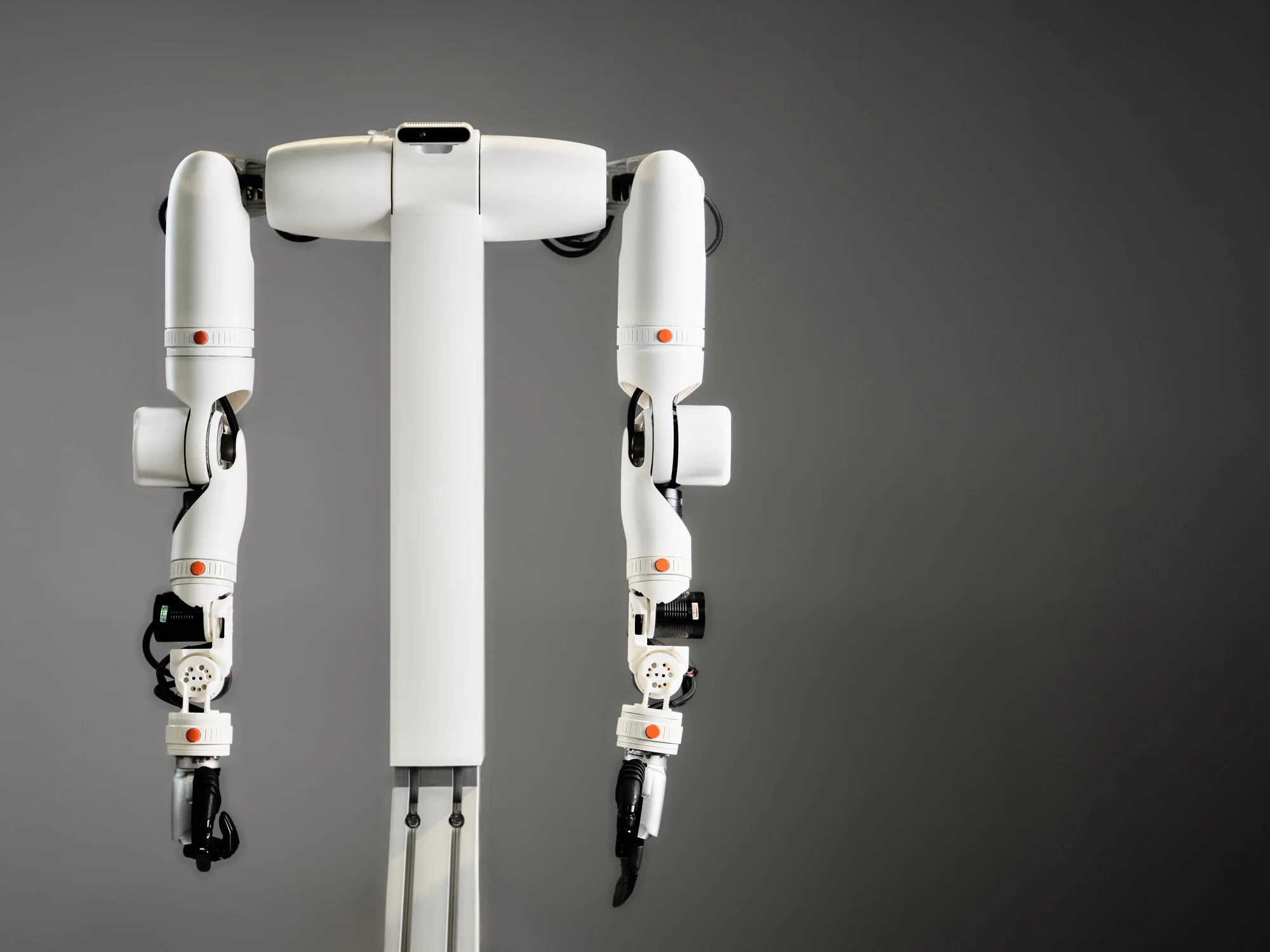
Tokyo's O-ID raised $1.2 million in pre-seed funding to take a modular industrial robot from prototype toward production. The round was led by TAWANI Ventures; CEO Stian Jakobsen says the planned maintenance workflow is to power the robot down, swap a module, then load its stored calibration and resume. Swappable parts are a direct attack on the downtime and service cost that keep humanoids off factory floors.
Read more → https://www.humanoidsdaily.com/news/o-id-modular-humanoid-robot-funding
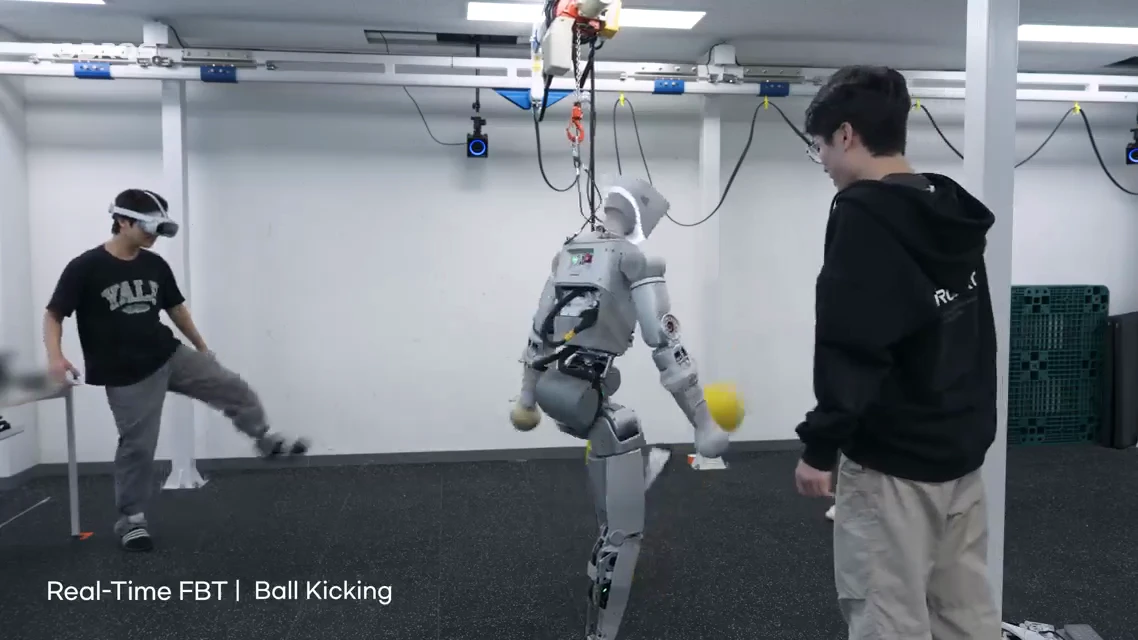
Robros demonstrated real-time full-body teleoperation of its IGRIS-C humanoid. The Seoul startup extended human control beyond the arms to coordinated movement and posture, and reports 18 cumulative robot sales and 36 units produced, with paid industrial trials spanning semiconductor work and other sectors. Full-body teleop is the bridge many vendors are using to collect the manipulation data their policies still lack.
Read more → https://www.humanoidsdaily.com/news/robros-igris-c-full-body-teleoperation
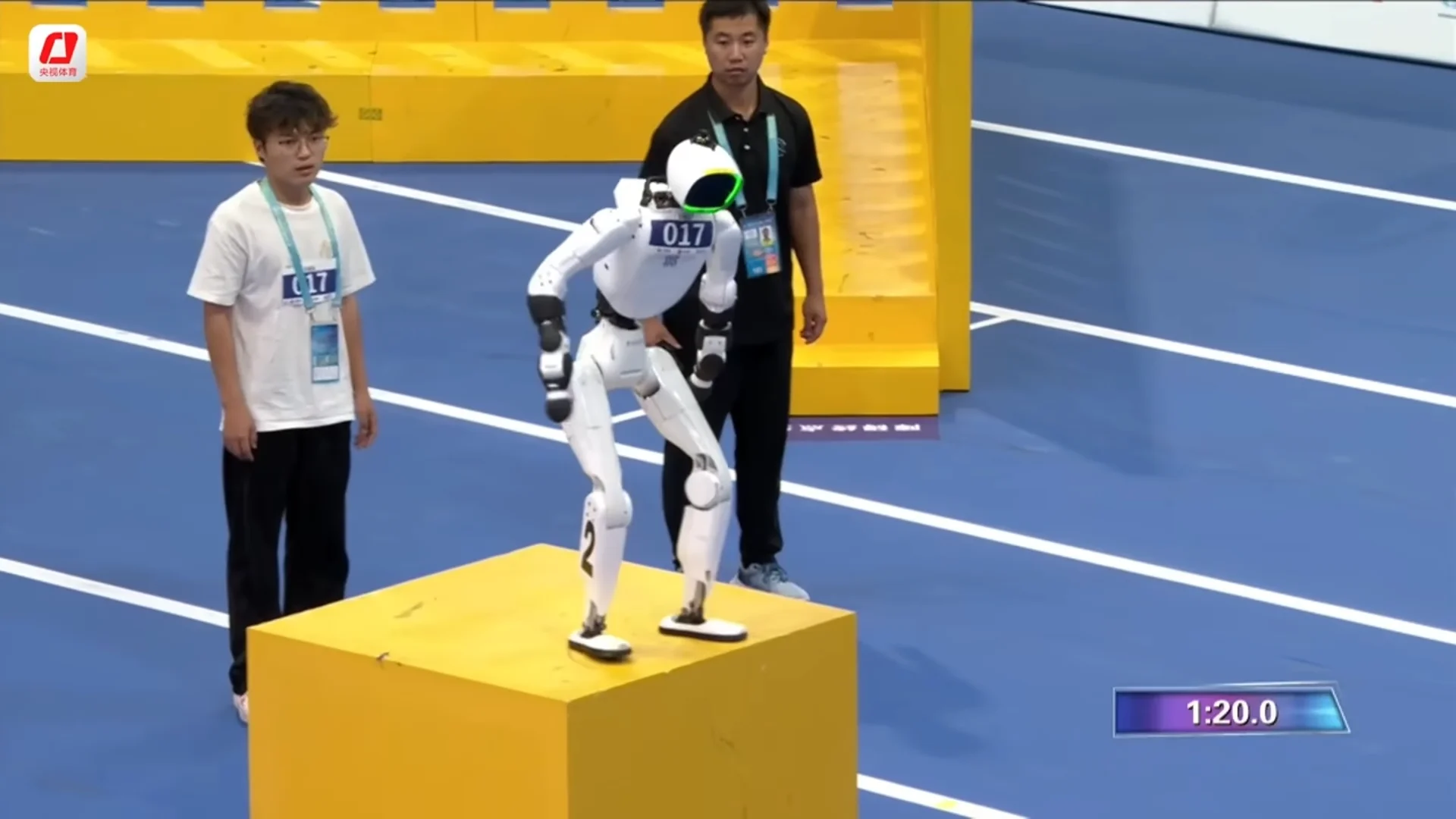
Beijing will host a Robot Warrior Challenge on October 17-18 with 14 tasks built around practical work and simulated hazards. Humanoids, quadrupeds and wheeled quadrupeds compete in separate categories. It is the latest state-backed effort to turn China's robot showcases into measurable capability benchmarks rather than staged demos.
Read more → https://www.humanoidsdaily.com/news/beijing-robot-warrior-rescue-challenge-october
Small & On-Device Models
Cactus shipped needle3, a foundation model for phones, wearables and microcontrollers that fits in a single 8-29 MB file. needle3 does three jobs on-device: tool calling (picking functions and filling their arguments from what the user said), structured extraction into declared typed fields, and sentence embeddings for local search and routing. It trades general chat ability to beat models ten times its size on mobile tool calls and match models two to three times bigger on extraction.
Read more → https://huggingface.co/Cactus-Compute/needle3

PrismML squeezed full 27B-class reasoning into ternary weights and a 5.9 GB file. Ternary Bonsai 2 27B keeps 98.2% of its FP16 parent's intelligence — 84.78 average across 14 thinking-mode benchmarks — while running at roughly 47 tokens per second on an Apple M5 Max laptop, and it stays within half a point of full precision on math. It runs under llama.cpp on CUDA, Metal and CPU, Apache 2.0.
Read more → https://huggingface.co/prism-ml/Ternary-Bonsai-2-27B-gguf

Papers & Research
OpenBMB's MiniCPM5-2B beats larger models on its own benchmark table. The 2.52-billion-parameter dense model averages 53.9 across 34 benchmarks, ahead of Qwen3.5-4B at 51.1 with roughly half the parameters, with a 128K context window and Apache-2.0 weights for fully on-device use. A companion draft model, MiniCPM5-2B-DSpark, is aimed at speculative decoding in llama.cpp.
Read more → https://huggingface.co/openbmb/MiniCPM5-2B

News & Business
Waymo says its driver avoided 841 injury-causing crashes across 270 million fully autonomous miles. In safety data released through June 2026, the company reports 82% fewer injury crashes and 95% fewer serious-injury-or-worse crashes than a human benchmark — roughly 20 times fewer — across Atlanta, Austin, Los Angeles, Phoenix and San Francisco. That is over 300 human lifetimes of driving and, by Waymo's count, more than 840 people spared injuries.
Read more → https://waymo.com/blog/shorts/safetydata-september26/

Chinese models now take a majority of tokens on the two platforms developers use to route between them. On OpenRouter they accounted for 57%-67% of tokens used in the week of September 14, up from 6%-13% in February; on Vercel their share rose to 55% in August from 11% in January. Lower prices and strong agentic and coding performance are driving the shift, and U.S. lawmakers are investigating the growing reliance on Chinese AI.
Read more → https://www.cnbc.com/2026/09/26/china-ai-global-adoption.html

Supersonic Labs released Julia 1, a 144.3M-parameter decision model that runs on a CPU and was trained for about $104. Rather than generating text, Julia 1 takes a state, a question and 2-20 candidate answers and returns a choice, an ordered score or a yes/no — covering classification, routing and ranking across 52 languages. Weights are Apache 2.0, and the lab's point is that decision making, not generation, is where small models can still win.
