The open-weight frontier caught up on paper this week: Reflection's Beam lands at 501B parameters with 23B active, Anthropic's Claude Sonnet 5.5 posts 70.6% on Terminal-Bench 4.0 at the same $2/$10 price, and the small-model and decision-model layers keep filling in underneath. Meanwhile the robots got new hands, factories and teleoperation stacks; the world-model crowd tried to teach video generation the laws of physics; and a16z's own data showed just how little of the AI boom America actually pays for at the household level. Here are the stories shaping this edition.
Frontier & Text Models
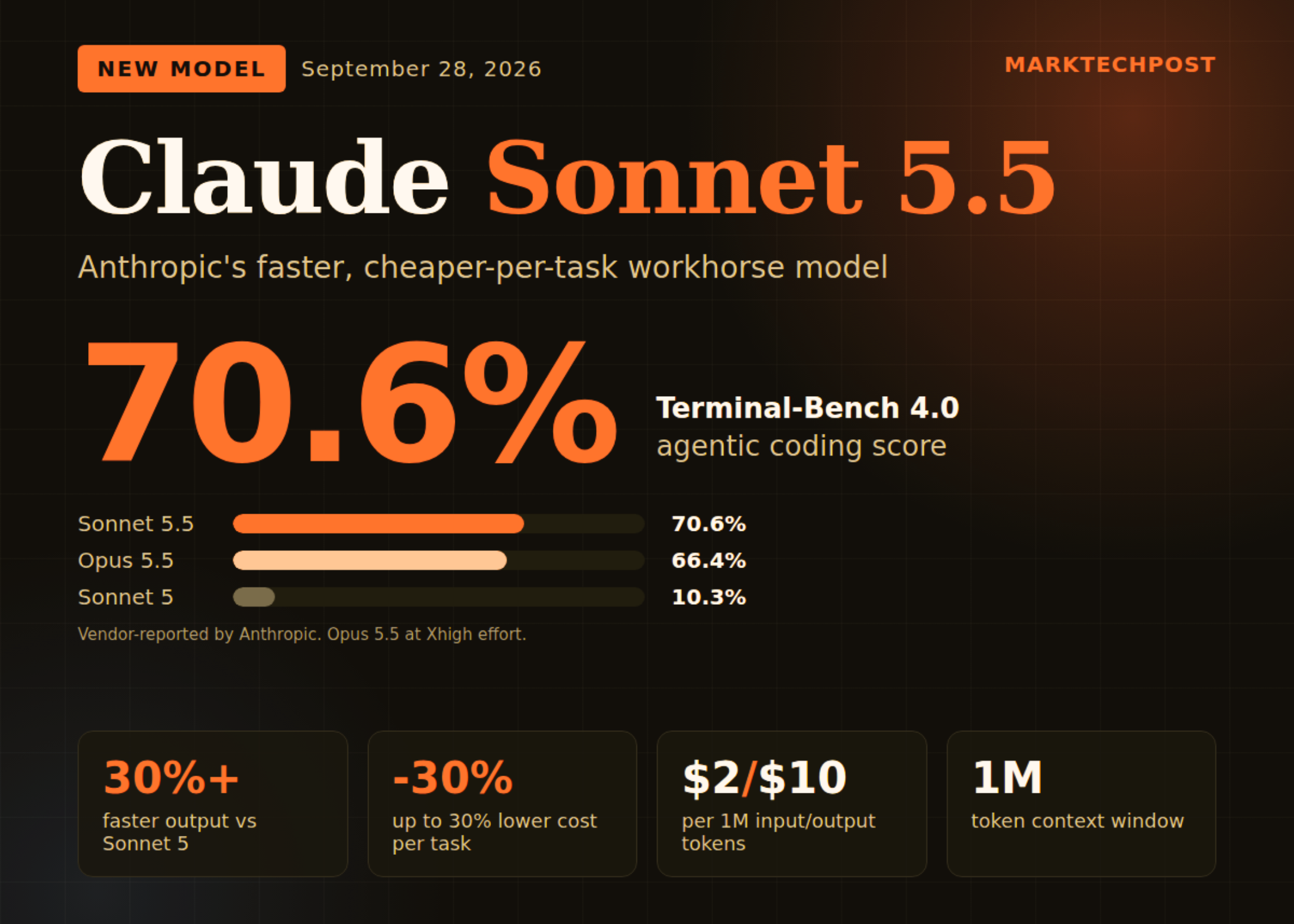
Anthropic's Claude Sonnet 5.5 jumps to 70.6% on Terminal-Bench 4.0 — up from 10.3% for Sonnet 5 — at the same $2/$10 per-million-token price. The workhorse model is 30%+ faster than Sonnet 5 and up to 30% cheaper per task, because it needs fewer tokens and tool calls. It ships with a 1M-token context window, 128K max output, and five effort levels including a new "xhigh". Anthropic says customer token counts fell sharply: Balyasny Asset Management measured ~121K tokens per answer versus 497K on Sonnet 5, and Base44 reported 3.6 iterations per app build versus 7.7 for Opus 5.
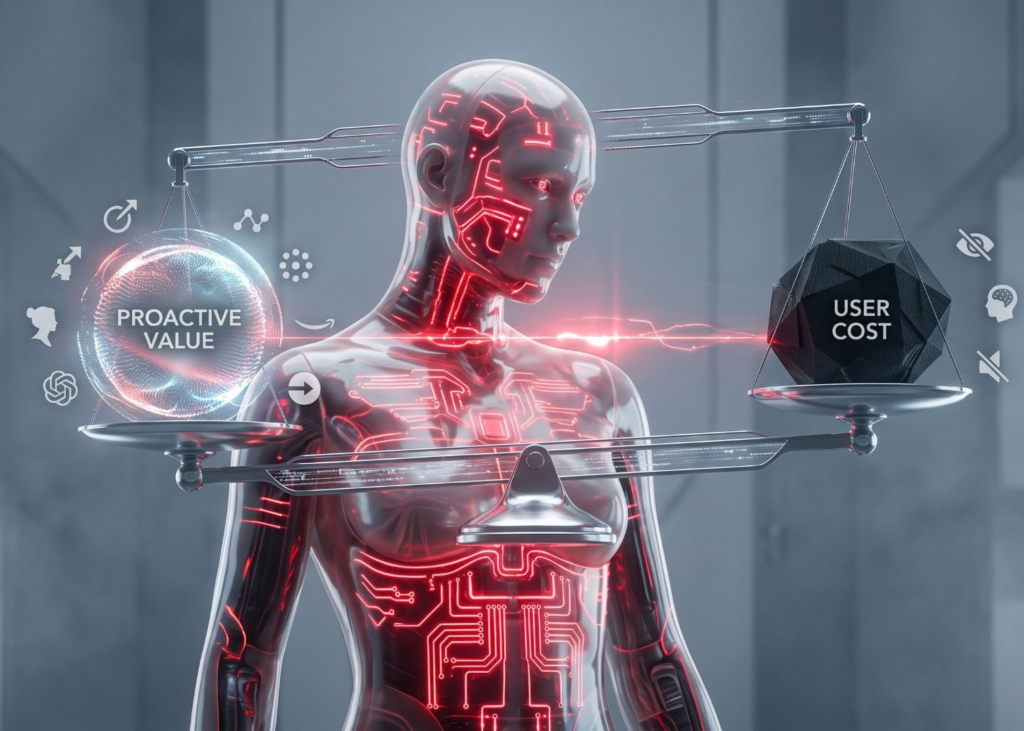
Meta, OpenAI and Uber are all betting the agent should speak first — which moves the hard problem from what to answer to when to interrupt. Meta's Muse books, emails and keeps working with the app closed; OpenAI's Dots run "proactive research" as read-only monitoring across your apps to catch a forgotten invoice or a Slack bug; Uber's driver assistant turns live marketplace signals into advice, pointing a driver idle for 33 minutes to a better zone. The design rule the piece lands on: a proactive message should only be sent when its expected value to the user beats the cost of interrupting them. A new class of "decision models" — TypeSafe's Jev, Supersonic Labs' Julia 1 — is emerging to make those cheap, structured calls before any LLM is invoked.
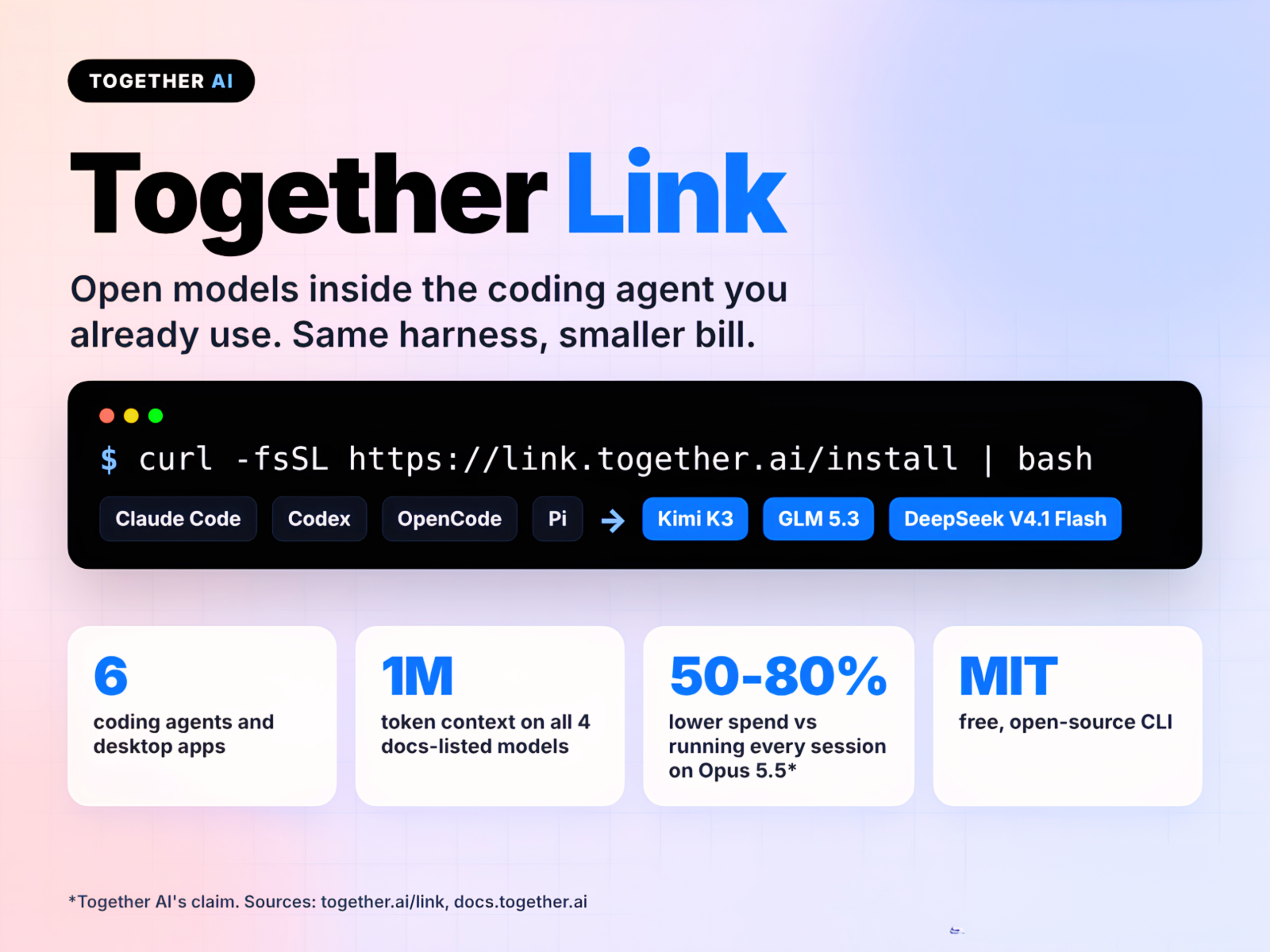
Together AI released Together Link, a free, MIT-licensed CLI that points the coding agents you already use at open models. It connects Claude Code, Codex, OpenCode and others to models hosted on Together AI — keep the harness, swap the model, shrink the bill. Installation is a single command and needs only a Together API key; Kimi K3 and GLM 5.3 target hard coding work while GLM 5.3 Flash and DeepSeek V4.1 Flash cover everyday tasks. It is in beta, so routing and the model list may still change.
Video & World Models
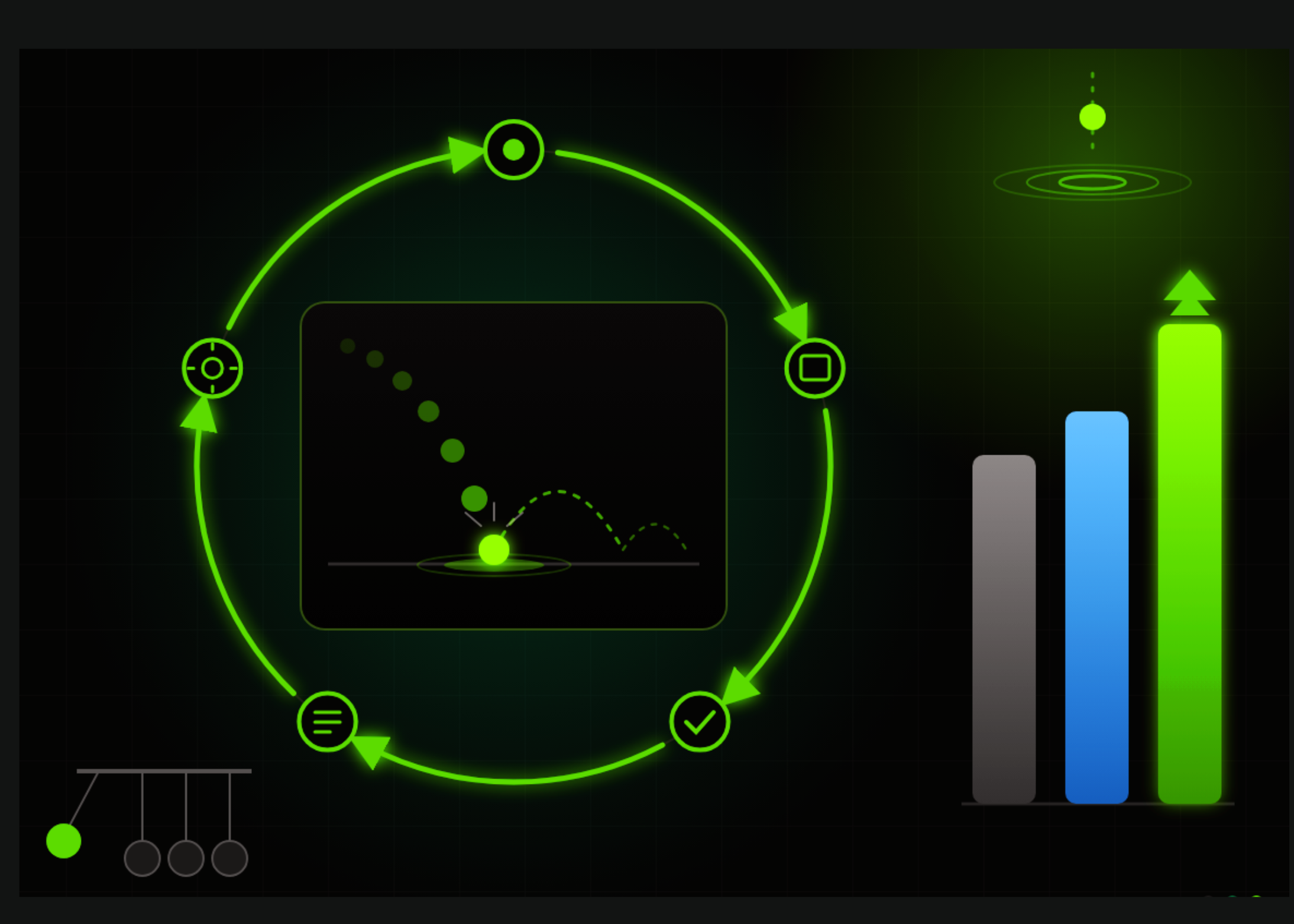
A world model that renders a beautiful clip can still get the physics wrong — and researchers from NVIDIA, MIT and Oxford argue the fix can come from language itself. Their framework, Physis-Lang, adds a physics-reasoning field to every video caption, spelling out entities, causes, interactions and governing principles, plus a scene-specific negative prompt describing implausible outcomes such as a stone floating on water. On the Physics-IQ Verified leaderboard snapshot of September 29, 2026, Physis-Lang on Cosmos3-Super ranks first at 48.2 ± 1.4, with Cosmos3-Nano second at 43.3 ± 1.5. The final training set holds 183K videos, and retrieval-based curation alone added 3.01 points across three benchmarks.
Audio, Voice & Music
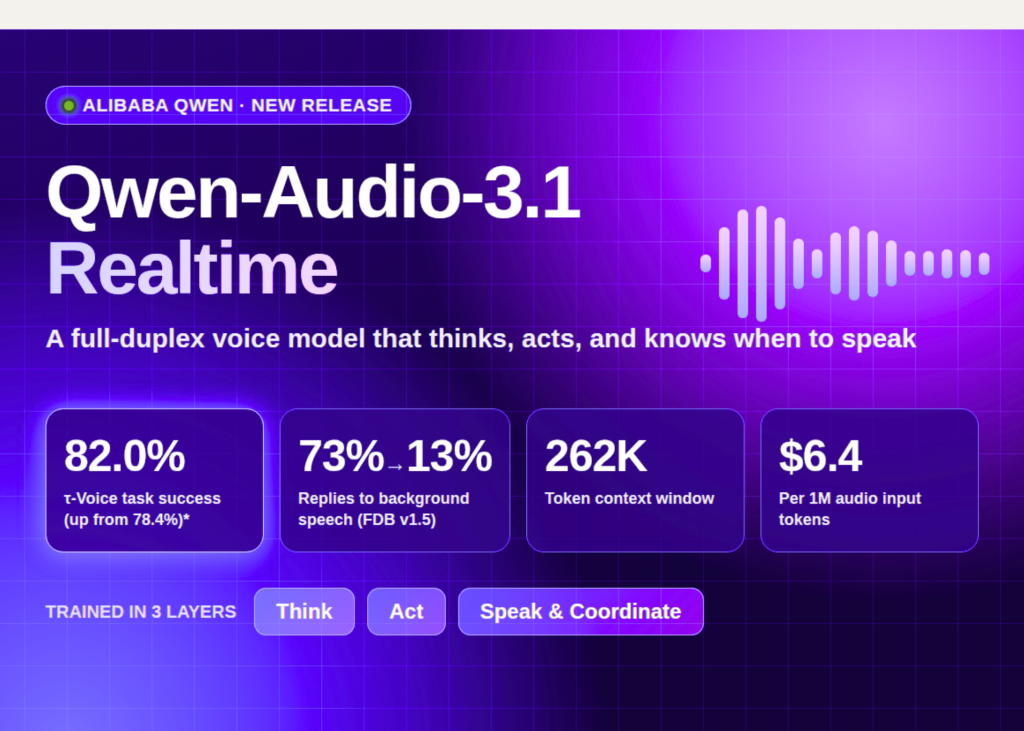
Alibaba's Qwen team has released a full-duplex voice stack — and cut prices about 85% on Realtime, 70% on TTS and up to 95% on ASR. Qwen-Audio-3.1-Realtime runs two models behind one voice: a full-duplex decision model (listen / speak / stop / resume) and a speech-to-text model, with a context-aware renderer turning text into streaming speech. It carries a 262K-token context and supports function calling, web search and structured outputs. The team reports FLEURS WER fell from 9.01 to 3.98, but honestly flags trade-offs — after interruptions the unwanted-resume rate rose from 0.035 to 0.130, and interruption-stop latency is 1.116s versus 0.383s for GPT-Realtime-2.
Suno, the AI music startup, is moving into spoken audio with Speech, a voice-generation tool now in public beta. Users can provide a script or describe the voice they want, then generate spoken audio with optional background music. The product extends Suno beyond its core text-to-song business and places it directly against dedicated AI voice-generation and audio-production platforms — a sign of how quickly generative-media companies are broadening their product boundaries.
Read more → https://suno.com
Robots & Embodied AI
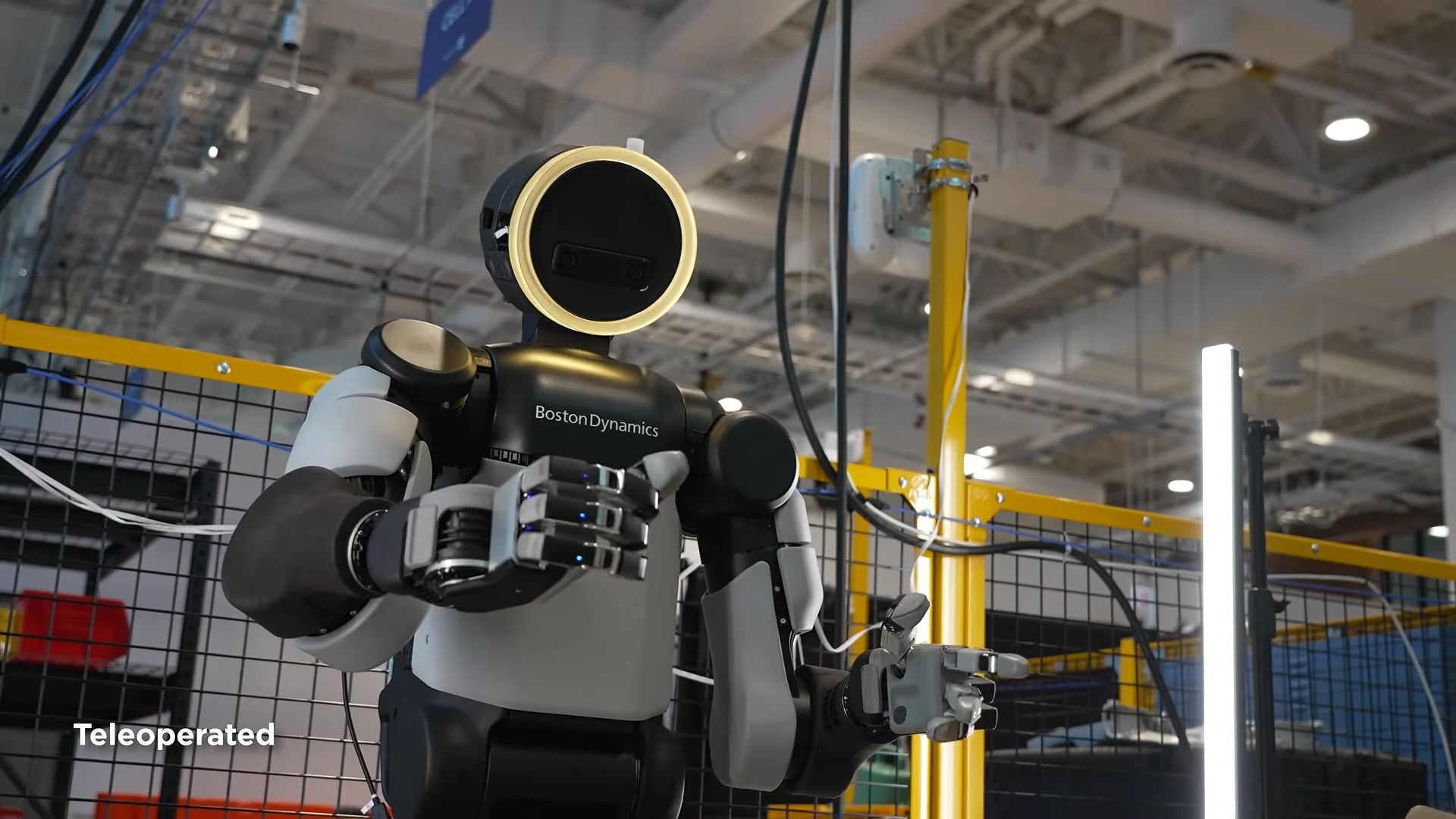
Boston Dynamics gave Atlas new hands with four fingers and 13 degrees of freedom, up from seven. The GR3 design adds a more dexterous opposable thumb — four DoF in the thumb, three in each other finger — so the humanoid can reorient objects in-hand, recover a slipping grip and press a power tool's trigger. Dense pressure sensors cover the fingertips and palm, and the joints use a single actuator type with encapsulated hardware and no fragile cables crossing them. Boston Dynamics deliberately skipped a fifth finger, noting it would add three actuators plus cost, volume and extra failure points.
Read more → https://www.humanoidsdaily.com/news/boston-dynamics-atlas-four-finger-hands-13-dof
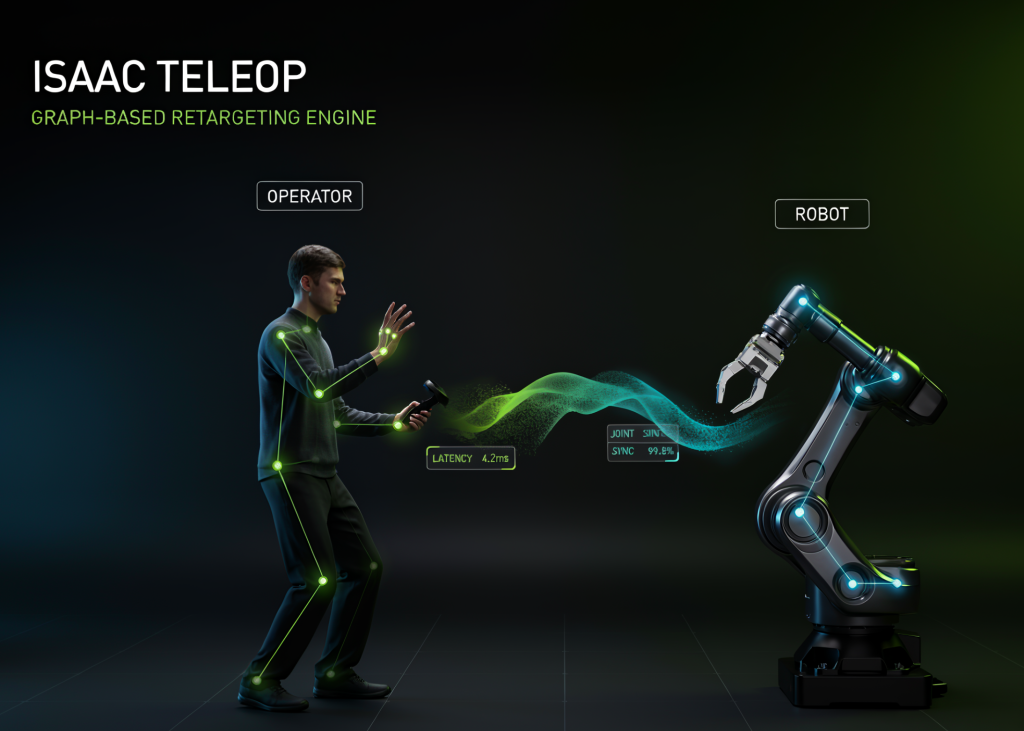
NVIDIA's IsaacTeleop turns XR hand and controller tracking into robot actions through a graph-based retargeting engine — and you can build the whole pipeline in plain NumPy on a Colab CPU. The engine's contract is typed tensor groups: a hand is 26 OpenXR joints, a controller is 14 slots, and optional inputs start absent so every node learns explicitly when tracking is lost. Built-in retargeters handle gripper hysteresis, SE(3) end-effector poses and locomotion, and a TensorReorderer flattens them into the action vector Isaac Lab expects — with each leaf computed once per frame. Swapping the synthetic leaves for real device sources is the only change needed to run it against a headset.
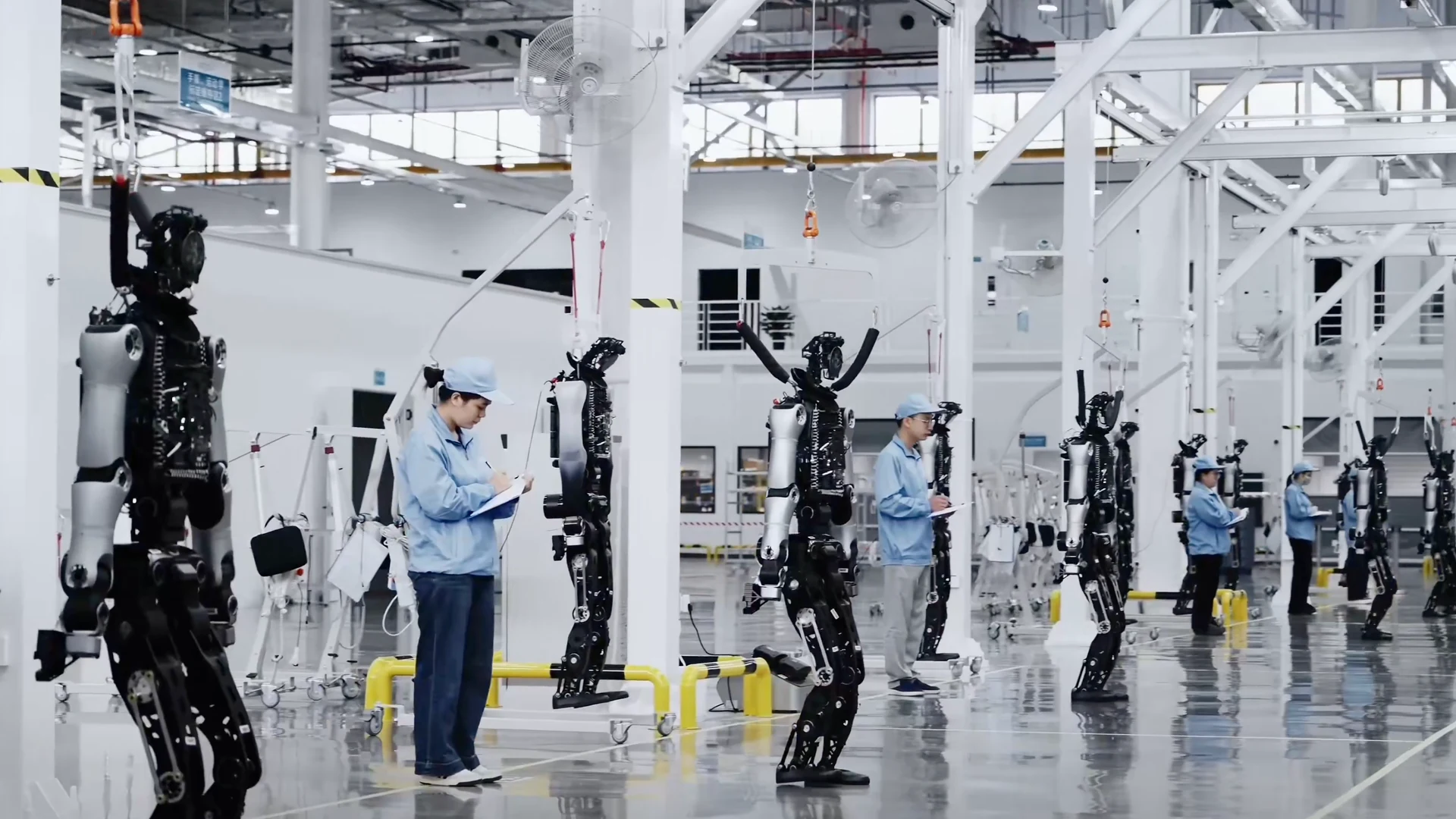
UBTECH's CEO walked viewers through a factory he says can roll out a humanoid every eight to ten minutes. In the first episode of a new tour series, James Zhou estimates the roughly 14,000-square-meter facility could reach around 1,500 units a month at maximum capacity. The footage shows UBTECH's own Cruzr Y1 and S2 robots unpacking materials and packaging while a U7 Wally autonomous forklift moves finished units — "robots making robots", though people are still in the loop. The figures describe potential throughput; the video does not disclose actual production, utilization or customer deliveries.
Read more → https://www.humanoidsdaily.com/news/ubtech-factory-tour-1500-robots-monthly-capacity
Papers & Research
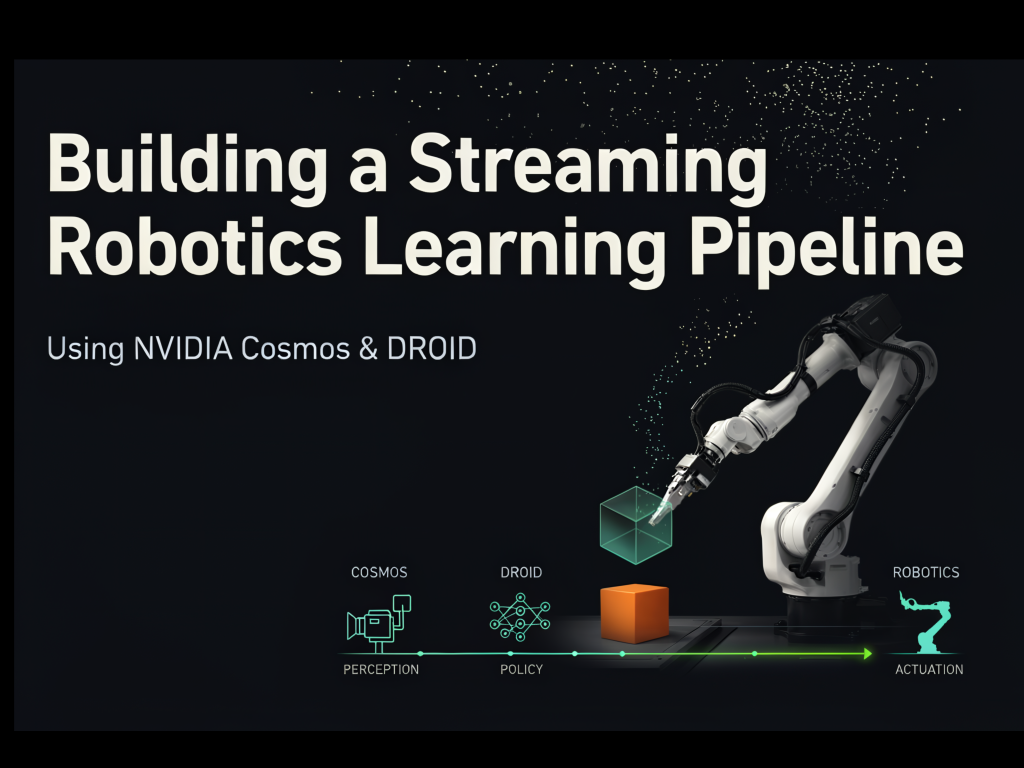
A streaming robotics pipeline now trains a behavior-cloning policy against NVIDIA's Cosmos3-DROID dataset — 707 GB — without downloading any of it locally. The pipeline introspects the LeRobotDataset v3.0 structure, then uses HTTP byte-range reads with PyArrow to pull only the Parquet row groups and columns it needs, decoding just the required AV1 video windows through seek-based access. It converts episodes into state-action trajectories, normalizes observations and actions with dataset statistics, and trains a multimodal ACT-style policy evaluated by open-loop rollout with temporally ensembled action chunks.
News & Business
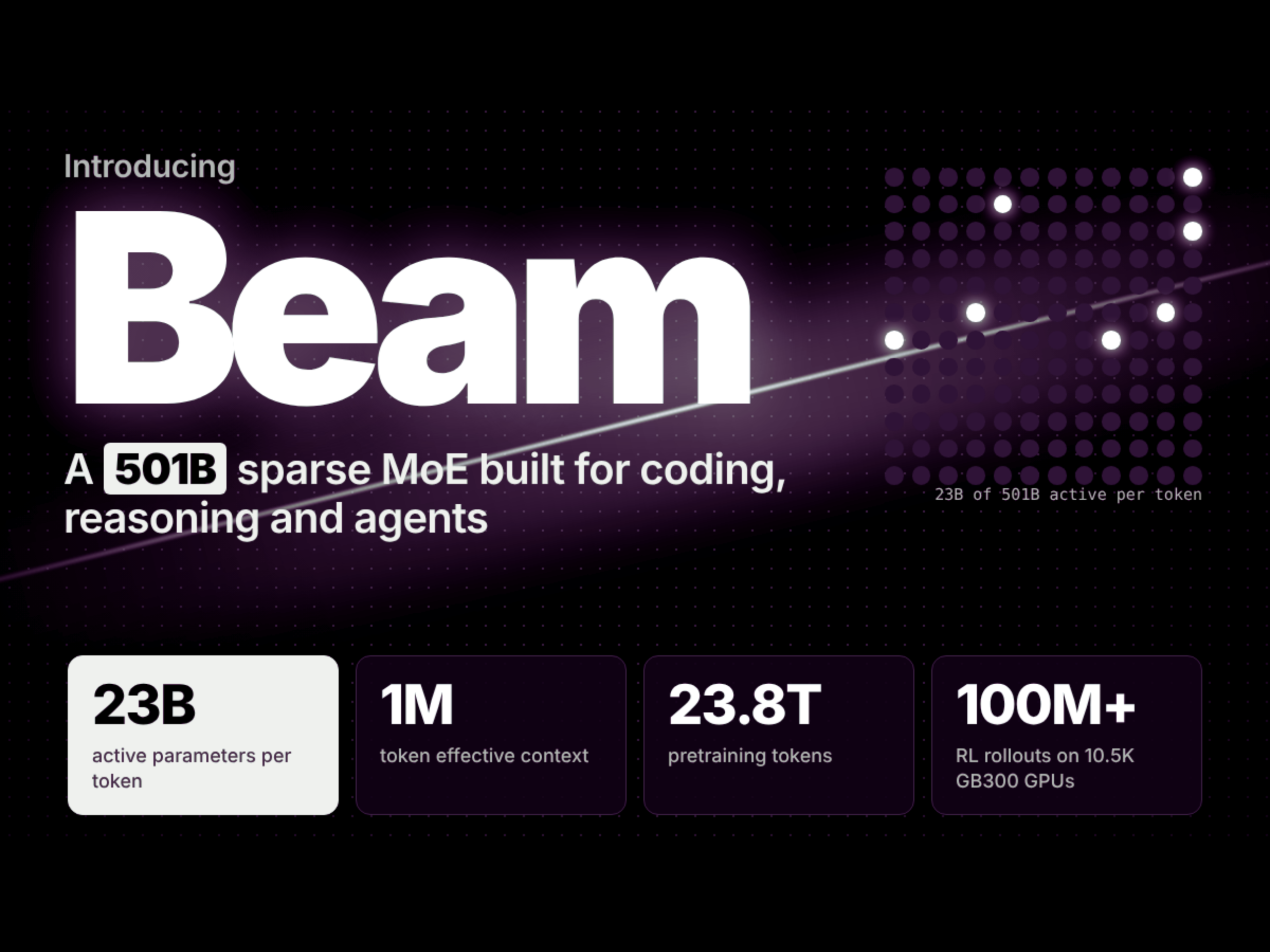
Reflection AI's Beam is a 501B open-weight MoE that activates just 23B parameters per token — and it is aimed straight at coding and agents. Beam was pretrained on 23.8T tokens in under four weeks on 6,144 NVIDIA GB300 GPUs, then RL-trained with 100M+ rollouts on 10.5K GB300s, reaching 92.3% goodput. Reflection reports 80.9 on SWE-bench Verified (versus 70.7 for Nemotron 3 Ultra) and 80.1 on Terminal-Bench v2.1, close to GLM 5.2's 81.0, while using 3–4x less inference compute on reasoning benchmarks. It carries a 1M-token effective context and a per-request reasoning-effort dial; Apache 2.0 weights are scheduled for later this month, with early access on a waitlist today.
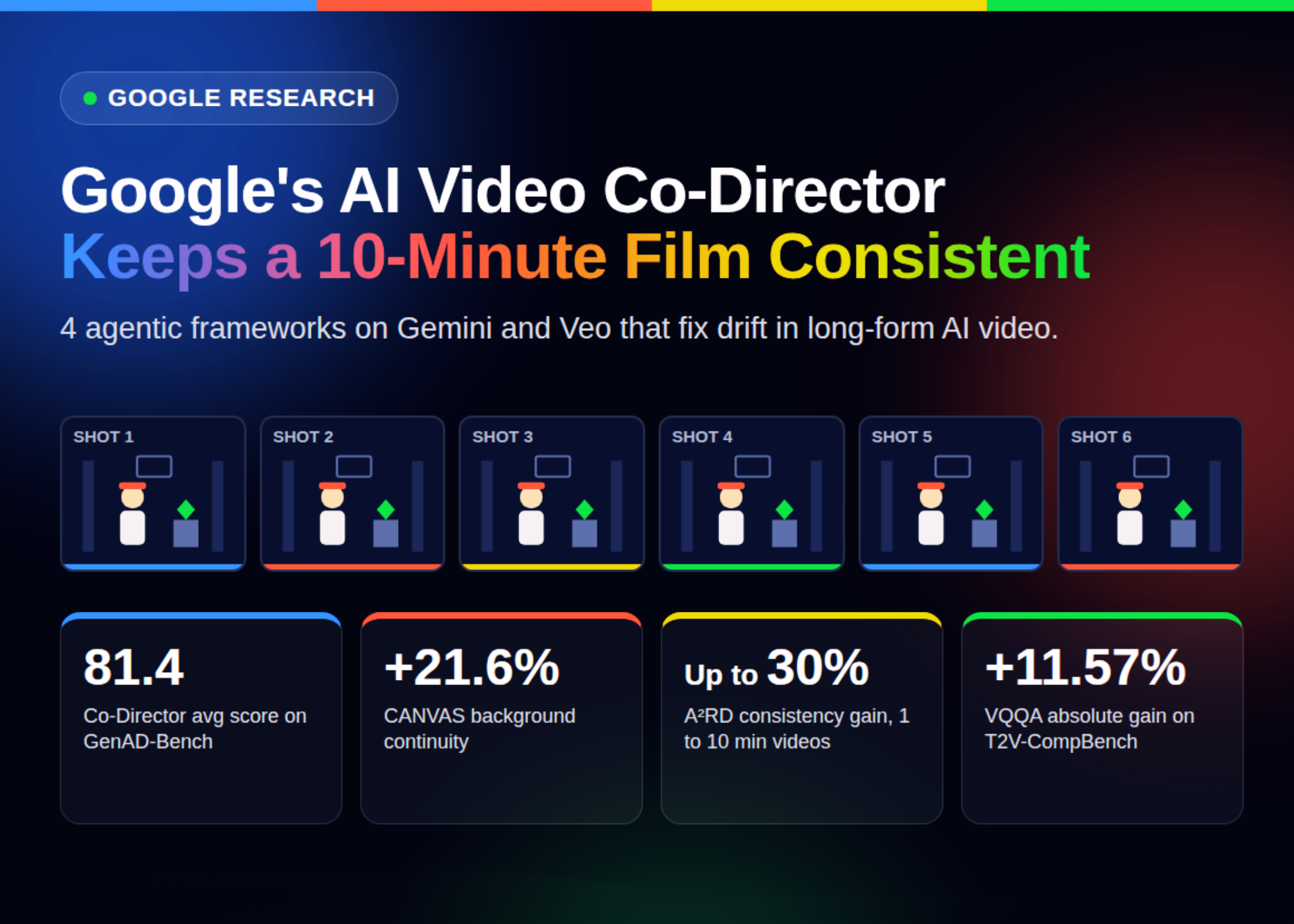
Google Research's "AI video co-director" attacks the two failures that break long AI video: identity drift and cascading errors. Four agentic frameworks — Co-Director, CANVAS, A²RD and VQQA — sit on top of Gemini and Veo and are model-agnostic enough to drive other generators. Co-Director treats creative planning as a multi-armed bandit search, scoring each cut with an MLLM judge; CANVAS keeps a persistent visual memory, holding a thief's cap and a gemstone consistent where the AutoStudio and Gemini-3.1-Pro baselines lost them. Google shared a 10-minute film generated with the segment-by-segment A²RD pipeline.

NVIDIA's new 64GB DGX Spark puts a 1-petaFLOP GB10 Grace Blackwell superchip on your desk for running open models and always-on agents locally. The 150 × 150 × 50.5 mm box pairs a Blackwell GPU with a 20-core Arm CPU and 64GB of unified LPDDR5x running at 273 GB/s; two units cluster over ConnectX-7 for 128GB. NVIDIA positions 64GB as enough for today's most capable 30–35B-class open models, and notes agent token consumption has grown 14x since early 2026 — every one of those tokens is billed on a metered API but free on owned hardware. It ships October 23 from Acer, ASUS, Dell, Gigabyte, HP and MSI.
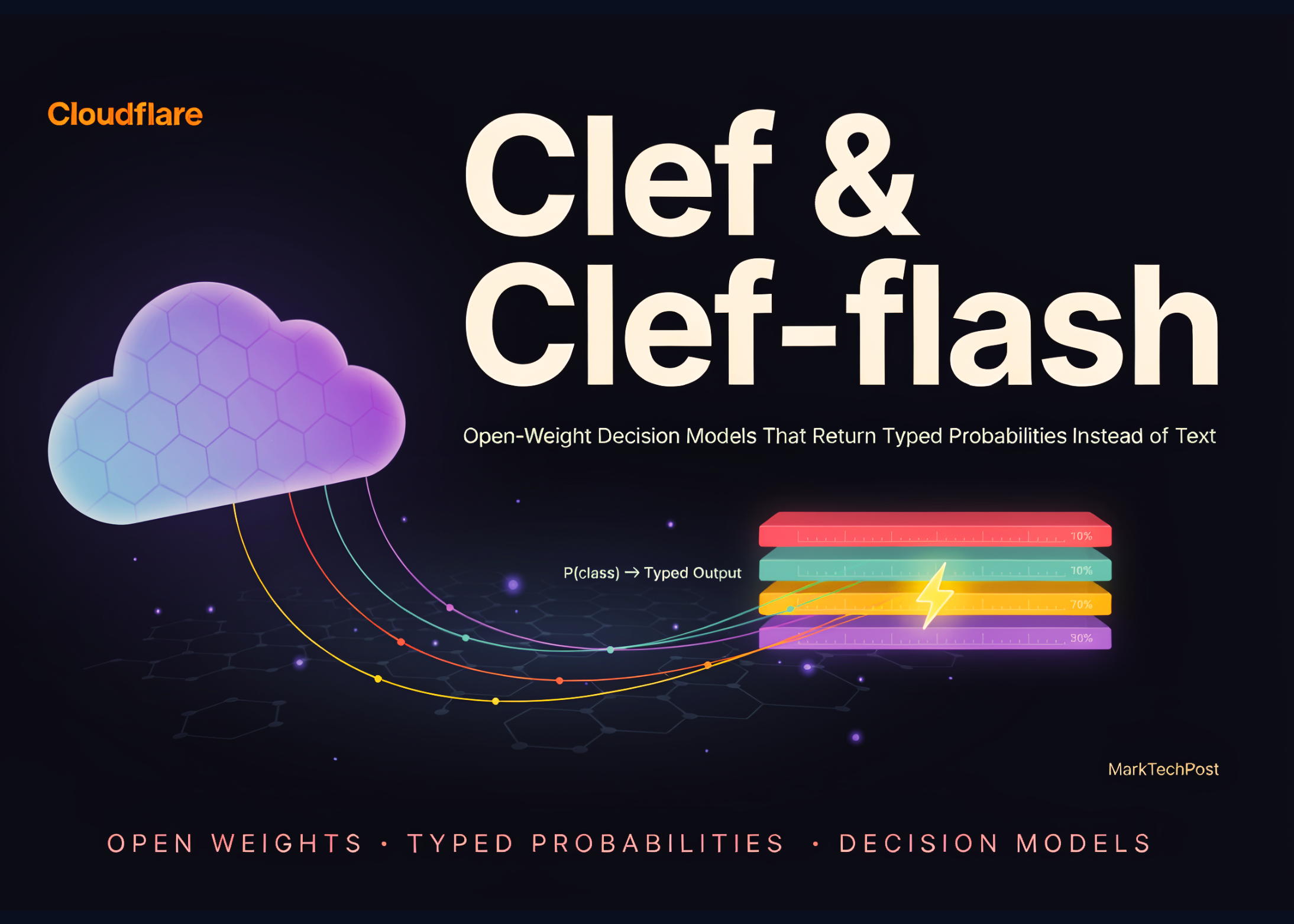
Cloudflare released Clef and Clef-flash, open-weight "decision models" that return typed probabilities instead of text. Each reads an input state and a schema of typed questions, then answers with a probability per allowed option — no free-form tokens to parse. Clef supports yes/no, single-choice and ordered-score questions, and a single Workers AI request can carry up to 64 questions and 4 images. Built on Qwen3.8-27B and Qwen3.5-9B with Apache 2.0 weights, both are compatible with TypeSafe AI's Jev API — switching from Jev means changing the endpoint and model name.
Read more → https://www.marktechpost.com/2026/10/01/cloudflare-releases-clef-and-clef-flash/
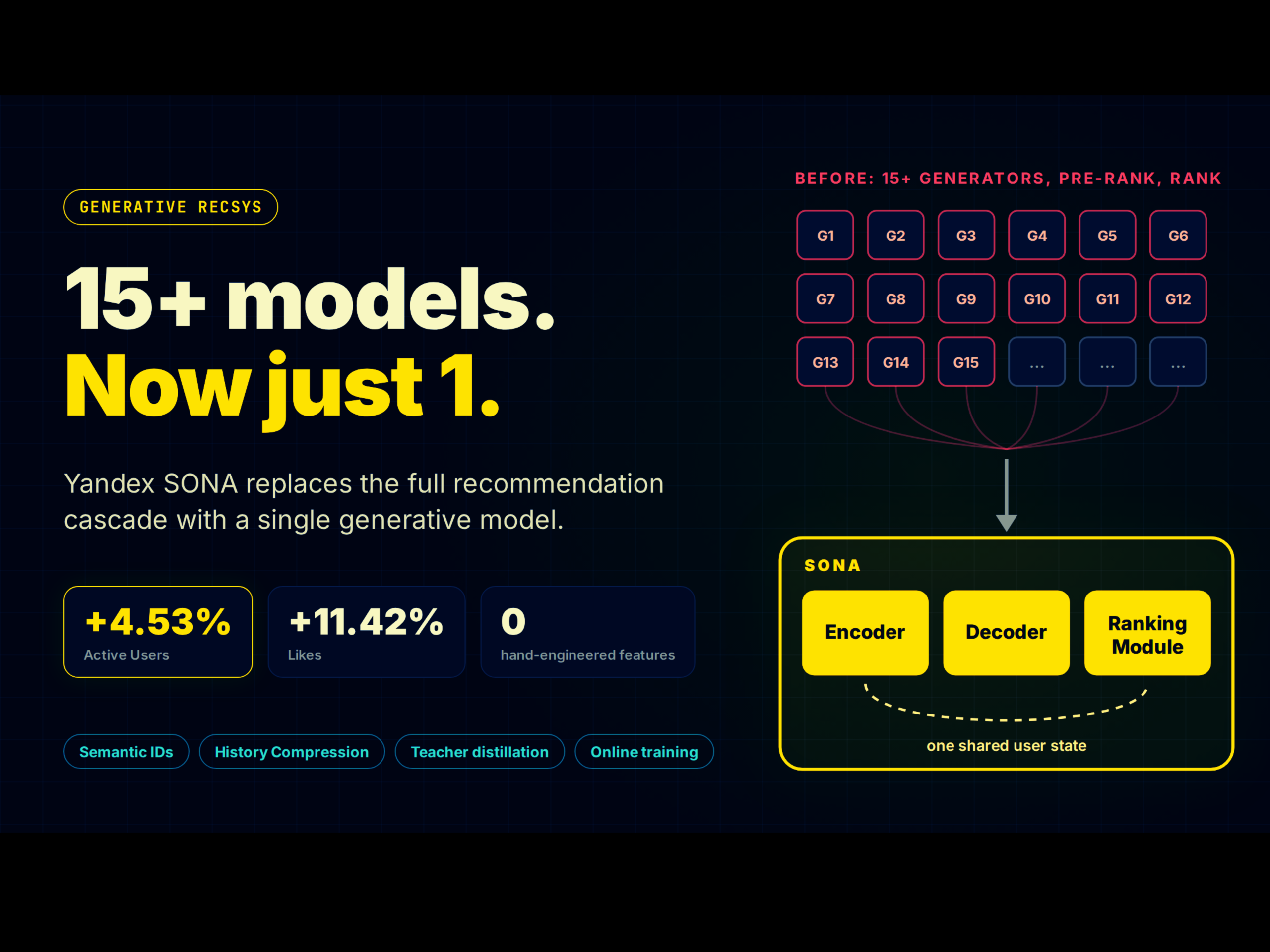
Yandex replaced more than 15 candidate generators, its pre-ranker and its ranker with a single served transformer — and ran it live on its smart speakers. Sona brings candidate generation and ranking around one shared user representation, using no hand-engineered features, only logged event fields and learned Semantic IDs. A seven-day A/B test on 15% of users per split reported +4.53% active users, +6.30% listening time and +11.42% likes — 2.35x the uplift Argus previously delivered on the same surface. It is not deployable externally: no code or weights were released.
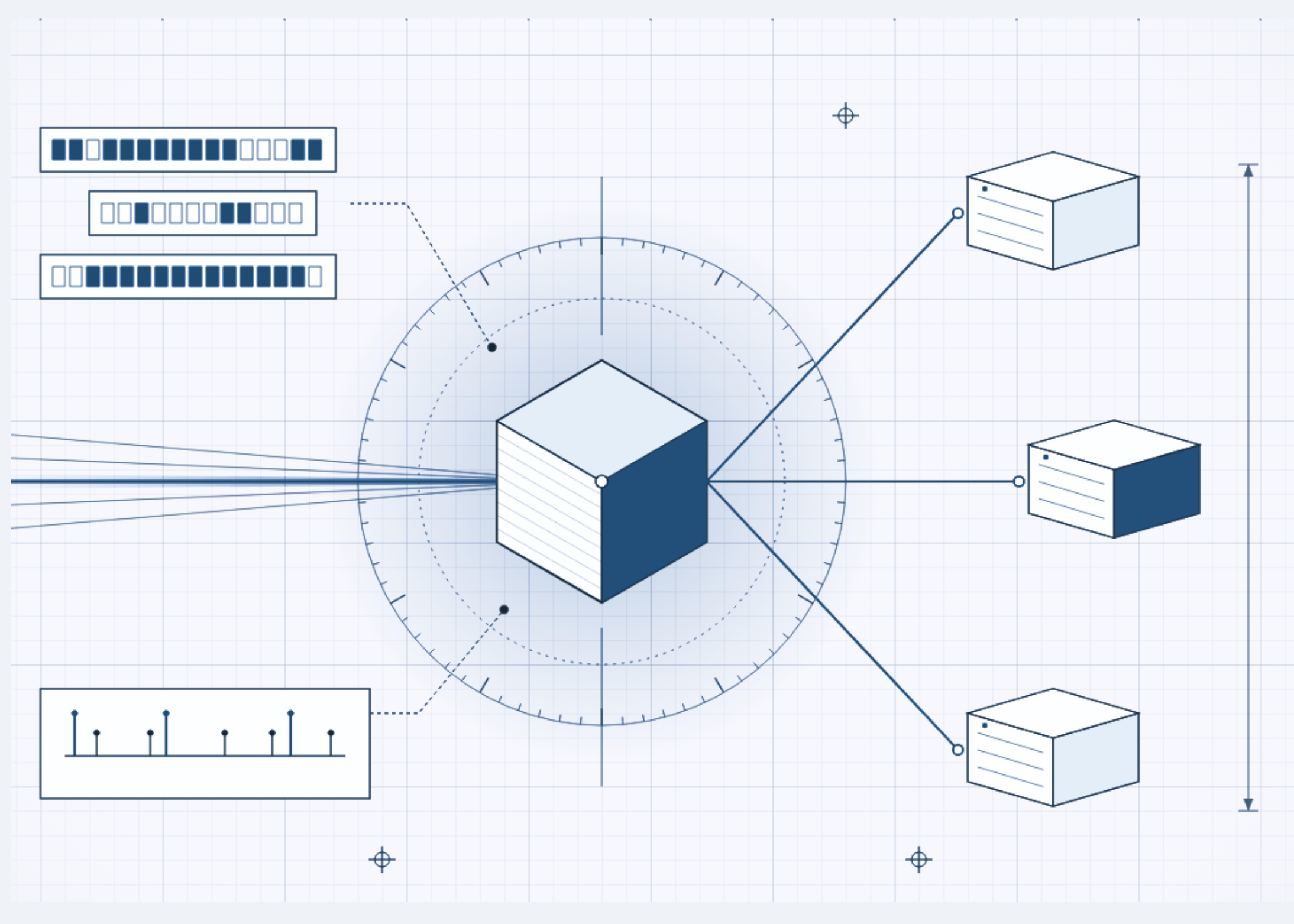
Perplexity replaced its forked search engine with Photon, an in-house Rust retrieval and ranking engine, after production p99 latency sat near 800 ms. The old engine's dataset exceeded RAM, so cold reads triggered page faults that stalled queries, and index merges spiked p99 to about 1.2s for 10–15 minutes at a time. Photon runs retrieval, initial ranking and second-stage ranking per shard, with a broker fanning out and merging candidates. It now powers a new Fast Search mode in the Search API; Perplexity reports single-call latency of 160 ms at p50 and 230 ms at p95, at $1 per 1,000 requests.

About 2% of U.S. households pay for an AI subscription — even as generative-AI adoption reaches roughly 41% of U.S. workers. PNC Research data cited by a16z puts paid household AI penetration at 2.2% as of April 2026, up from near zero in early 2023; by contrast roughly 91% of households pay for a streaming service and about 55% for cloud storage. Among households that do pay, average monthly spend rose from about $22 in May 2024 to $31 by May 2026. The disconnect — enormous infrastructure capex against tiny direct consumer monetization — is the defining shape of the AI economy right now.
That's this week's horizon. If a story here changes your stack, reply and tell us where it lands — the next edition ships tomorrow.