The frontier spent today productizing scale rather than just bragging about it. Anthropic opened Claude up to 1,000 parallel agents; OpenAI put a ~$50B annualized revenue rate and a hunt for $30B more on the table; DeepMind argued the next intelligence won't be a solitary superintelligence at all. Underneath, the open-weight and research layer kept racing — a 78B sovereign model from Germany, a 16.9 MB on-device speech engine, robot world models that predict actions, and 3D tools that finally give users local control. Here is everything that mattered.
Frontier & Text Models

Anthropic's Claude can now orchestrate up to 1,000 AI agents in parallel through new dynamic workflows. A lead agent writes a plan, farms tasks out to sub-agents, and merges the results when they finish — all inside Claude's Managed Agents platform. Anthropic's own testing hid 70 bugs in a 116,000-line codebase: a single agent caught between 14 and 27 per run, while the dynamic workflow consistently hit 66. The feature ships behind the "multiagent_20261001" agent type, and Anthropic warns these workflows "burn through a lot of tokens," recommending you start small.

OpenAI's annualized revenue reached roughly $50 billion at the end of September as the company negotiates at least $30 billion in fresh capital. The Financial Times figure followed an earlier, headline-grabbing "$70 billion" number that Axios said was an accounting construct built to make OpenAI comparable to Anthropic; the gap comes down to how each books partner sales, and both methods comply with US GAAP. OpenAI separately told Bloomberg it still expects to hit at least $70 billion annualized by the end of 2026, driven by enterprise revenue that grew 107% in the third quarter. The round is being negotiated at a $1.4 trillion pre-money valuation.
Read more → https://the-decoder.com/openai-revenue-keeps-surging-as-company-seeks-30-billion-in-fresh-capital/

Anthropic's Claude Science built the first complete ultraviolet map of the sky, coordinating AI agents to download, calibrate and merge data from multiple space missions. UV light is invisible from the ground because the ozone layer blocks it, and NASA's GALEX mission covered only about two-thirds of the sky, skipping bright star-forming regions. Johns Hopkins astrophysicist Brice Ménard led the effort, which inpainted the gaps; in tests the reconstructions averaged about ten percent deviation from actual measurements. Ménard frames it as proof AI can absorb the tedious data work researchers keep putting off.
Read more → https://the-decoder.com/anthropics-claude-science-creates-the-first-complete-ultraviolet-map-of-the-sky/

Aleph Alpha released Kolibri-1, a sovereign open-weight reasoning model with 78B total parameters that activates just 3.46B per token. The German company's mixture-of-experts model targets German and English, supports an explicit reasoning mode and tool calling, and offers a 1,048,576-token context window (though Aleph Alpha recommends staying under 262,144 for serving efficiency on complex tasks). It ships in FP8 at roughly 78 GB and fits on two H100s or a single H200/B200, under an Apache-2.0 license. It is pitched as a European alternative for multi-step reasoning and agentic tool use.
Read more → https://huggingface.co/Aleph-Alpha/Kolibri-1

Anthropic launched Cyber Mission, a program to defend critical infrastructure and open-source software, including a free AI scanner for OSS projects. The Critical Infrastructure Defense Program gives operators of power grids, water systems and transportation networks access to Claude models, engineers and threat analysis, with CrowdStrike, Palo Alto Networks, Deloitte and Rockwell Automation as founding partners. The separate OSS scanner regularly checks open-source projects, automatically flags and explains vulnerabilities, and suggests patches — Anthropic expects accuracy above 90 percent but warns reports ship without human review. Maintainers of critical projects can opt in via GitHub.
Read more → https://the-decoder.com/anthropic-launches-a-free-ai-scanner-for-open-source-projects/
Image & Vision

Alibaba's Qwen team released Qwen-Image-2.1-Turbo, an accelerated 7B text-to-image and editing checkpoint that generates in just 8 denoising steps. It reuses the Qwen-Image-2.1 architecture with CFG=1 and prefix KV caching that reuses the text and reference-image context across steps, and loads through the QwenImage21Pipeline in Diffusers. The checkpoint ships with its recommended sampling schedule, so it runs without hand-tuning the scheduler. It is Qwen's push to make open image generation cheap and fast.
Read more → https://huggingface.co/Qwen/Qwen-Image-2.1-Turbo
3D & Reconstruction

SpaceFlow gives 3D generation the local control it was missing, letting users set how strictly each region of an object follows the input shape. Current methods define geometry adherence with one global control strength and cannot specify appearance locally; SpaceFlow is a training-free pipeline that takes a text description plus a set of geometric primitives, each acting as a proxy for one object part with its own control level. During structure generation it enforces those spatial constraints inside the generative flow, then segments the result and matches parts to primitives so each region conditions only on its own text or image cue — limiting cross-part leakage. Regional geometry metrics show it preserves the parts users actually constrained.
Read more → https://arxiv.org/abs/2610.12399
Audio, Voice & Music
Amazon's Nova 2.5 Sonic is a speech-to-speech foundation model in Amazon Bedrock, built for real-time voice agents. It handles speech and generates spoken replies in real time, so developers can build conversational agents on AWS rather than stitching together separate transcription and text-to-speech services. The release puts Amazon in the same low-latency voice race as OpenAI, Google and Cartesia.
Read more → https://aws.amazon.com/ai/generative-ai/nova/

Cactus Compute released Whistle, a speech-to-text model that fits in a single 16.9 MB file and runs on a CPU with no GPU and no dependencies. It transcribes 16 kHz audio up to 30 seconds in one pass across seven languages — English, German, French, Spanish, Italian, Dutch and Polish — auto-detecting the language and returning an empty transcript instead of an invented sentence on silence. Beyond transcription it exposes word-level timestamps aligned from the decoder's own attention, plus a speech embedding for retrieval without decoding. It is built for phones, wearables, robots, smart home and even microcontrollers.
Read more → https://huggingface.co/Cactus-Compute/whistle
Robots & Embodied AI
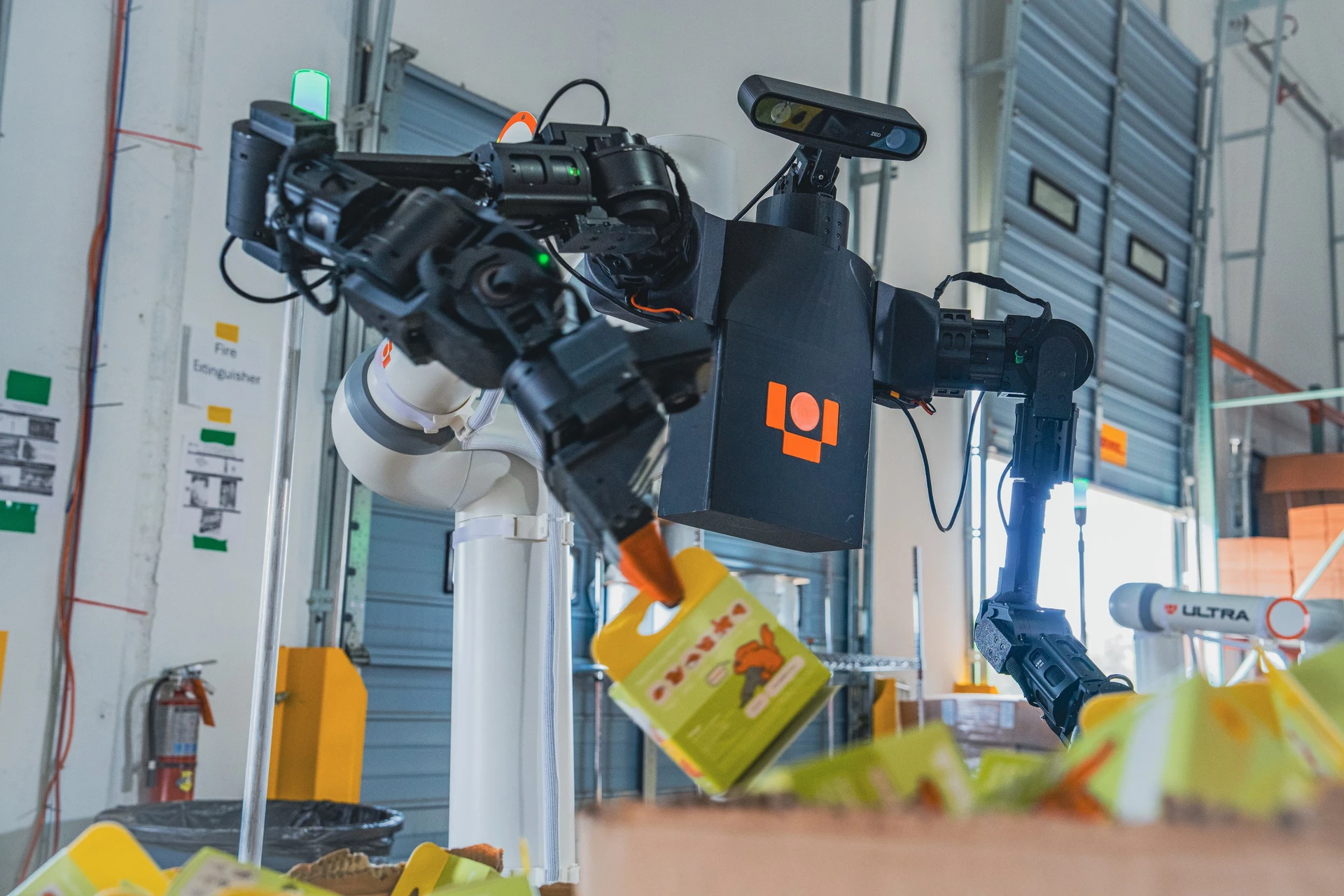
Brooklyn-based Ultra raised a $50 million Series A to expand its warehouse robotics business, bringing total announced funding to $62 million including an earlier seed round. Ultra sells warehouse robots as a service — charging for installation and ongoing support rather than a one-off purchase — and is deepening a relationship with Physical Intelligence, whose robot AI models power its systems. The partnership already includes live order-packing deployments with human intervention when needed. It is a sign that investors are backing physical-AI deployments, not just demos.
Read more → https://www.humanoidsdaily.com/news/ultra-50-million-series-a-warehouse-robots-physical-intelligence
Papers & Research

OuroWorld turns a static 3D Gaussian-Splatting scene into a 3D "cinemagraph" — a dynamic scene that loops seamlessly from any viewpoint. A vision-language model infers plausible motion and guides a video model to synthesize a reference clip, which is then lifted and completed into multi-view video. To learn from that imperfect supervision, the authors introduce Inconsistency-Robust Periodic 4D Gaussian Splatting: a Fourier-series deformation field that guarantees looping by construction, plus a grounded drift field anchored at the reference view to absorb cross-view inconsistency. Unlike earlier Eulerian methods limited to fluid-like motion, it captures general deformation, object motion and illumination change.
Read more → https://arxiv.org/abs/2610.12461

DreamTrue is a multi-view, cross-embodiment robot world model that predicts action-faithful, physically plausible video. Training such a model on existing robot data runs into two obstacles: imprecise calibration weakens action-following, and datasets over-represent successful interactions, biasing predictions toward success. The authors render action trajectories into image-space conditions with offline geometric calibration to improve action adherence across embodiments, then add counterfactual post-training — altering recorded trajectories to generate futures under a wider range of actions and contact configurations. They also build a human-annotated video dataset to score predictions that have no paired ground-truth future.
Read more → https://arxiv.org/abs/2610.12468

A new paper asks whether robot decision-making can be written entirely in code, with no vision-language model in the loop. It reframes the embodied world as an "Embodied Turing Machine," whose tape is the robot and environment state and whose rules are the policy; if that state can be represented accurately, decisions can be pure code. The proposed method, Code-Only-as-Policy (COAP), measures and tracks robot, environment and task state from camera images and proprioception, then decides from it — with the same code applying across episodes and a shared library serving different tasks. The authors argue this beats VLAs and "agent harness" approaches on explicit state representation and execution.
Read more → https://arxiv.org/abs/2610.12369

Xiaomi's MiMo-V2.6 is an omni-modal model family whose tech report is really a study in scaling reinforcement-learning compute. The team scales RL along three axes: larger batches — 1,568 samples and 2.7–3.7B tokens per step at context lengths up to 1M — more diverse and complex environments spanning code, general, visual and cyber domains under mixed agent harnesses, and more "grader" compute via groupwise agentic grading for accurate reward signals on long-horizon tasks. To stay stable at scale they freeze the MoE router and build a multi-layer defense against reward hacking. Xiaomi is open-sourcing the training dynamics and RL environments.
Read more → https://arxiv.org/abs/2610.11959
News & Business

A DeepMind Institute essay argues the next leap won't be a lone superintelligence but networks of people and AI agents working together — what its authors call "Artificial Symbiotic Intelligence." Google-affiliated researchers Benjamin Bratton, Blaise Agüera y Arcas and James Manyika write that AGI will emerge from a social system, not an isolated machine, and that the real challenge is coordinating and governing a web of agents, institutions and people. They point to a companion study of reasoning models like DeepSeek-R1 and QwQ-32B, whose internal traces resemble debate — shifting perspectives, raising objections, reconciling approaches — behavior that emerges from reinforcement learning rather than explicit programming. The framing directly rebuts the singularity.

The Multimodal Art Projection team released YuE2-3B, an open music-generation model built around editable scores rather than one-shot text prompts. Unlike most text-to-music systems that return a single opaque audio file, YuE2 lets users export a symbolic plan, edit it, and regenerate — and produce covers of existing songs. The 3B model spans Chinese and English and ships under a CC-BY-NC-4.0 license, with demos and a music arena available. It is part of a broader move to give musicians the fine-grained control image models already have.
Read more → https://huggingface.co/m-a-p/YuE2-3B
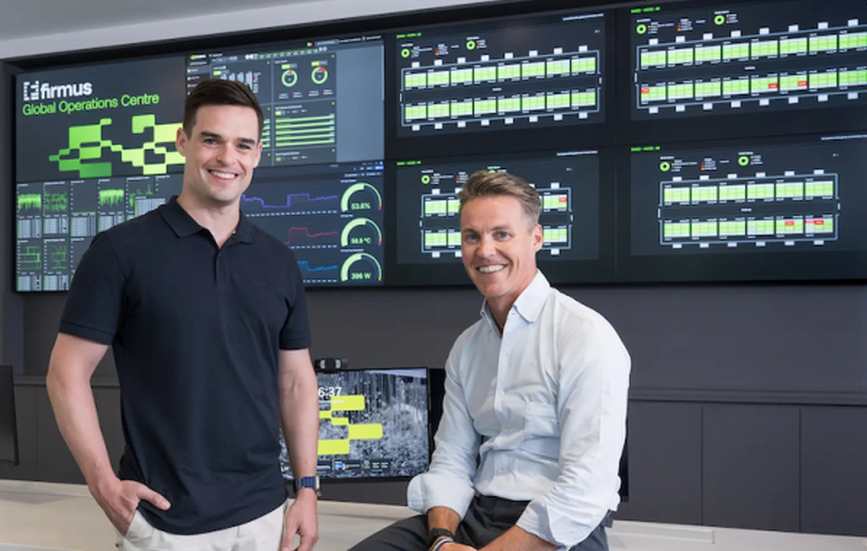
Nvidia-backed AI infrastructure startup Firmus abruptly cancelled a planned $5 billion IPO on the Australian Securities Exchange. The company said its board concluded the proposed terms failed to reflect the strength of the business, after investors questioned a proposed $30.6 billion valuation — nearly three times what it was worth two months earlier. Shares had reportedly been priced at A$11 apiece, which would have made it the second-largest new share sale in Australian history. Firmus will now pursue private capital instead.

AI agent startup Manus raised more than $500 million in fresh funding, weeks after Chinese regulators blocked its $2 billion acquisition by Meta. The round was led by private-equity firm Boyu Capital and venture investor IDG Capital, with existing backers Tencent, HSG Capital and ZhenFund participating, according to CNBC. Bloomberg previously reported Manus was seeking a roughly $4 billion valuation — double what Meta agreed to pay when it announced the acquisition in December 2025. The comeback shows investors are still willing to make huge bets on independent agent companies despite US–China tensions.
That's this week's horizon. If someone forwarded this to you, the full archive lives at newsletter.premarcu.com/archive.