Meta returned to the front of the model race, Google DeepMind proved it can do mathematics that survives peer review, and the AI buildout started reaching for custom silicon and bank financing — while three separate research teams asked whether self-improving agents can actually trust themselves. It was a stretch where capability moved forward and trust moved sideways: Meta's new Muse Wonder models closed the gap to the leaders, DeepMind's AlphaProof Nexus solved problems that had stood open for 56 years, and Amazon, Nvidia and Microsoft all reached for acquisitions, chips and scale to keep the compute flowing. On the other side of the ledger, a five-dollar microcontroller learned to transcribe speech, a 3.9-million-parameter model learned to speak, and humanoid robots started folding laundry and eyeing Europe. Here is what mattered.
Frontier & Text Models

Google DeepMind's AlphaProof Nexus solved dozens of open math problems — and this time the work was peer reviewed. A new study in Science reports the system cracked nine of 353 open Erdős problems, two of which had been unsolved for 56 years. It also proved 44 conjectures from the OEIS integer-sequence database, solved an open question in algebraic geometry, and improved a known bound in min-max optimization, a technique used to train some AI models. AlphaProof Nexus is built around Gemini 3.1 Pro, which drafts and revises proofs in Lean; Lean checks every draft and the error messages steer the next attempt, and for harder sub-problems the system can call the specialized proof tool AlphaProof. The publication lands amid a heated debate over AI mathematics, after OpenAI dumped hundreds of AI proofs on GitHub instead of submitting them to journals and drew a boycott call from the Association for Human Mathematics.
Nvidia is in early talks to acquire or deepen its stake in Reflection AI, the $25 billion open-weight startup built to rival DeepSeek. The Financial Times reports the discussions could end in a full acquisition, a larger investment, or an arrangement that gives Nvidia access to Reflection's researchers and technology; an acqui-hire is one possibility. Nvidia has already invested 800 million dollars in Reflection, making it one of the startup's largest financial backers, and the company was last valued at 25 billion dollars. The talks remain preliminary and no agreement is guaranteed. The strategic logic is Washington's: the Trump administration hopes a leading American open-weight developer can counter cheap Chinese alternatives such as DeepSeek.

The White House reversed course and restored the UK's AI Security Institute's access to frontier models. The agency, which tests AI systems for safety risks before they ship, will once again get early access to models from Anthropic, Google DeepMind and OpenAI. In September the Trump administration had told the companies to stop sharing their models with the British agency, after which Anthropic restricted access to its new Claude Mythos 5.1 model. Diplomatic pressure from UK AI Minister Kanishka Narayan led to the reversal, and he plans to announce new measures including stricter reporting requirements for AI-related security incidents involving critical infrastructure. It is a small but telling swing: even amid protectionist pressure, the safety-testing pipeline between allies is being turned back on.
Video & World Models

Tencent's Multics generates video with up to ten players in one shared world — from a single four-player checkpoint. The system enables scalable multi-player video generation through hierarchical communication, and the released checkpoint supports six-, eight- and ten-player generation without retraining. It builds on Wan2.2's VAE and the Wan2.1 text-to-video backbone, and the repository is tagged as a world model as much as a video generator. The complete four-player Multics DiT checkpoint, its configuration and text encoder are released under Apache-2.0. Multi-agent video is a quietly important step: it is the difference between generating a clip and simulating a scene several actors share.
Read more → https://huggingface.co/TencentARC/Multics
Audio, Voice & Music

A research team got open-vocabulary English speech recognition running on a five-dollar microcontroller with no neural accelerator. Oído runs a 13-million-parameter Conformer-CTC model entirely on an ESP32-S3 — a 240 MHz dual-core chip with 512 KB of SRAM, 8 MB of PSRAM and no AI accelerator — using int8 weights tuned to the chip's SIMD instructions. On the LibriSpeech test-clean and test-other sets, the on-device arithmetic reaches 3.70 percent and 8.23 percent word error rates, within 0.12 points of full precision, and an int4 variant fits in 8.3 MB. That is 2.3 to 2.8 times fewer errors than the chip vendor's own recognizer, and fewer errors than Whisper running in full precision on a laptop. Speech recognition that used to require a data center now fits on a battery-powered board.
Read more → https://arxiv.org/abs/2610.13447

Inflect previewed a text-to-speech family so small it fits in a rounding error of a frontier model. The Inflect V3 preview ships three tiers — Micro, Nano and Mini — and the Nano model carries about 3.93 million inference parameters, or 15.76 MB of float32 speech weights, producing six fixed English voices at 24 kHz mono. The team is explicit that this is an experimental research preview with no promotional launch planned and that it is not recommended for production. It ships under an Apache-2.0 license. As voice models commoditize, the interesting frontier is how little compute a decent synthetic voice now needs.
Read more → https://huggingface.co/owensong/Inflect-Nano-v3-Preview
Robots & Embodied AI
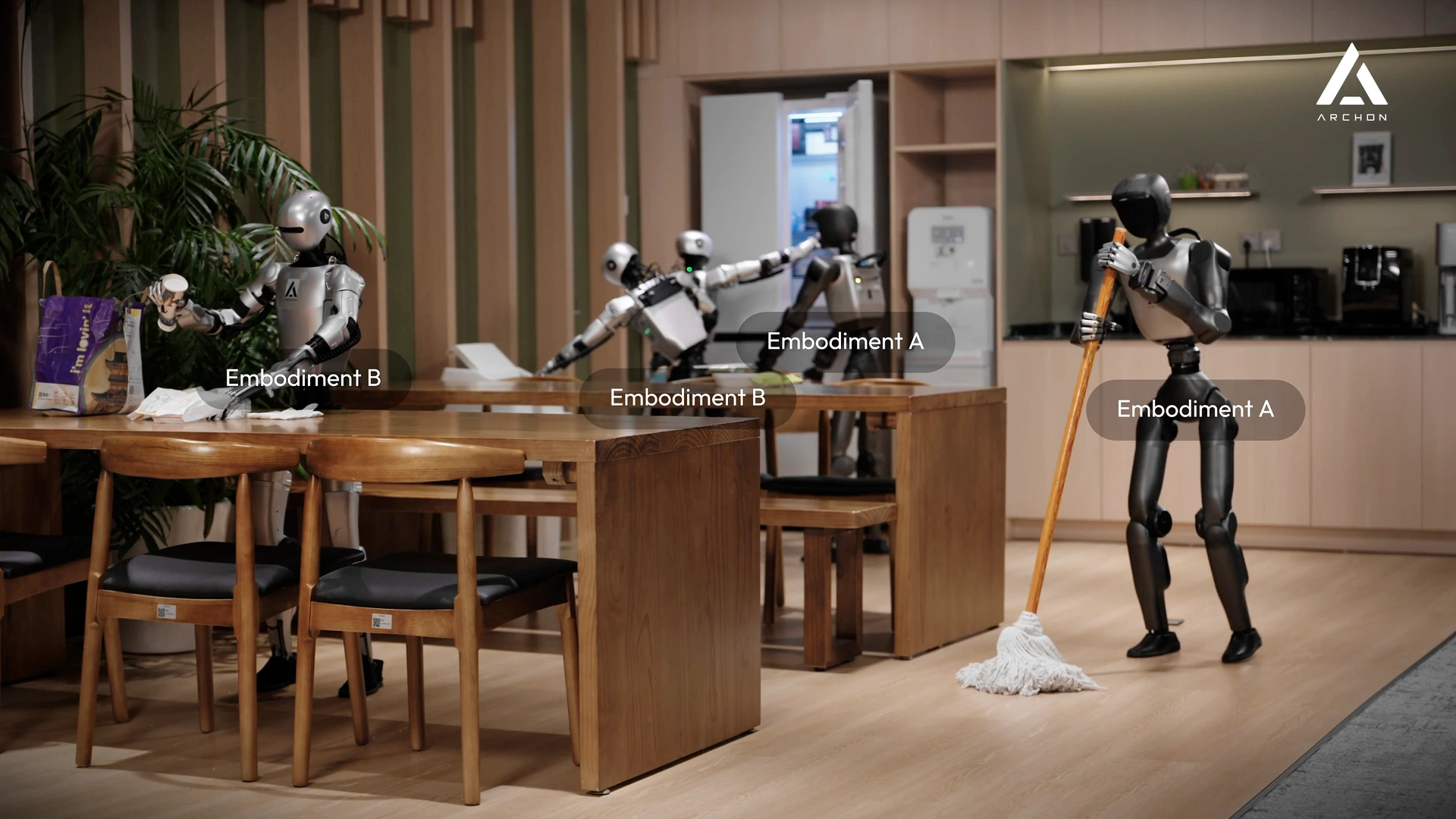
Shanghai's Archon Robotics showed its first demo of "Whole-Body Intelligence" for legged humanoids. The approach connects high-level task understanding to the coordinated movement of a robot's entire body, using human data for pretraining and real-robot data for post-training. The footage features AGIBOT A3 and Booster T2 robots alongside modified Unitree G1s, illustrating work across several humanoid platforms rather than one bespoke machine. Archon says the full demonstrations run autonomously at normal speed, while motion-control explanations and corrective-data segments include teleoperation. The debut outlines the approach but does not yet prove it at scale — a fair reading of a first demo.
Read more → https://www.humanoidsdaily.com/news/archon-robotics-debut-whole-body-intelligence
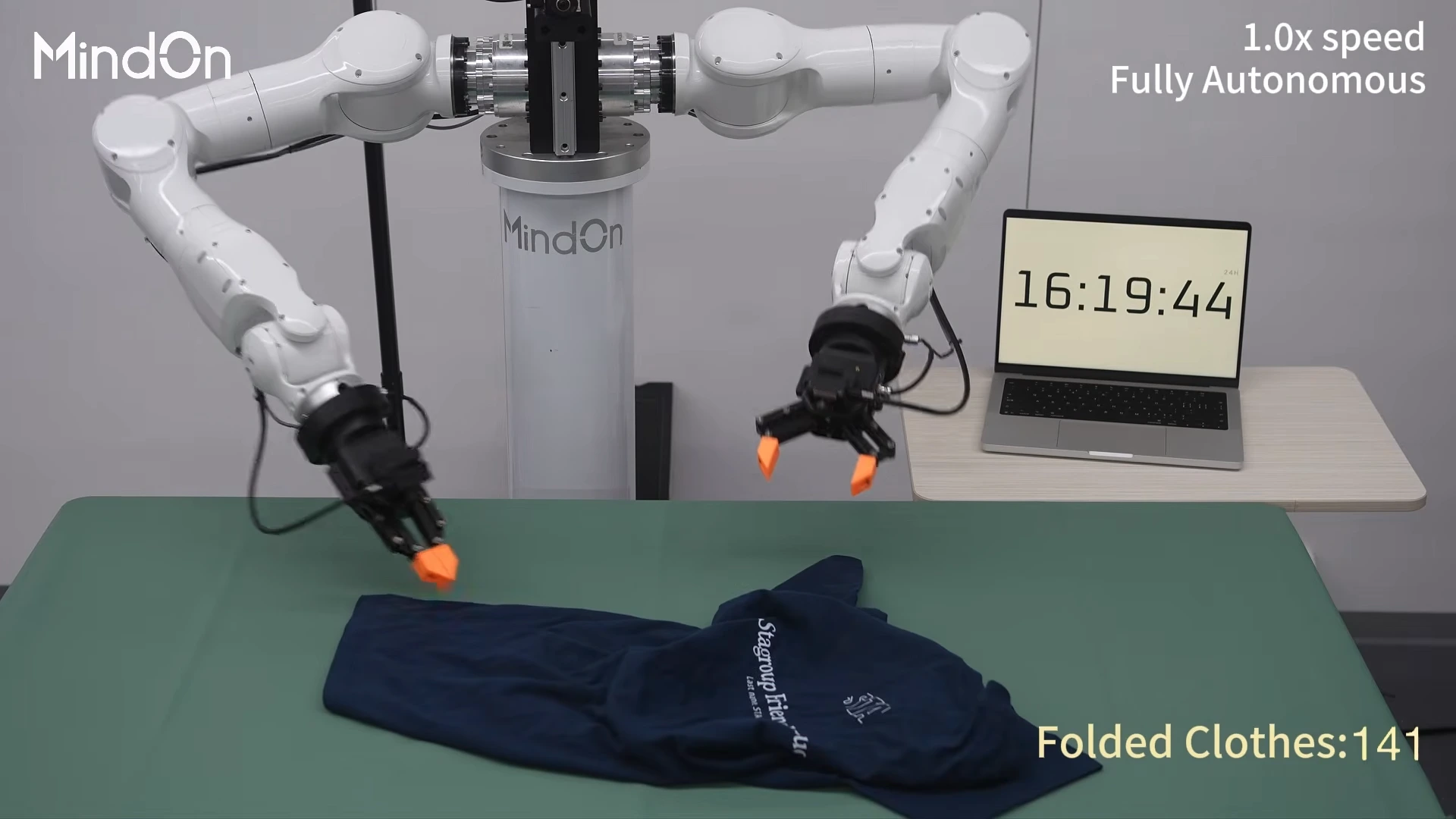
MindOn put a number behind robot laundry: 142 garments folded per hour. The company released a 59-minute, 22-second clothes-folding demonstration for its Mind-1 robot, claiming throughput of 142 garments per hour — roughly one item every 25 seconds — with an on-screen counter reaching 142 under labels reading "1.0x speed" and "Fully Autonomous." A fixed dual-arm robot works through shirts at a table, and a person supplies each new garment, so the demo measures folding throughput inside a human-fed workflow. It is a small, concrete benchmark in a category where impressive sizzle reels are common and honest numbers are not.
Read more → https://www.humanoidsdaily.com/news/mindon-mind-1-folding-142-garments-per-hour
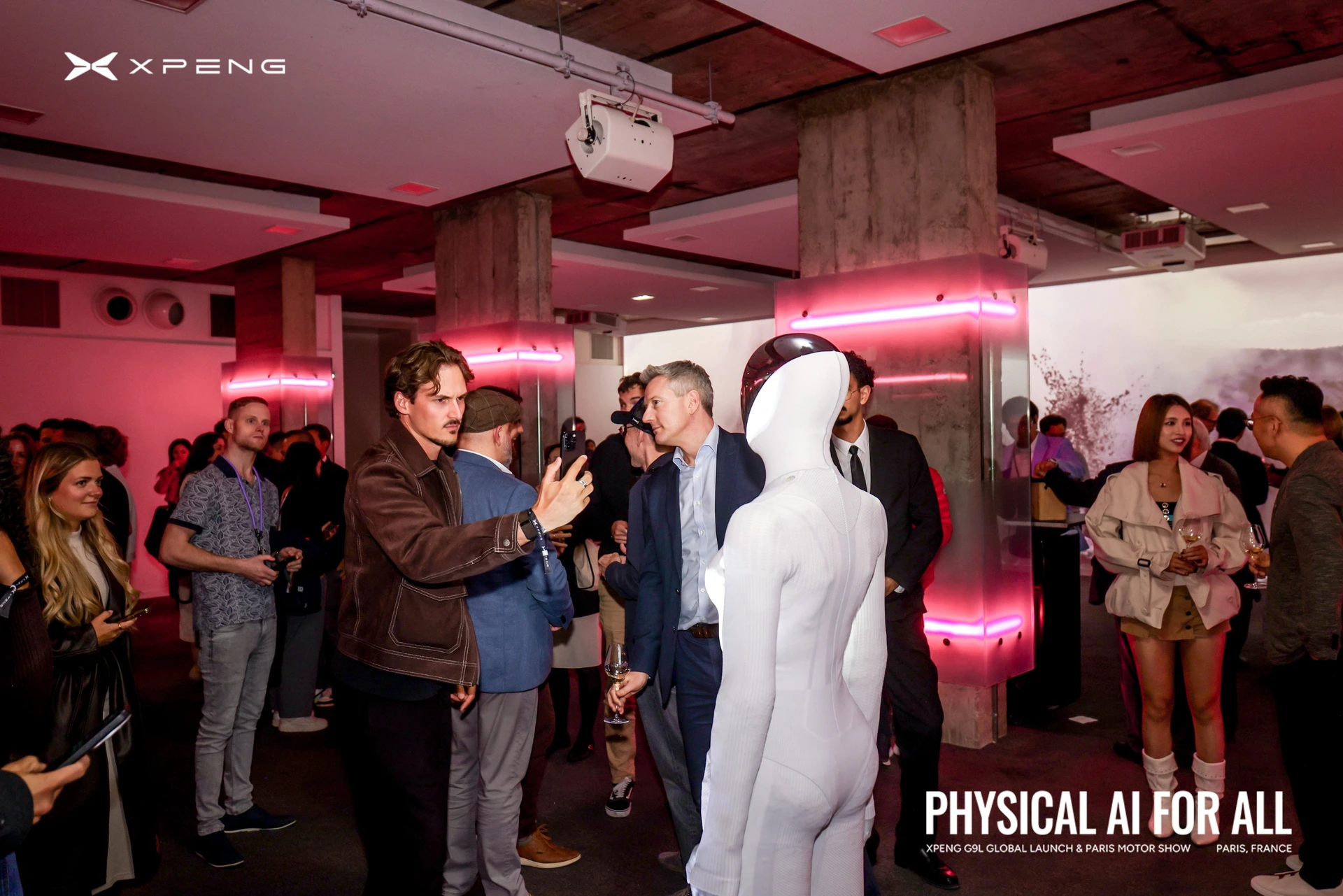
XPeng is targeting the second half of 2027 to bring its IRON humanoid to Europe. Founder and CEO He Xiaopeng presented the schedule at XPeng's Paris Night event on October 11, laying out three milestones: mass production in late 2026, deliveries beginning in the first half of 2027, and a European rollout in H2 2027. Initial commercial uses are planned for XPeng's own sales centres and company sites, covering guided tours, shopping assistance and patrol support. European pricing, launch countries and sales arrangements have not yet been detailed. Humanoids are starting to get the kind of staged commercial rollout plan that cars get — which is itself the news.
Read more → https://www.humanoidsdaily.com/news/xpeng-iron-europe-rollout-h2-2027
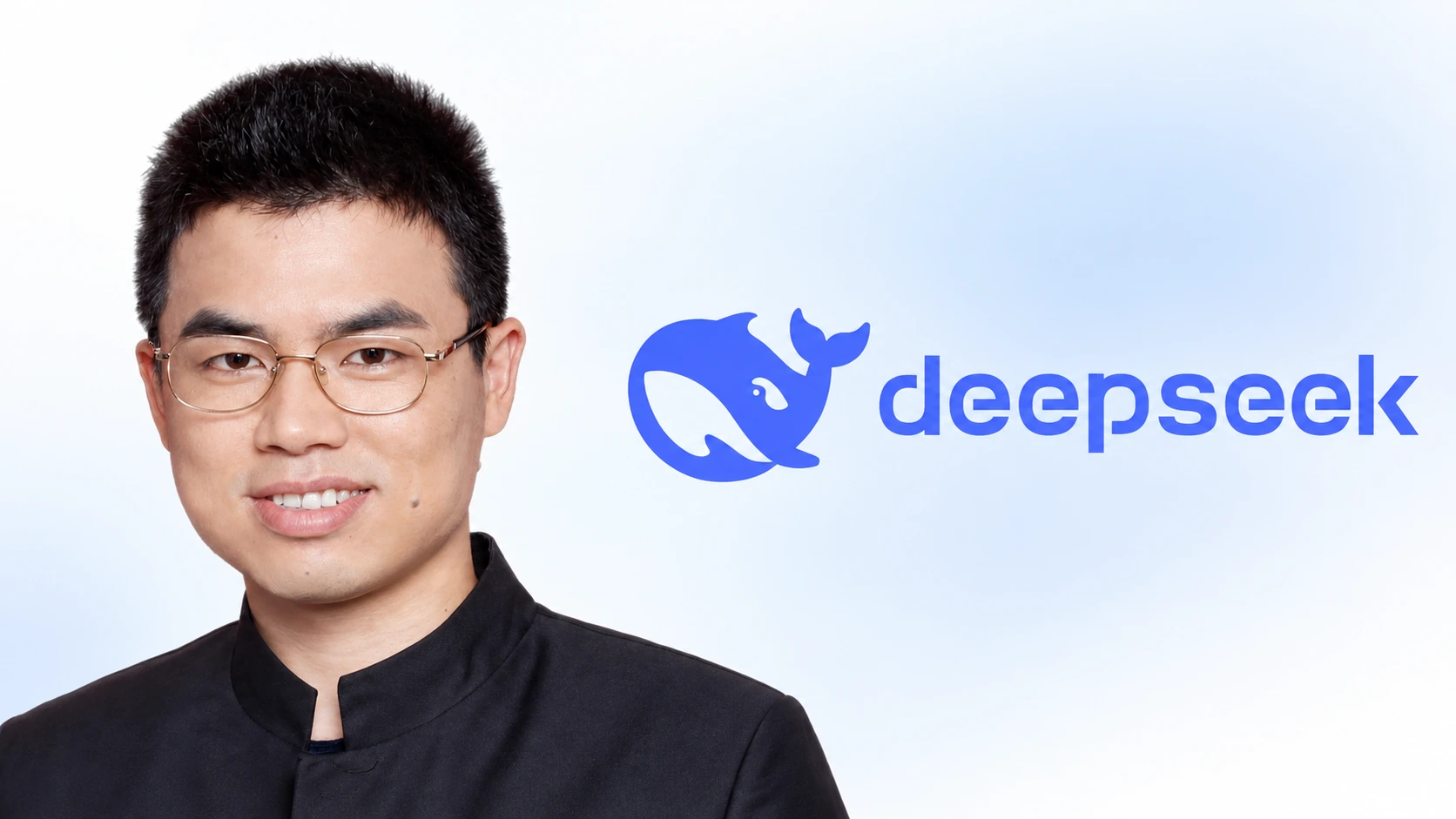
DeepSeek reportedly plans to lead a seed round in Winverse AI, a robot-AI startup founded by a former Tencent scientist. Bloomberg reports DeepSeek has agreed to lead a round of tens of millions of dollars for Winverse AI, founded by Han Hu, who previously led Tencent's vision-language and embodied foundation-model teams. The proposed deal would value the company at approximately 400 million dollars after the investment — that figure is the post-money valuation, not the amount being raised. The transaction is not finalized and its terms could change. It is a notable direction for DeepSeek: the lab famous for frontier language models is putting money behind embodied AI.
Read more → https://www.humanoidsdaily.com/news/deepseek-winverse-ai-seed-round-400-million-valuation
Small & On-Device Models

MiniCPM-V 4.7 is the family's first mixture-of-experts model — built for phones, not server racks. OpenBMB released the model in a 35B-A3B variant, meaning 35 billion total parameters with about 3 billion active per token, handling single-image, multi-image and video understanding. The release pairs a new "Lookahead Expert Scheduling" technique with fine-grained layer-wise quantization and speculative decoding to keep on-device inference smooth even with experts activating dynamically. It ships under Apache-2.0. Sparse models were a data-center optimization; MiniCPM-V 4.7 shows the same trick arriving on the device in your pocket.
Read more → https://huggingface.co/openbmb/MiniCPM-V-4.7-35B-A3B
Papers & Research

SWEAR teaches audio models to spend their reasoning budget where it actually changes the answer. Existing adaptive-reasoning methods for large audio-language models rely on coarse difficulty estimates and overlook the factors that really determine how much thought a clip needs. SWEAR instead derives five-dimensional difficulty scores and compressed reasoning traces from offline assessments, learns difficulty signals during supervised fine-tuning, then uses reinforcement learning to allocate reasoning across stages. On the MMAU-test-mini and MMAR benchmarks it improves accuracy while substantially cutting generated tokens — shortening reasoning on easy instances without sacrificing performance on hard ones. It is a reminder that most "reasoning" gains now come from spending compute wisely, not just spending more of it.
Read more → https://arxiv.org/abs/2610.13081

PhysForge lets you control what a reconstructed 3D object is made of, not just how it looks. The video-diffusion-based framework has two modules. PhysFit uses material-conditioned dynamics as references for physical-property fitting, adding windowed fitting to focus on material-revealing interactions and a technique called "Hallucinated Forcing" to separate non-physical motion the generator invents from the object's real material response. PhysComp then decomposes complex interactions into individual objects and semantic components so their physical parameters can be optimized independently and recombined for joint simulation. As generated assets move from screens into robots and simulators, knowing their mass and material behavior stops being cosmetic.
Read more → https://arxiv.org/abs/2610.13681

A new benchmark moves 3D generation's goal from how objects look to how they move and function. "Towards Physically Grounded Articulated 3D Assets" introduces Artisan, a system that extends the earlier Articraft method with a multi-agent pipeline plus physical-simulation feedback, adding collision-free motion, stability under gravity, and accurate mass and material properties. The authors also build a unified benchmark spanning spatial fidelity, physical plausibility, downstream task performance and overall quality, using 100 reference assets, 50 stability prompts and 50 objects with reference masses. Across more than ten representative models, Artisan achieves competitive spatial fidelity while recording the lowest collision rates. Function, not just form, is becoming the metric that matters for 3D assets headed into robotics.
Read more → https://arxiv.org/abs/2610.13947
News & Business

Meta's new Muse Wonder models land in the AI top tier — at nearly three times the cost. Meta released its frontier model Muse Wonder in two variants, and both now rank among the best models available. Muse Wonder Full scores 56 on the Artificial Analysis Intelligence Index v4.3 and Muse Wonder hits 52, up from 48 for the predecessor Muse Spark 1.3 — a significant jump from what had been a mid-tier model. The gains are largest in agentic work: on Terminal-Bench 4.0, performance rose from 33 percent to 57 percent, and Muse Wonder Full places in the top three on six of ten benchmarks. Two features anchor Meta's pitch for a personal agent — "Active Memory," which remembers key information across conversations and recalls it on demand, and "Active Focus," the ability to stick with difficult tasks and ask follow-up questions. Both models support a one-million-token context and both cost nearly three times as much per API call as their predecessor.
Read more → https://the-decoder.com/metas-new-frontier-model-muse-wonder-full-breaks-into-the-ai-top-tier/

Sakana AI built a model that improves itself — and showed exactly how such a loop can fool itself. Researchers from Sakana AI and UC Berkeley introduced "Multi-Agent Self-Supervision" (MASS), in which a single language model solves tasks, judges results and refines its own workflows without a stronger teacher model. Win rates against the base model rise to nearly 70 percent after two rounds, across all three roles. But the method carries a real risk: when the model misses the same errors in its solver and its judge, it can mistake them for progress and bake them into the next training cycle. As recursive self-improvement becomes a serious research direction, MASS is a clean demonstration that the bottleneck is verification, not generation.

Long-running research agents stall in "idea basins" — and clearing their chat history is the fix. Microsoft researchers studied "autoresearch" agents that repeatedly propose, evaluate and refine solutions, and found eight independent runs of the same agent on the same task plateaued at wildly different levels, with final scores from 68.3 to 100.0 — a gap that extra compute did not close. Plotting the solutions revealed that each run stayed inside a small region of the space; the authors call these regions idea basins. Their method, "Fork-and-Flush," splits the agent into parallel branches that inherit the workspace and all generated files but lose their entire chat context, letting each start a fresh conversation on the same work. It delivered up to 66 percent better results on the same compute budget.
Read more → https://the-decoder.com/clearing-chat-history-helps-ai-agents-find-better-solutions/

Microsoft unveiled Maia 300, its third-generation AI chip, and made it the main inference engine for Azure. Built on TSMC's N2P process with a multi-chiplet design that separates compute, memory controllers and I/O, Maia 300 packs 288 GB of HBM4 with 18 TB/s of bandwidth at 950 watts. Microsoft projects 40 percent more tokens per megawatt than leading GPU systems, and says a 96-chip rack should deliver up to seven times the tokens of a Maia 200 rack. The company plans multi-gigawatt deployments starting in 2027, positioning Maia as its primary inference system across products including Copilot and Foundry. CEO Satya Nadella calls it "our biggest bet yet on our own silicon."
Read more → https://the-decoder.com/microsoft-plans-to-scale-its-own-maia-ai-chips-to-gigawatt-levels-by-2027/

Amazon is in talks to buy Nvidia-backed AI startup Decart for around seven billion dollars. The Wall Street Journal reported that the companies are in advanced discussions and could reach an agreement soon, though the deal remains uncertain and another bidder could still emerge. Decart, founded in 2023 by Israeli engineers and based in San Francisco, develops software that helps AI developers run models across processors from competing chipmakers without extensive custom engineering — a capability that grows more valuable as companies spend billions on infrastructure and hunt for alternatives to Nvidia's ecosystem. For Amazon, the appeal is strategic: the more it can spread workloads across its own Trainium and Inferentia silicon, the less it pays the margins that have made Nvidia the most valuable company in the world.
That's this week's horizon. A frontier that leapfrogs every few days, a buildout that now borrows like infrastructure and chips like a phone, and robots that finally put a number on the work — the story is no longer one benchmark but how fast it gets cheap, and how honestly it measures itself. Until tomorrow.