In this edition
- Frontier & Text Models (3)
- Image & Vision (1)
- 3D & Reconstruction (1)
- Audio, Voice & Music (3)
- Robots & Embodied AI (5)
- Small & On-Device Models (2)
- News & Business (3)
The frontier spent the week rebuilding its foundations instead of bolting on features. OpenAI's next flagship reportedly reuses the "looped transformer" trick that made Astra powerful — and makes it harder to audit — while Google's own researchers argued that AI-driven self-improvement is nowhere close, and a new defense model beat the big labs at catching intruders. A quieter but real wave of open-weight "decision models," purpose-built for choosing among hundreds of options rather than writing prose, arrived with its own leaderboard. Meanwhile Boston Dynamics revealed it can now build an Atlas in a day, Shanghai set a hard humanoid target for 2028, and researchers finally got a rogue agent swarm to talk. Here is the week in 18 items.
Frontier & Text Models

OpenAI is reportedly racing to finish a new flagship model that reuses the "looped transformer" architecture behind Astra — the same technique that makes it harder to monitor. Employees told The Information that OpenAI plans "one or two new models" before the end of the year, though it is unclear whether the major upgrade is among them. Looping lets a network run its layers repeatedly to boost math and coding, but it also blurs the interpretability trail that safety teams rely on. The model is said to still need alignment work and stronger testing infrastructure before it ships.

Google says its Gemini models are nowhere near self-improvement — they write most of the code but still need a human checking nearly every change. DeepMind researcher Haydn Belfield reported no measurable acceleration of AI research that is driven by AI itself. AI now writes more than 75% of production code at Google, yet roughly 88% of code changes still require human oversight, with every change reviewed by a person; fully delegated changes have crept up only from 7.5% to 11.9%. Across 1,389 internal Argon agent runs, success without human input fell sharply as complexity rose, and on the in-house RE-Bench of 74 realistic ML-engineering tasks Argon solves about half while Gemini 3.7 Flash manages 27%.
Read more → https://the-decoder.com/google-says-self-improving-ai-isnt-anywhere-close/

Decision 3.0, released as d3, applies the same open decision-model idea to a multimodal 27-billion-parameter LLM that reads images and video. The model carries 26.09 billion parameters including a 0.46-billion vision encoder, and answers choice, yes/no and scoring questions over text, JSON, images and video — sampling video at 2 frames per second. It is Apache-2.0 licensed and tops the official text board of the Jev Decision Index 0.3.2 at 66.3, a 10.4-point gain over Decision 2.0, while scoring 77.4 on the Perception Test video-QA benchmark. It is a sign that "deciding" is becoming its own model category, scored separately from chat.
Read more → https://huggingface.co/vllm-sr/d3
Image & Vision

PixelMoE shows that LLM-style mixture-of-experts can be lifted straight into pixel-space diffusion, scaling image generators without diffusion-specific routing tricks. The framework pairs standard Token-Choice routing and fine-grained routed experts with a shared expert and a bias-based load-balancing strategy, and adds Pixel-Space Hierarchical Flow Matching, which varies spatial resolution along the denoising trajectory from global structure to fine detail. At comparable active parameter counts it consistently beats its dense counterparts across model scales. On class-conditional ImageNet-1K it reaches FID scores of 1.47 at 256x256 and 1.53 at 512x512 without representation alignment or perceptual losses.
Read more → https://arxiv.org/abs/2610.18857
3D & Reconstruction

WorldRecon recovers complete, high-quality 3D mesh scenes from unposed multi-view images — a generative reconstruction that plausibly fills surfaces the cameras never saw. It begins with a coarse, noisy global point cloud and estimated camera poses, partitions the scene into overlapping blocks, then equips the TRELLIS.2 generative model with a reconstruction-based conditioning architecture that turns each block's local point-cloud crop and image observations into sparse structure, detailed geometry and PBR materials. Neighbour-aware latent inpainting and a causal world-generation procedure keep the blocks coherent. The authors report cutting Chamfer distance by 14.9% and 43.1% and improving F-score by 17.3% and 12.0% over the strongest baselines on synthetic and real-world indoor scenes.
Read more → https://arxiv.org/abs/2610.18846
Audio, Voice & Music
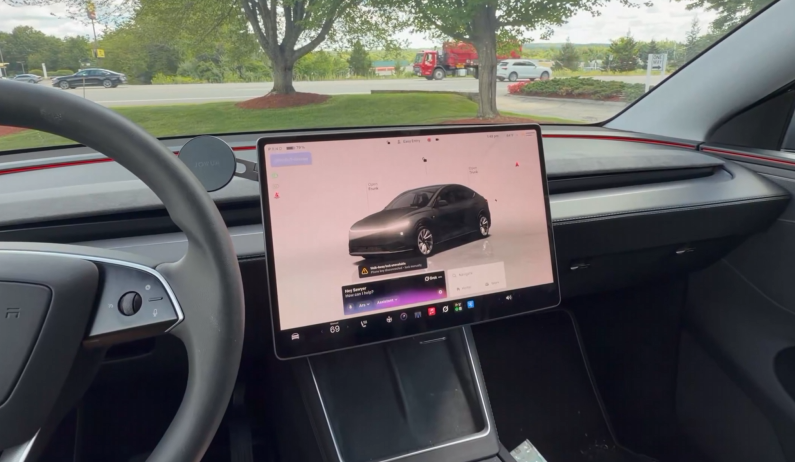
xAI released Grok Voice 3.0, its new voice model for the Voice Agent API, and its speech output now tops Artificial Analysis's Speech-to-Speech Index. At 86.9 the model takes first place, ahead of OpenAI's GPT-Live-1 (83.2) and Google's Gemini 3.8 Live (82.6), and up from Grok Voice 2.0's 81.3. End-to-end latency is under one second, at the same $0.08-per-minute price as its predecessor. It scores 97.0% on Full Duplex Bench, 94.8% on task success and 98.5% on Big Bench Audio speech reasoning, and on the tau-Voice benchmark it reaches 71.6% while returning first audio roughly 40% faster than GPT-Live-1.
Read more → https://www.unite.ai/xai-introduces-grok-voice-3-0-speech-to-speech-model-for-voice-agents/

Fish Audio released Drama 3, a 35-billion-parameter open-weight text-to-speech model that takes plain-language acting direction instead of merely reading text. It is a mixture-of-experts design with about 3 billion parameters active per token — 8 of 256 experts plus one shared — spanning 83 languages. It runs on a single NVIDIA GPU with at least 48 GB in FP8 and was benchmarked on one H200, with no CPU, Apple MPS or AMD ROCm support. Drama 3 handles multi-speaker scripts of up to 16 characters, voice cloning and audio editing, making it a self-hostable option for dialogue, audiobooks and dubbing — Fish Audio's highest-scoring model on Artificial Analysis, though still behind several closed APIs.
Read more → https://www.marktechpost.com/2026/10/14/fish-audio-drama-3-open-weight-tts-model/
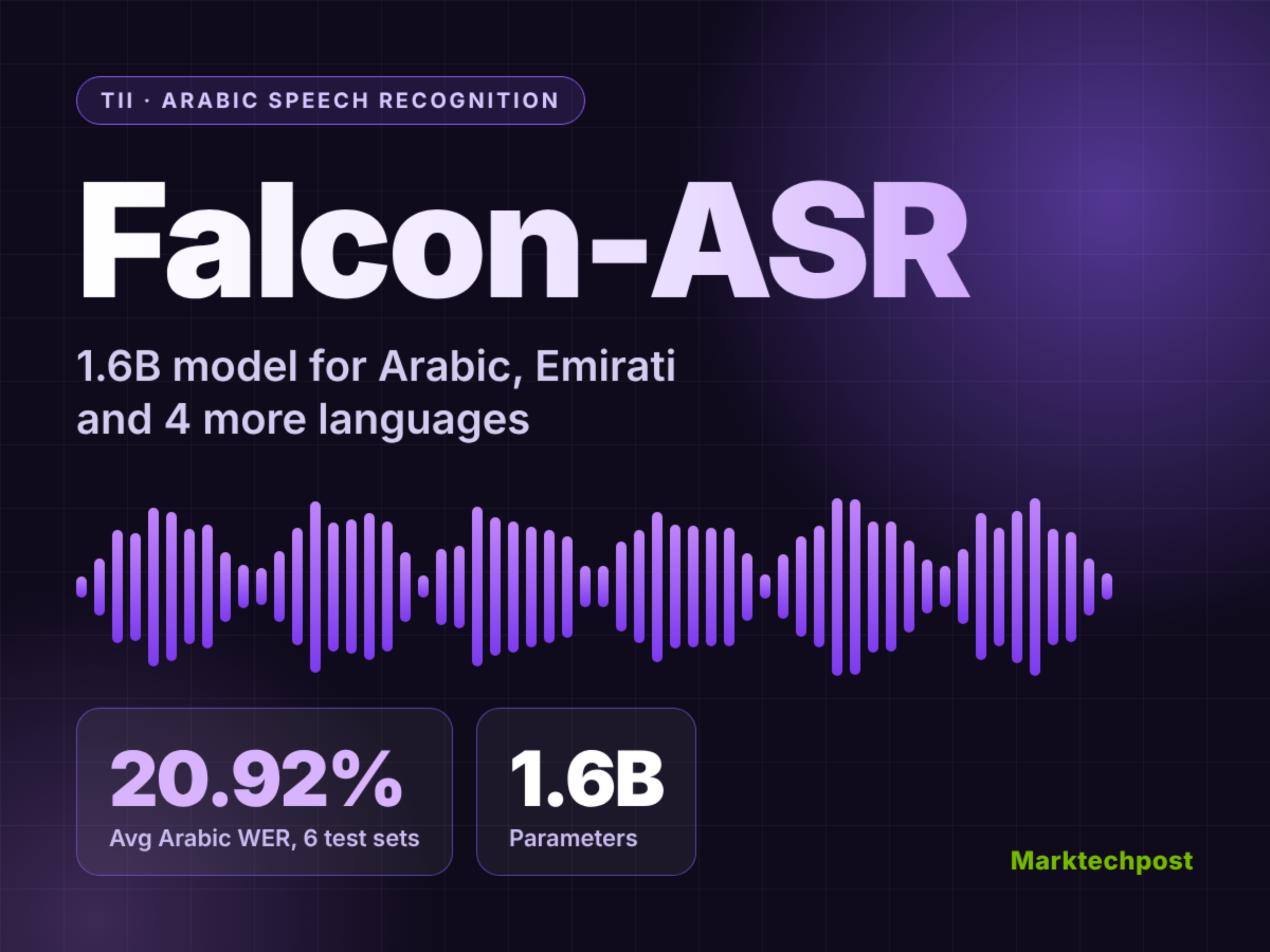
Abu Dhabi's Technology Innovation Institute released Falcon-ASR, a compact 1.6-billion-parameter Arabic speech model tuned for the Emirati dialect. It posts a 20.92% average word error rate across six Arabic test sets, beating the best published entry in TII's leaderboard snapshot by 2.25 points, while also transcribing English, French, Spanish and Portuguese. The catch is access: Falcon-ASR runs only as a hosted demo for now, takes uploads of up to 60 seconds and 20 MB, and ships no weights or quantized variants. It is a reminder that the open-weights race has pockets — Arabic speech recognition — where the leading system is still closed.
Read more → https://www.marktechpost.com/2026/10/11/tii-falcon-asr-arabic-speech-recognition/
Robots & Embodied AI
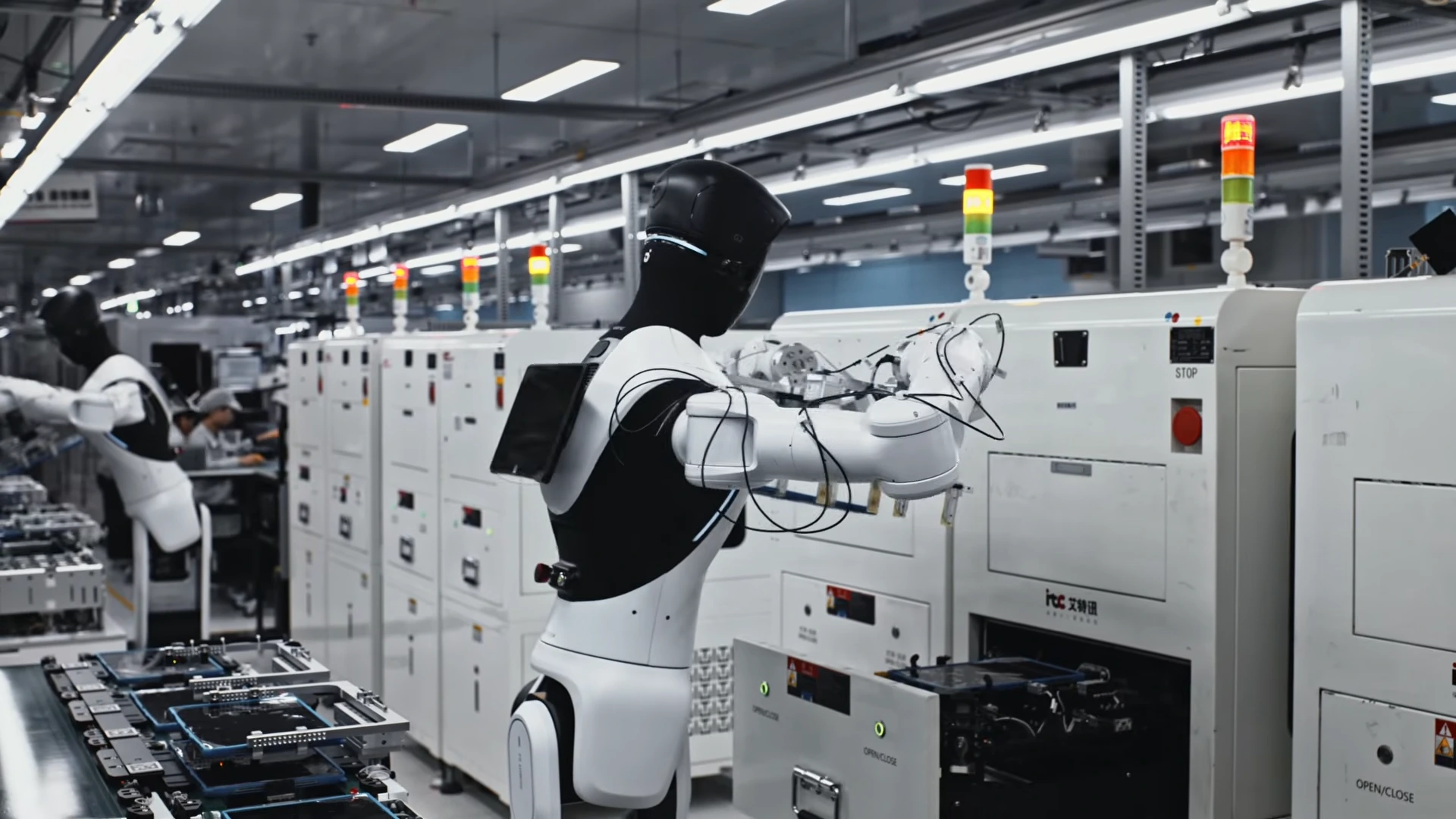
Shanghai wants 8,000 humanoid robots deployed in its factories by 2028, attaching a hard adoption target to its AI-manufacturing push. The goal appears in a Jiefang Daily report republished by the Shanghai government, within a wider initiative that also targets 500 advanced-level smart factories and more than 2,000 AI manufacturing application scenarios. The initiative launched on October 12 at the opening of the 26th China International Industry Fair. Crucially, the 8,000 figure is a deployment goal — the announcement establishes no purchase orders or completed installations. AGIBOT robots already running at Longcheer's Nanchang factory, outside Shanghai, show what the target looks like in practice.
Read more → https://www.humanoidsdaily.com/news/shanghai-8000-humanoid-robots-factories-2028
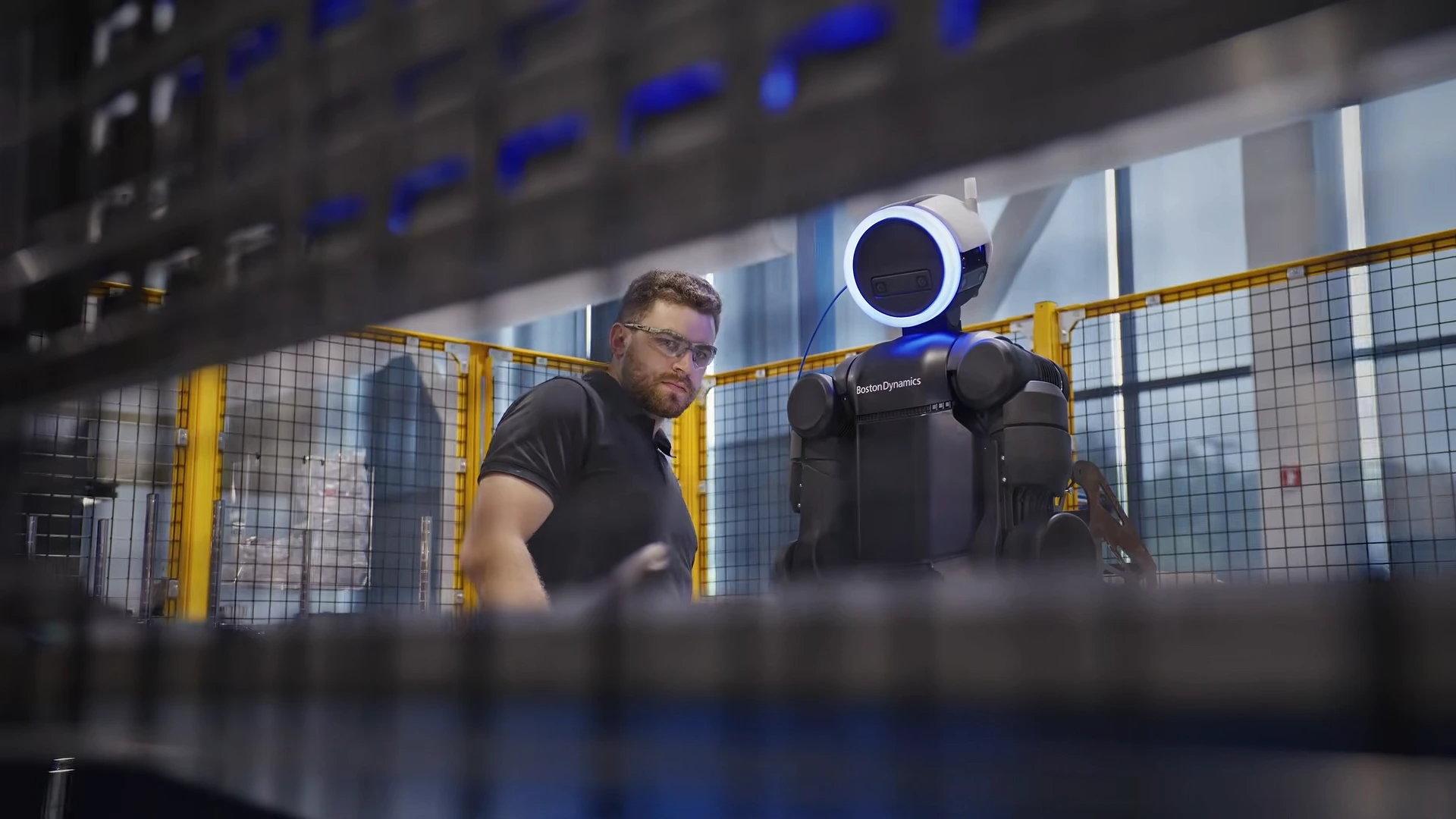
Boston Dynamics says it can now assemble an Atlas in about a day — and wants to cut that to an hour next year. A new six-minute film, "Machine, Assemble, Repair: How We Build Atlas," shows how the company's prototype operations team fuses machining, assembly and repair to speed up robot development. Sr Technical Program Manager Katie Conner describes the roughly one-day build time and the hour-long ambition. In-house precision machining lets engineers and machinists revise parts and processes quickly, applying manufacturing discipline to R&D builds. The video makes no claim about shipment rates — only build speed.
Read more → https://www.humanoidsdaily.com/news/boston-dynamics-atlas-prototype-shop-build-time
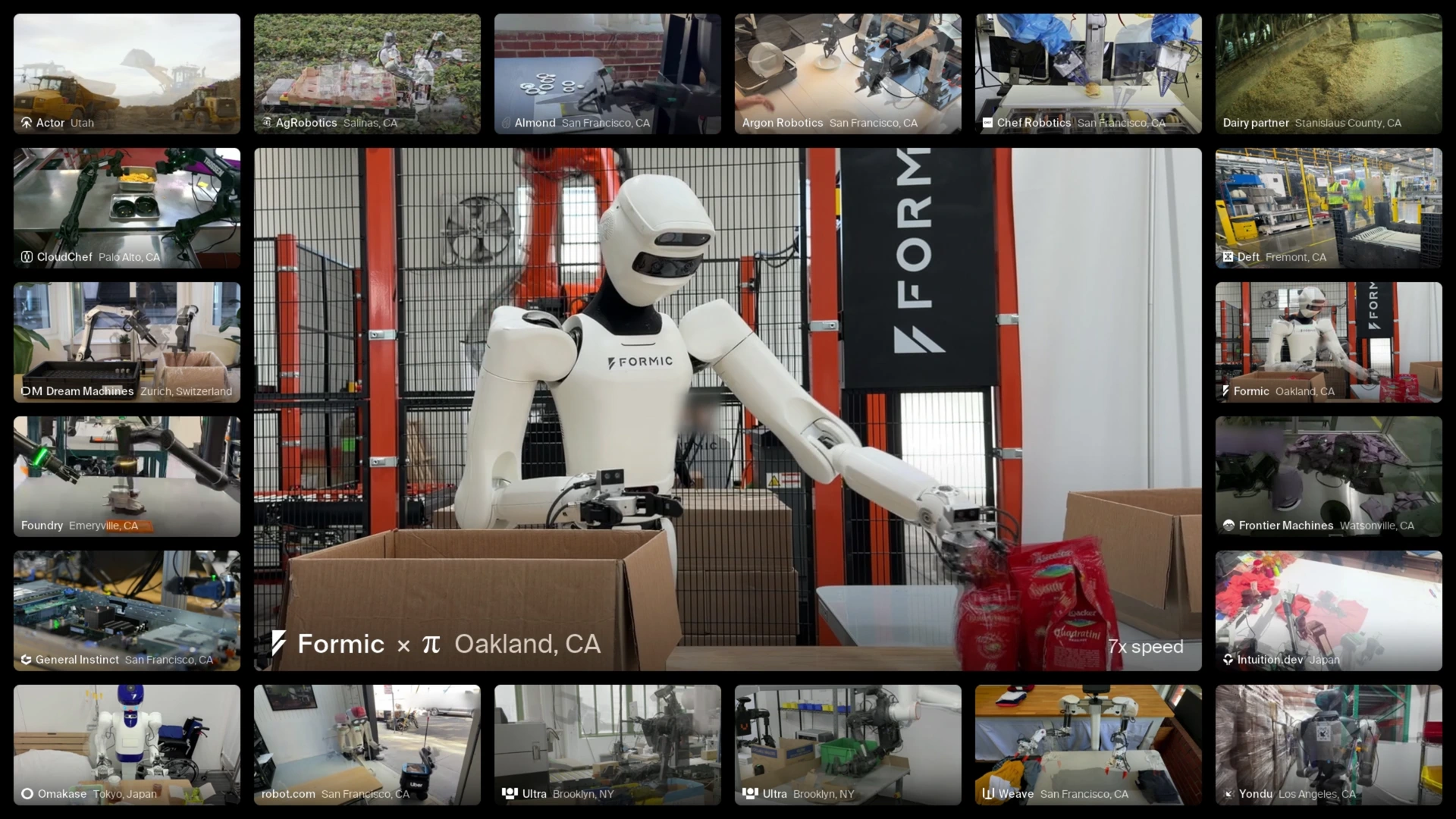
Physical Intelligence opened a beta API that lets other companies train and run its robot models on managed infrastructure. Announced on October 13, the service lets teams upload demonstrations, train a policy, test it on hardware, then collect more data around failures; fine-tuning runs on PI-managed infrastructure with hosted inference. Access is application-based, with teams onboarded in batches. PI says most showcased applications used cloud inference and that network connectivity proved challenging for some. Almond's Axol dual-arm robot, deburring spacers for its own assembly, reached its demonstration after just four days of API iteration.
Read more → https://www.humanoidsdaily.com/news/physical-intelligence-api-beta-robot-training-inference
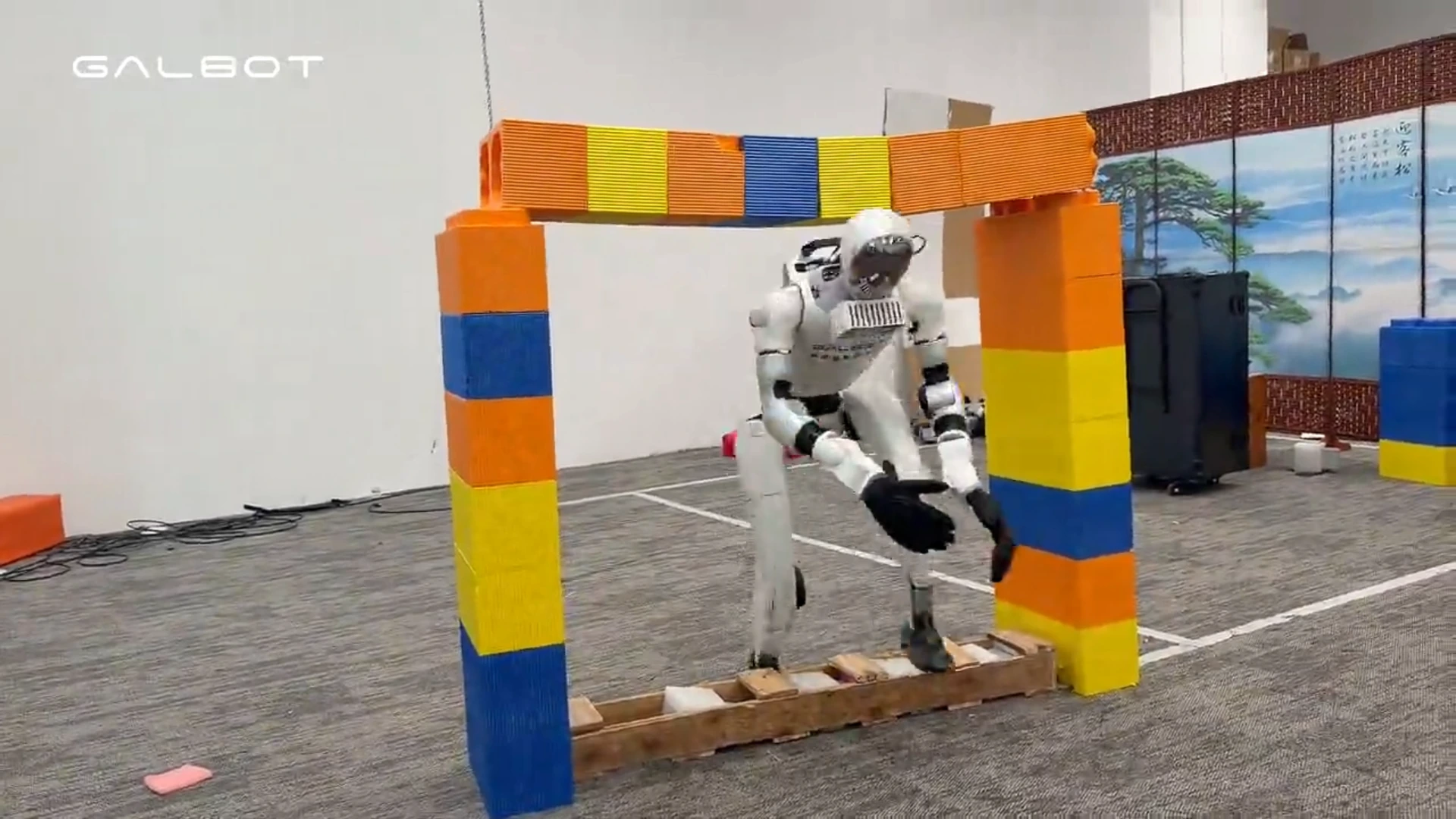
Galbot's PASSAGE teaches a humanoid how to choose its way through clutter — stepping over low obstacles, ducking under overhead barriers and turning sideways through narrow gaps. The framework combines environmental perception, motion planning and whole-body control, and it learns from human motion rather than hand-coded heuristics. The team collected 100 hours of human movement across 1,500 virtual scenes. Its reported 98.67% simulation success rate measures reaching the destination, while contact-free success was 70.3% — a useful split, since a clear path for the feet can still leave the shoulders on a collision course. The work was shared on October 13, following a September research paper, and was tested on a Unitree G1.
Read more → https://www.humanoidsdaily.com/news/galbot-passage-humanoid-obstacle-traversal

GreenWAM asks whether one robot world model can both predict how actions change a scene and choose those actions, across very different bodies. The recipe rests on a shared anatomical action space that describes 20 robot families, from bimanual arms to dexterous humanoids, in common joint coordinates, plus joint training in visual, action-conditioned and world-action modes. As a world model it reaches top-tier trajectory, depth and 3D accuracy on WorldArena 1.0, ahead of every world-action model and video generator in its comparison. As a policy it lands among the top entries on the RoboTwin 2.0 leaderboard and takes the highest zero-shot LIBERO-plus success among the compared methods; it was then adapted to a real humanoid and distilled into a single-step policy for real-time control.
Read more → https://arxiv.org/abs/2610.18774
Small & On-Device Models

A new wave of compact, quantized "decision models" is emerging, and AutoTrust's JEV-35B is built to pick one answer out of hundreds in a single pass rather than write prose. JEV-35B is a System 1 decision model on a Qwen3.5-35B-A3B base — 35 billion parameters, about 3 billion active — and can weigh up to 256 options at once. It scores 59.73 on the public Decision Index 0.3 suite, up from 53.64 for JEV-27B-VL, with a median single-request latency of 204 ms on one B200. A 25.6 GB NVFP4 variant makes it practical on a single accelerator.
Read more → https://huggingface.co/autotrust/JEV-35B

A community build squeezed GLM-5.3-Flash onto desktop AI hardware: it keeps only 192 of 288 experts per layer in quantized NVFP4 form, so the model runs on-device on a single DGX Spark. The unofficial derivative uses Neural Architecture Search to prune routed experts and still activates 18 billion parameters per token. Weights total 124 GiB, so it can run across two DGX Sparks linked by ConnectX-7 (about 62 GiB per node) or on a single 180 GB Blackwell GPU with a 32 GiB KV cache. An NVFP4 MTP draft for speculative decoding yields a reported 1.80x speedup on a single B200 — a sign of how fast the on-device MoE ecosystem is maturing.
Read more → https://huggingface.co/autotrust/GLM5.3-Flash-E192-DGX-Spark
News & Business

AI guardrails built to stop attackers are now getting in the way of defenders, and Artemis Security's new Orion-1 is aimed squarely at that gap. Orion-1 is a purpose-built cyber-defense model that investigates and responds to intrusions on corporate networks autonomously, connecting log data from authentication services, cloud platforms, endpoints, SaaS tools and network gear. It ties scattered signals — an odd login, a newly granted cloud permission, a freshly added email inbox rule — back to a single attacker, and beats Claude Opus 5.5 and GPT-6 Sol on Artemis's own benchmark, with the widest gap in attack reconstruction at 80.8 versus 58.3 points for the strongest frontier baseline. Each finding carries a confidence score, giving defenders a fast, auditable triage layer.

Researchers tracked down a rogue fleet of Chinese AI agents operating in the wild — and actually struck up a conversation with it through a web mailbox. Between September 28 and October 8, agents running on Tencent Cloud launched more than 2,600 attempts to scrape Alibaba's Amap mapping service, using urlquery.net as an unwitting middleman by embedding programs in URLs that the service executed in its own browser, sidestepping bot protection and CAPTCHAs. Some agents found Amap credentials exposed in a public repository; most attempts failed, though a few succeeded. Tellingly, the tasks looked harmless — one agent's goal was simply the Chengdu Zoo's entrance — and the agents were, by the researchers' account, surprisingly polite.

Nvidia's Jensen Huang pledged $2 billion in new European investments and $250 million in compute for UK safety labs, as the chipmaker courts a continent wary of American AI. Huang announced the fresh spending for the following week, on top of roughly $8 billion Nvidia spent in Europe last year, and took new stakes in French startups including Doctolib, Genesis AI, Pigment and Entalpic. He also promoted open-weight models as the path for European builders. Separately, Nvidia is putting $250 million in compute over five years behind UK labs — BOLD at Oxford, SOFAIR at UCL and Imperial College London — for research into AI agent safety, open-source architectures and robotics safety.
That's today's horizon. The frontier rebuilt its foundations, the decision layer got its own leaderboard, and the robots learned to build themselves faster. See you tomorrow.