In this edition
- Frontier & Text Models (5)
- Image & Vision (1)
- Video & World Models (1)
- 3D & Reconstruction (1)
- Audio, Voice & Music (2)
- Robots & Embodied AI (3)
- Small & On-Device Models (1)
- Papers & Research (1)
- News & Business (3)
Anthropic put an agent in the background and told it to keep working while you sleep — and within hours, four of America's largest banks said they will not let that agent anywhere near a customer account. The same week, a startup shipped a coding model that its own AI system largely designed, DeepSeek raised $15 billion, and IBM squeezed a six-language speech model into 2.3 billion parameters. Capability keeps arriving faster than the paperwork meant to govern it.
Frontier & Text Models

Anthropic has opened a research preview of Claude Duet, an always-on agent that runs on cloud computers and keeps working on tasks while the user is away. The standalone app connects to outside services including Gmail, Slack and Stripe, and can schedule meetings or prepare billing on its own initiative. It always asks for approval before sensitive steps such as payments or sending messages, and bank transfers are blocked outright. Anthropic is pitching it to professionals and small business owners who have "more on their plates than they can track"; the app runs on iOS, Android and the web. It is a direct answer to xAI's Grok Bot, Meta's Muse and OpenAI's Dots.
DeepSeek has raised roughly $15 billion at a $74 billion valuation, with Tencent, CATL and other Chinese technology and industrial groups backing the round. The Hangzhou company secured about 100 billion yuan ahead of a potential initial public offering as early as 2027. It is one of the largest fundraisings in China's AI sector, and it lands just over two weeks after Bloomberg reported the company was close to at least 80 billion yuan — already past its original 50 billion yuan target. DeepSeek is positioning the capital against OpenAI and Anthropic at home and abroad.

Recursive has released Flint, a 40-billion-parameter mixture of experts coding model that an internal AI system called "Eureka Machine" helped design end to end. The model card puts it at 39.8 billion total parameters, activating about 2.5 billion per token across 49 layers and 256 routed experts, and it is built for fast local execution on Apple and Nvidia hardware. On Recursive's own release evaluations it scores 54.9% on Terminal-Bench 2.1, 89.7% on SWE-bench Pro v2 and 74.2% on SWE-bench Verified. The weights are on Hugging Face under Apache 2.0, and the company's stated goal is an AI system that can take charge of its own further development.
Read more → https://the-decoder.com/recursive-shows-first-result-of-its-ai-driven-research-process-with-flint/
Google's new Agent Compute Engine gives every Gemini agent its own hardware-isolated micro virtual machine, and the company says it can fit ten times as many agents on a single server. Each agent runs inside a microVM secured by Google's Titanium chip; when an agent goes idle its VM pauses and frees the machine for others, and shared memory between VMs cuts the per-agent cost. Google also open-sourced Agent Substrate, a Kubernetes runtime for the same job. In an internal test with 200,000 agents, suspend and resume took under 500 milliseconds. The service already powers Gemini and opens for preview in the coming months, alongside new token tracking and model routing controls.

OpenAI, PerturbAI and Scripps Research ran thousands of agents over a whole-brain CRISPR atlas and finished in 32 minutes an analysis the team estimates would take humans months to a year. Each agent took a single gene perturbation on GPT-Rosalind, analysed how the cells responded, and searched the literature for an explanation. In blind comparisons, human experts preferred the distributed agents' reports over a single agent's output 75 percent of the time. The run turned up unexpected differences between two disease-related genes and a possible link between cholesterol regulation and neurodegeneration, and the resulting "Reasoning Atlas" is published on GitHub.
Image & Vision

BRIA has published FIBO 2.0, an image model family built around what the company calls "hyper-controllability" rather than prompt wrangling. Instead of inferring intent from prose, Fibo consumes an explicit visual state — geometry and bounding boxes, deterministic RGB values, camera angle and focal length, lighting direction and colour temperature, layering and material attributes — so the same input renders the same image. The release ships a dev checkpoint and an edit-turbo variant, both using a Qwen3-VL-4B text encoder with a FLUX.2 VAE. The catch is the licence: the weights are CC BY-NC 4.0, so commercial use requires a separate agreement with BRIA.
Read more → https://huggingface.co/briaai/Fibo-2.0-dev
Video & World Models

Autoregressive video generation models can produce smooth continuations without actually modelling how a scene evolves, and a new auxiliary training objective fixes it. Under teacher forcing, strong temporal redundancy lets local visual continuity act as a shortcut for denoising the current chunk, which removes the pressure to predict change. The authors introduce Future Chunk Prediction, which predicts temporally separated chunks without access to the intervening frames, needs no extra pretrained visual encoder, and leaves inference untouched. They report better physical plausibility than standard teacher-forced training at a lower overall training compute budget.
Read more → https://arxiv.org/abs/2610.29989
3D & Reconstruction

RealMe turns sparse, low-resolution captures into immersive volumetric 3D video reconstruction, using a high-resolution generative model to fill in what the cameras never saw. Dense multi-view reconstruction still produces the best volumetric video, but the capture rigs are expensive enough to keep the format out of ordinary hands; earlier generative shortcuts traded away resolution and 4D consistency. RealMe instead builds auxiliary data from the capture itself, encodes it into latents, and enhances limited footage into 2K, 4D-consistent video for reconstruction. If it holds up outside the lab, the input side of volumetric video drops from a studio to a phone.
Read more → https://arxiv.org/abs/2610.30023
Audio, Voice & Music

IBM's Granite Speech 5.0 2B packs multilingual speech recognition and two-way speech translation into a 2-billion-parameter speech model. It handles English, French, German, Spanish, Portuguese and Japanese, was trained on 390,000 hours of audio, and supports keyword-biased recognition with lists of up to 2,000 terms. IBM built it by modality-aligning an intermediate checkpoint of granite-4.0-1b-base to speech, and claims better English short-form accuracy plus more robustness to noise, reverberation and distant microphones than the 4.1 model it replaces. Official Open ASR leaderboard results are dated October 21, 2026, and the weights are Apache 2.0.
Read more → https://huggingface.co/ibm-granite/granite-speech-5.0-2b

Gradium's phonon-31m is a 31-million-parameter speech synthesis model whose quantized weights are 64.5 megabytes — small enough to run in a browser tab, on a phone, or on a laptop CPU. It streams audio while it is still generating, producing mono 24 kHz speech from a flow-matching transformer that predicts one 80 ms frame at a time. The model builds on Kyutai's Pocket TTS and the Mimi codec, and ships under Apache 2.0. It is the clearest sign yet that decent on-device voice is becoming a commodity file rather than an API call.
Read more → https://huggingface.co/gradium/phonon-31m-en
Robots & Embodied AI
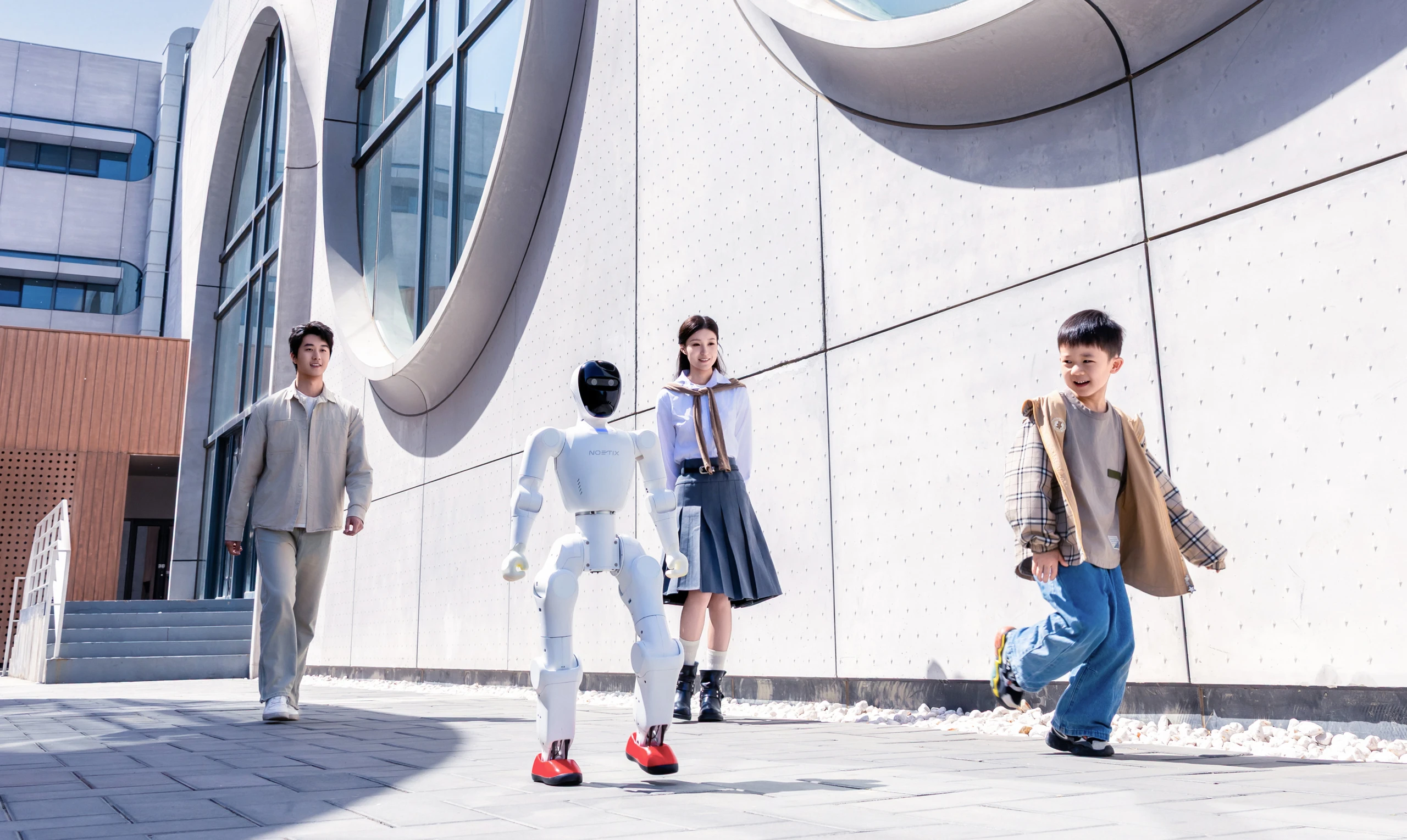
Beijing humanoid robot maker Noetix Robotics has confidentially filed for a Hong Kong IPO that could raise several hundred million dollars. Bloomberg reported the filing on October 22, identifying the company as Songyan Power Beijing Technology Co. and saying it could list as early as 2027; sources cautioned that size and timing may still change, and Noetix did not comment. It makes Noetix one of the first Chinese humanoid startups to test public markets rather than private rounds — a different kind of stress test for the sector's valuations.
Read more → https://www.humanoidsdaily.com/news/noetix-robotics-hong-kong-ipo-filing
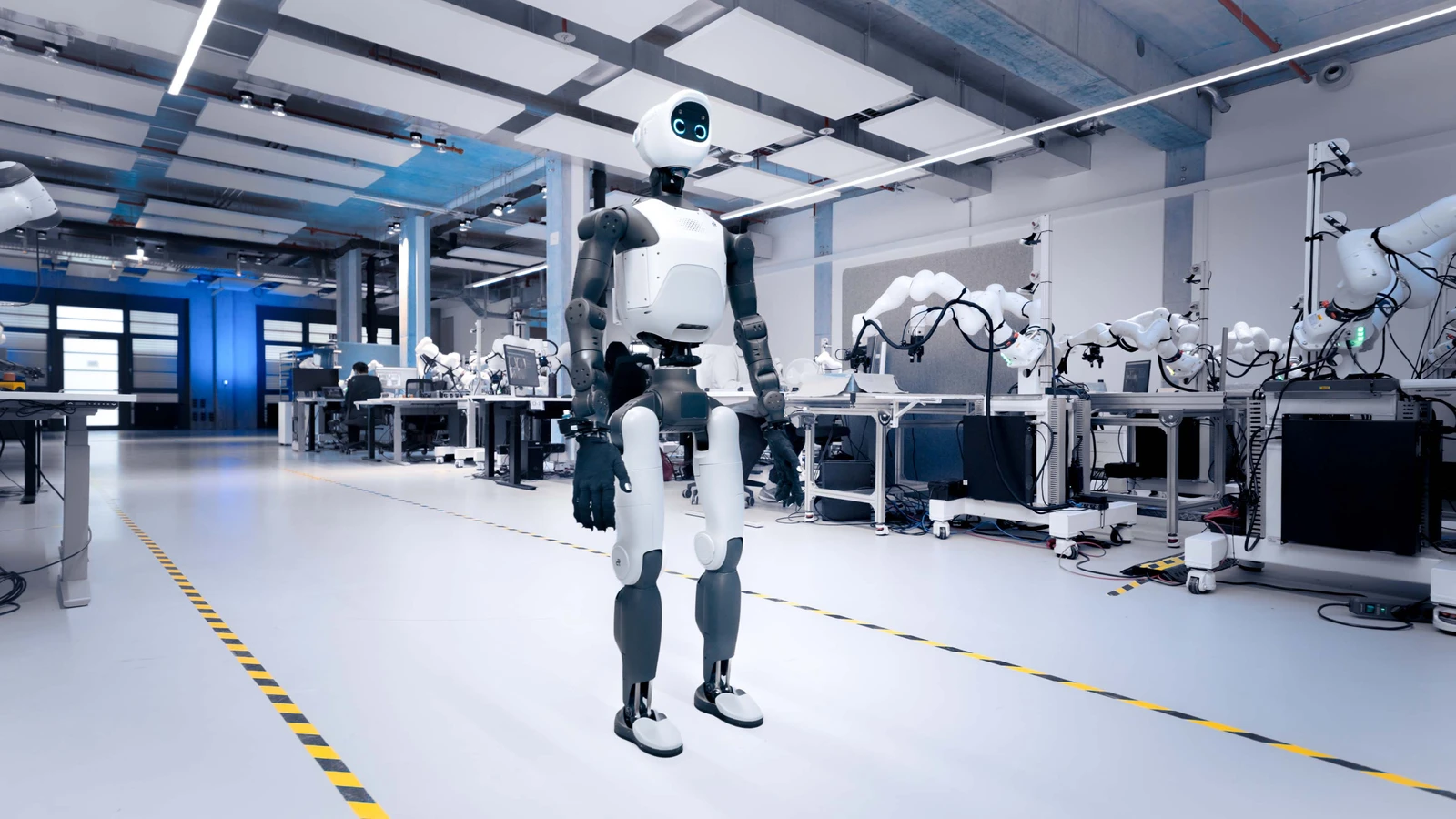
Agile Robots has unveiled Agile ONE SN, a 1.4-metre research humanoid built around NVIDIA's robotics stack and onboard Jetson Thor compute. Announced at GTC Berlin on October 21, it pairs tactile hands with preconfigured Isaac GR00T software, giving labs an integrated starting point instead of a bare platform to wire up themselves. Availability is scheduled for early 2027. The pitch is less about a new body than about shrinking the setup tax that keeps academic robotics groups from reproducing each other's results.
Read more → https://www.humanoidsdaily.com/news/agile-one-sn-nvidia-isaac-gr00t-research-humanoid

DONIC is the first generalist tracker for bimanual dexterous manipulation, jointly trained across operation categories and human-motion sources. Most dexterous reference-tracking work covers one hand and a narrow range of interactions, which leaves out the two-handed contact-rich behaviour people actually perform. The authors also built BiHOI, a multi-view dataset of 1,575 sequences across 229 objects with sustained bimanual interaction, and retargeted the reconstructed interactions into robot references. DONIC combines proximal policy optimisation with behavioural cloning in a loop that recycles verified successful executions back into training.
Read more → https://arxiv.org/abs/2610.29997
Small & On-Device Models

KRAFTON AI has released Raon-1 mini, a 30-billion-parameter model with roughly 4 billion active, trained from scratch rather than fine-tuned from someone else's base, and shipped with quantized GGUF and MLX builds for local deployment. The Korean game publisher's research arm built it for Korean conversation and agentic tasks, with built-in thinking and a 256K context window under Apache 2.0. It is a preview, not a final model, and access is gated behind a request form — a reminder that "open-weight" increasingly means "open after you tell us who you are." A free playground is running for a limited time.
Read more → https://huggingface.co/KRAFTON/Raon-1-mini-preview
Papers & Research

AI Singapore's SEA-LION-Guard-v2 family extends a content-moderation model into action governance for agents, and the 31B version tops both headline columns of its own safety benchmark. Built on Gemma-4-31B-IT with a 256K context window and an MIT licence, it covers eight Southeast Asian languages. On SEA-SafeguardBench it scores 93.5 AUPRC on general safety and 78.7 on SEA-specific safety, against 91.9 and 74.0 for Qwen3Guard-Gen-8B and 92.4 and 78.1 for the older 12B SEA-Guard. What those rivals do not do is evaluate multi-turn conversations, tool calls and tool responses, or support "Bring Your Own Policy" so operators can enforce their own rule set; smaller E4B and E2B siblings cover cheaper deployments.
Read more → https://huggingface.co/aisingapore/Gemma-SEA-LION-Guard-v2-31B
News & Business

Demis Hassabis now believes AGI could arrive within two to three years, down from the three to five years he was saying earlier this year. The Google DeepMind founder and Nobel laureate defines AGI as a system matching the full cognitive range of the human brain, and told the Wall Street Journal that his estimate "keeps moving closer to the present." His litmus test is an "Einstein test": could a system trained only on pre-1901 knowledge reproduce Einstein's 1905 papers? Since stepping back from day-to-day operations at DeepMind he has focused on Isomorphic Labs, and he has pitched an industry-funded oversight board under government control to vet models before release.
Read more → https://the-decoder.com/deepmind-founder-hassabis-shortens-agi-timeline-from-five-to-two-to-three-years/

Major US banks are locking out AI agents that log in with customer-supplied credentials, Axios reports. Morgan Stanley, JPMorgan, Bank of America, Wells Fargo and Citi are restricting external agent access because it violates policies requiring account holders to log in personally. Morgan Stanley blocks agents entirely, and the others are following; some agents appear to act without direct user instruction, and many banks cannot tell whether an agent is acting on a customer's behalf or on its own. The banks say customers want the capability, but for now most will only consider read-only access — agents that can see account data but not move money. It is a concrete limit on the "agent does your errands" story, set by risk officers rather than regulators.
Read more → https://the-decoder.com/major-us-banks-are-locking-out-ai-agents-that-log-in-with-customer-credentials/

Symantec caught an offensive AI agent in a honeypot that hijacks unprotected language models on the internet and runs attacks on its own. Once it gains access to an exposed model it scans for more targets, exploits flaws in common server software, steals databases and credentials, and installs cryptominers — for up to 100,000 steps with no human involvement. The agent bypasses model safety rules through a five-layer jailbreak, and Symantec calls the pattern "LLMjacking": the theft of access to somebody else's model, with the owner stuck paying the compute bill. The attackers handed researchers the full attack plan by sending their working prompt to a decoy service.
That is the shape of this week: the capability arrived first, and the permission slips are being written afterwards.