In this edition
- Frontier & Text Models (7)
- Image & Vision (1)
- Video & World Models (1)
- Audio, Voice & Music (3)
- Robots & Embodied AI (3)
- Papers & Research (2)
The frontier spent the week arguing about money and correctness rather than raw capability. OpenAI quietly slid a cheaper 1.05-million-token mid-tier model under its flagship, Moonshot post-trained a 2.8-trillion-parameter successor and kept the weights open, and Anthropic both filed an S-1 that could raise more than a hundred billion dollars and put Claude to work producing 180 million lines of formal proof that other people's software is correct. Below that, the audio stack went real-time and multilingual, four robotics teams shipped production hardware milestones, and a 39.8-billion-parameter coder that activates only 2.5 billion of them came within reach of the best coding models in the world.
Frontier & Text Models
OpenAI's GPT-6.1 Terra lands as the mid-tier sibling to flagship Sol, packing a 1,050,000-token context window at $1/$5 per million input/output tokens on OpenRouter. Positioned for everyday agentic, coding and writing work, it is notably strong at screenshot and on-screen content understanding. It ships to Plus, Pro, Enterprise and Edu users in ChatGPT Work and Codex, and to developers via the API as gpt-6.1-terra. Released 2026-10-26.
Read more → https://openai.com/index/introducing-gpt-6-1-terra/
Moonshot's Kimi K3.1 Pro is a flagship open-weight multimodal reasoning model, a heavily post-trained successor to Kimi K3 that retains the 2.8T-total / 104B-active parameter base and 1,048,576-token context. Built on Kimi Delta Attention and Attention Residuals with native vision, it adds substantially more post-training compute on top of K3. A companion "Highspeed" variant is claimed capability-equivalent, though no separate benchmark table is published. OpenRouter lists it at $2/$10 per million input/output tokens. Released 2026-10-23.
Read more → https://openrouter.ai/moonshotai/kimi-k3.1-pro

Anthropic's Frontier Red Team, with partner Theorem, had Claude formally verify existing software, producing roughly 180 million lines of mathematical proof code in a few weeks. Claude translated crash tests from 123 OSS-Fuzz open-source libraries into mathematical problems, analysed compiled machine code, and emitted proofs that the independent Rocq checker verifies with almost no human reviewers. Anthropic calls the process "fully autonomous" proof generation, surfacing hundreds of bugs conventional testing had missed. For scale: formally verifying seL4 took 20 person-years.
Read more → https://the-decoder.com/anthropics-claude-now-writes-code-and-proves-it-safe-automatically/
Anthropic filed its S-1 with the SEC on 2026-10-26, planning a Nasdaq listing under ticker "ANT" with reported valuation estimates of $1.5T–$2T and a potential raise of $100B+. The filing shows $16.3B in H1 2026 revenue, up from $1.16B a year earlier, and an $80.7B net loss driven mostly by noncash accounting charges tied to convertible financing instruments; the underlying operating loss narrowed to $693M from $2.14B. Share price and share count are not yet disclosed. A raise above $85.7B would surpass SpaceX's record IPO earlier this year.

Recursive released Flint, a 39.8B-parameter mixture of experts language model for coding agents that activates roughly 2.5B parameters per token, under Apache-2.0. The decoder-only MoE Transformer has 49 layers (2 dense, 47 MoE), 35 sliding-window plus 14 full-attention layers, and 256K context. It scores 54.9% on Terminal-Bench 2.1, 89.7% on SWE-bench Pro v2 and 74.2% on SWE-bench Verified. OpenRouter describes Flint as built by Recursive's autoresearch system Eureka Machine; quantised variants are prepared for NVIDIA and Apple Silicon.
Read more → https://huggingface.co/RecursiveSI/flint

KRAFTON AI released Raon-1 mini, a 30B-A4B mixture of experts language model trained from scratch for Korean conversation and agentic tasks. Released 2026-10-21 under Apache 2.0, it offers 256K context and joins the Raon open model family. The model is gated on Hugging Face, with access granted on request.
Read more → https://huggingface.co/KRAFTON/Raon-1-mini-preview

MemTensor released MemT-1.0-Nano, a memory-augmented language model that makes persistent, dynamically evolving memory intrinsic to computation rather than relying on full-context KV cache. Built on a Qwen3.6-35B-A3B backbone with 36B total and 3B activated parameters, it carries 451M trainable memory parameters and a 10M dynamic memory state, cutting storage roughly 66x versus full-context KV cache at 128K history. A Mixture-of-Storage design scales capacity; training used 34B tokens. Released Apache-2.0 with a tech report on arXiv 2610.26825.
Read more → https://huggingface.co/MemTensor/MemT-1.0-Nano
Image & Vision

Kromoss is a full fine-tune of MOSS-Image-Base for 1024px text-to-image generation, keeping the same architecture, inference pipeline, Qwen3.5-9B text encoder and FLUX.2 small decoder VAE as MOSS-Image-SFT, making it a drop-in replacement. The repo also ships two 8-step turbo LoRAs distilled from MOSS-Image-Base that run at 8 steps with CFG 1 and no negative branch; the recommended DMD2 LoRA was further trained with DMD2's GAN stage against real images for slightly more contrast and detail and the best PartiPrompts score. Trained on 704k images, checkpoint update 11000 with EMA weights. Apache-2.0.
Read more → https://huggingface.co/lodestones/Kromoss
Video & World Models

WorldCast is a framework for cinematic, world-consistent character video generation under large-angle camera motion, targeting the rotation, translation and radius-variation trajectories that existing methods struggle with. Such viewpoint changes expose character regions unseen in the first frame, causing geometric distortion, appearance degradation and identity drift. The authors introduce CLACT, a large-scale character-centric dataset and benchmark of large-angle camera trajectories with accurate camera geometry and multi-view character observations. Published 2026-10-23.
Read more → https://arxiv.org/abs/2610.33135
Audio, Voice & Music

Mistral's Voxtral 3 is a four-model speech and audio family powering the company's voice-agent API, bundling real-time transcription, text-to-speech and a voice-agent SDK. It covers 50+ languages, adds emotional TTS and deep tool use. The TTS model is priced at $13 per million characters. Released 2026-10-20.
Read more → https://mistral.ai/news/voxtral-3/

Fish Audio's Drama 3 is a 35B-parameter (3B active) MoE text-to-speech model built for multi-character scenes and long-form content, with speaker tags supporting up to 16 characters in a single text. A hybrid full-plus-linear attention backbone feeds a Codebook-MTP audio decoder that causally decodes 10 codebooks over the whole sequence; experts run in FP8 with remaining weights in bf16. It supports voice cloning, natural-language control, automatic long-text chunking with per-chunk streaming, and runs on SGLang-Omni and vLLM-Omni from launch. Released under the Fish Audio research licence.
Read more → https://huggingface.co/fishaudio/drama-3

Tencent Hunyuan's Hy-SimulMT is a 30B-total / 3B-active real-time speech model for simultaneous bidirectional Chinese–English translation, with live voice cloning as the speaker talks. It continuously ingests incoming audio and emits both translated text and speech, with real-time voice cloning preserving the speaker's vocal characteristics. On Tencent's RealSI long-form audio eval it reached a StreamLAAL of about 3 seconds, the lowest among compared systems, and its GEMBA score beat compared open-source models and four of five commercial APIs. Apache-2.0; released 2026-10-22.
Read more → https://huggingface.co/tencent/Hy-SimulMT-30B-A3B
Robots & Embodied AI
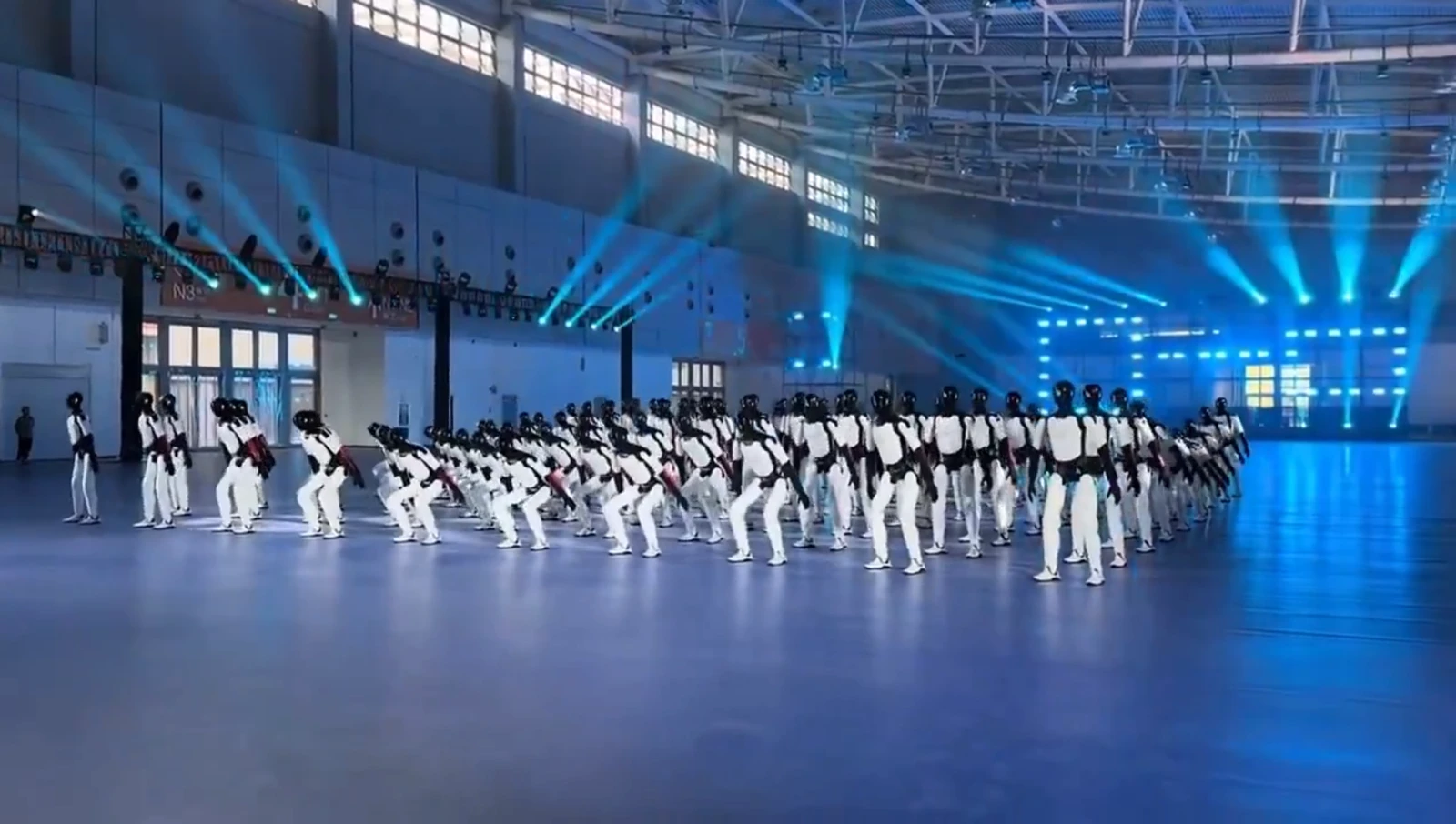
AGIBOT coordinated 110 Expedition A3 humanoids in a Guinness-certified dance performance in Jinan, setting a humanoid dance record. The 5-minute-43-second routine used standard production machines, not specially built units, orchestrated via AGIBOT's LinkBots fleet-control system with ultra-wideband positioning for formations, wave patterns and countdown numerals. A Guinness representative confirmed the final count of 110 robots, per Pandaily citing Chinese reporting. How this category differs from earlier Guinness robot-dance records remains unclear.
Read more → https://www.humanoidsdaily.com/news/agibot-110-humanoids-guinness-dance-record
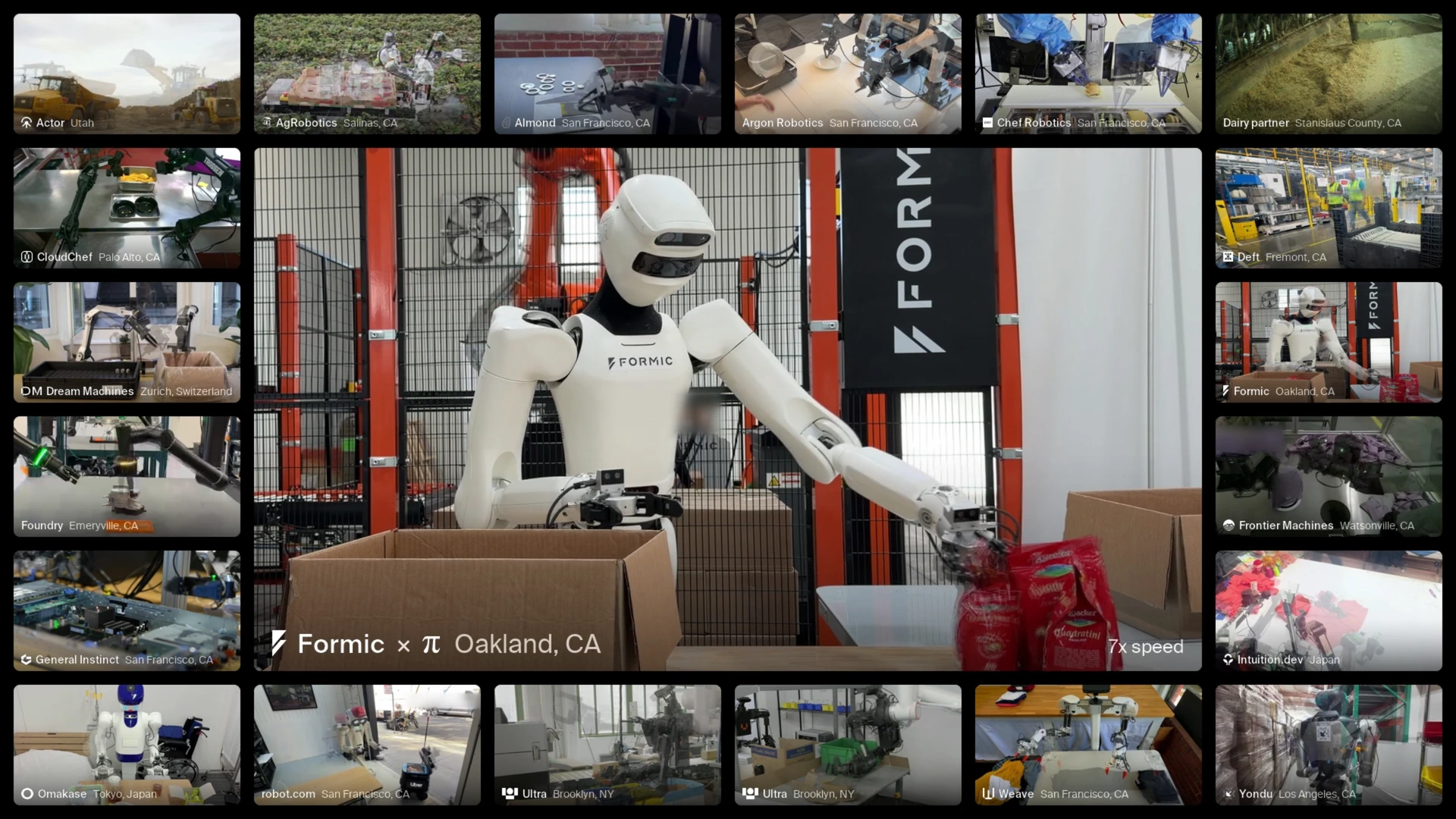
Physical Intelligence opened a beta API for training and running its robot models, positioning itself as the intelligence layer behind other companies' machines. Developers upload demonstrations, fine-tune on PI-managed infrastructure, run hosted inference, test on hardware, then collect failure data; access is application-based with batched onboarding. In a showcased case, Almond's Axol dual-arm robot was deburring spacers after four days of API iteration, while Actor's wheel loader loads dump trucks in a commercial deployment. Cloud inference was used in most demos, and network connectivity proved challenging for some.
Read more → https://www.humanoidsdaily.com/news/physical-intelligence-api-beta-robot-training-inference
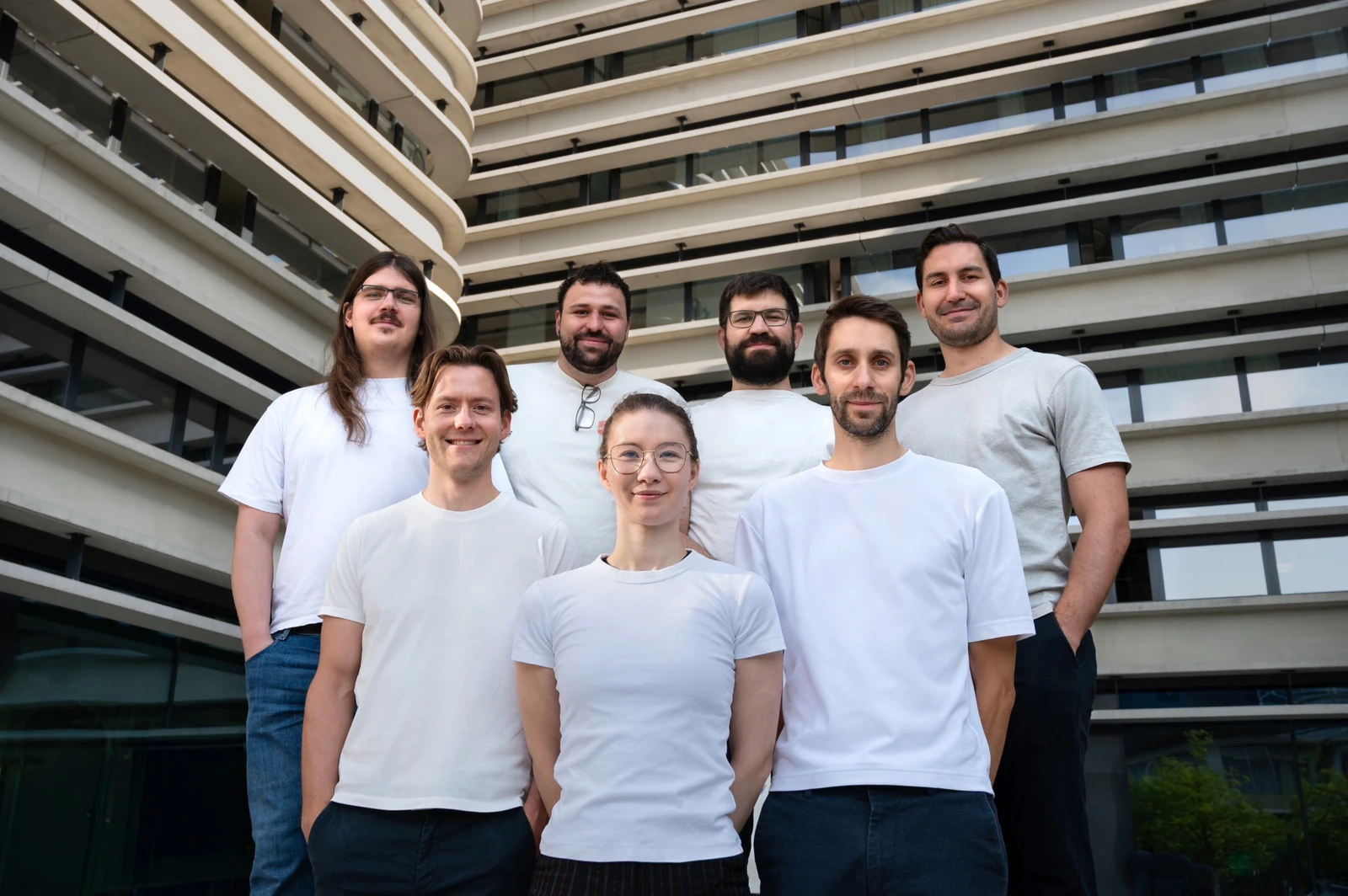
Enact raised $30 million at pre-seed from redalpine, Notion Capital and firstminute capital to build force-aware robots for small-batch factory assembly. Its approach pairs AI with force information from actuators, arguing that locating a connector doesn't tell a robot whether it has clicked into place. Enact is developing motors, control systems and models together rather than shipping software alone. First motors exist, but no pricing, delivery schedule or quantitative performance results have been disclosed.
Read more → https://www.humanoidsdaily.com/news/enact-30m-pre-seed-force-sensing-robots
Papers & Research

A new paper introduces TraceTrial-Bench, a benchmark for evaluating the harnesses that support LLM agents rather than just the models or end-to-end performance. The authors organise harness reliability into seven components: context, execution, governance, lifecycle, observability, tools and verification. They construct 95 expert-level, mechanism-oriented tasks with executable or state-based ground truth supporting semantically equivalent comparisons while preserving native harness behaviour. A Trajectory Tracing module captures agent execution traces; the paper was published 2026-10-23.
Read more → https://arxiv.org/abs/2610.32285

Kolab, a new dataset of over 115 hours of screen recordings, examines what happens to AI agents' contributions when humans collaborate on long-horizon tasks. It covers 50 professionals across 40 occupations working with agents on realistic problems, plus participants' judgments of collaboration and output quality. The authors argue humans value ongoing interaction such as plan revision more than single-attempt task completion, and that strong agentic benchmark scores don't imply effective real-world collaboration. The paper was published 2026-10-15.
Read more → https://arxiv.org/abs/2610.21109
That's the week: cheaper trillion-token context, open weights at 2.8 trillion parameters, a proof machine that checks other software, and a robot orchestra of 110.