In this edition
- Frontier & Text Models (6)
- Video & World Models (1)
- 3D & Reconstruction (1)
- Audio, Voice & Music (2)
- Robots & Embodied AI (4)
- Small & On-Device Models (2)
- Papers & Research (1)
Google DeepMind shipped Gemini 4 Carbon two weeks after Argon and it went straight to number one on the Artificial Analysis Intelligence Index — then Artificial Analysis rewrote the index itself and the open-to-closed gap widened from 3 points to 12. The same day brought the counter-move: Mistral put transcription, synthesis and tool calling into one streaming pipeline, Nvidia shipped a 30B speech model that runs on a single GPU, and Baidu and OpenBMB both went after document parsing from opposite ends of the size curve. Below that, Physical Intelligence is reportedly raising at $20B with no revenue, Unitree's revenue is up 70% while its profit falls, and a security startup showed that AI agents can walk through a frontier lab's third-party software in under twelve hours.
Frontier & Text Models

Google DeepMind released Gemini 4 Carbon two weeks after Argon, taking the top spot on Artificial Analysis Intelligence Index v5.0 with a score of 59 versus Argon's 50. Carbon ranks first in four of the index's nine individual evaluations and blocks every tested indirect prompt-injection attempt on Gray Swan's benchmark, dropping the attack success rate from 0.7% to 0.0%. It leads SEC-bench Pro at 88.2%, reaches 54.8% on ExploitGym, and holds a wide first-place lead writing fixes on CWE-Bench. On Text Arena it scores 1,528 to edge Argon's 1,520; on Agent Arena it places second across more than 21,900 sessions with a median task cost of $1.80, 72% below first-place Claude Opus 5.5 Max. Answer accuracy rose from 48% to 58% versus Argon while hallucination climbed from 4% to 11%, still second-lowest; Vals AI puts Carbon second at 70.36% accuracy behind Claude Sonnet 5.5 at 70.85%. Introductory pricing is $2 per million input tokens and $10 per million output, same as Argon, with cached input at a 95% discount; cybersecurity experts get access first this week, followed by trusted partners via the Fairwind Program.

Artificial Analysis overhauled its Intelligence Index to v5, and Kimi K3.1 Pro fell from fourth place to ninth behind eight closed models. The gap between open models and the top of the leaderboard widened to 12 points, up from 3 previously, and 60 percent of the index now relies on private test sets to prevent "benchmaxxing" — training on known test questions. Grok 4.7 also lost 12 points. Researcher Nathan Lambert argues benchmaxxing is only part of the story, since many gains now come from reinforcement-learning environments resembling benchmarks, and multi-domain progress requires sophisticated RL infrastructure not every lab has. Closed test sets have a downside: outsiders can no longer spot prompt errors, and Artificial Analysis had to revise ambiguous and flawed questions in its AA-Omniscience benchmark for the new index.
Read more → https://the-decoder.com/new-artificial-analysis-index-widens-the-gap-between-open-and-closed-models/

Anthropic added new artifacts to Claude for Legal that verify citations, compare laws across countries, manage case files, track legislation and check contracts against internal guidelines. The model handles initial verification and links each statement to its source before a lawyer reviews the results. More than 60 integrations are in the legal directory, including Bloomberg Law, letting users connect their own databases without manual uploads. Goodwin, Harvey, Foley & Lardner and PwC also offer their own tools on the platform. Built-in settings enforce data protection rules and maintain client-required information barriers between teams.
Read more → https://the-decoder.com/claude-for-legal-now-verifies-sources-automatically-then-hands-the-file-to-a-lawyer/

At DevDay Exchange 2026 in Berlin, OpenAI mostly rehashed prior San Francisco announcements and said the Dots assistant should reach Europe "in a few weeks" after regulator talks. Personal Pro accounts in the EEA, Switzerland and the UK remain locked out, though certain business accounts already have access. Weekly active Codex users in Germany have grown twentyfold since January 2026, up from a more than sevenfold increase reported in June, and nearly one in five desktop users taps skills for documents, presentations or spreadsheets. Management again blamed extreme resource demands for shutting down Sora in March, saying customers mainly wanted coding models and agents and have barely asked for video-sequence understanding. OpenAI pitches access to 1.2 billion weekly ChatGPT users; the Agents API runs agent infrastructure itself and the Codex Harness stays open source.

Cathedral, a security startup founded by former DOGE employees, used AI agents to breach Anthropic's internal systems through third-party business software in under twelve hours. Per a draft report reviewed by The Washington Post, the agents reached meeting transcripts, salary data, job postings and Slack messages via external admin and sales programs, exploiting Anthropic's own bug bounty program. Anthropic confirmed limited access to sales, HR and IT systems including some customer and partner contact info, but said Claude chats, source code and model weights were never exposed; it shut down affected access points the same day and notified U.S. federal authorities. Anthropic red teamer Logan Graham accused Cathedral of violating bug bounty rules through incomplete disclosure, while former OpenAI employee Will Depue claimed Anthropic was downplaying full admin access to Slack — a claim Graham disputed. Graham warned that models half a generation behind the frontier are already capable enough for such attacks, calling for continuous in-house penetration testing and formal-verification-based software rebuilds.
At the Android Dev Summit, Google rebuilt its development environment around AI agents, launching "Bring Your Own Agent" in Android Studio Rabbit 2 via the open Agent Client Protocol. Developers can install and run more than 40 coding agents — including Claude Agent, OpenAI Codex and Google Antigravity — side by side through a built-in marketplace, with direct access to project structure, symbol resolution, the emulator and Logcat. Google shipped Android Bench 2.0 evaluating models on multi-day projects by functionality, time and cost, plus a Change Review verification tool, an XML-to-Compose migration assistant, and a YAML-based declarative build system called Lightbuild. Internal tests show agents finished UI tasks 77 percent faster with up to three times fewer tokens, and an A/B test with Claude Opus 5.5 found memory leaks nearly twice as fast while cutting token usage about 25 percent. Google also unveiled the XREAL AURA, the first wired smart glasses running Android XR at under 95 grams with a 70-degree field of view, priced at $1,099 and shipping from mid-November in the US, Canada and South Korea.
Video & World Models

The Efficient-Large-Model project released LongLive 2.0 Robot-L, an autoregressive model for robot video generation arriving at training step 3,972. The release contains only the online generator: 4,999,787,712 FP32 parameters across 825 tensors, with no optimizer, EMA or training states included. S, M and L denote training sequence length, not model size, and the matching inference runtime, VAE and text encoder must be supplied separately. All 20 Stage-L fixed-video validation gates were accepted; the final 24-video panel used 50 sampling steps, CFG 3.0 and base seed 20260711, which the authors describe as release validation rather than a safety or benchmark claim.
Read more → https://huggingface.co/Efficient-Large-Model/LongLive2.0-Robot-L
3D & Reconstruction

Hexels swap gaussian splatting primitives for planar hexagonal surface elements carrying a first-order spatial color field, cutting the memory needed for 3D reconstruction. Across 34 scenes, Hexels improve PSNR over memory-matched 2DGS by 4.53–7.38 dB while requiring lower training VRAM. Per primitive, they outperform 2DGS by up to 4.74 dB, use lower training VRAM and run 2.31 times faster in FPS. For 3D surface reconstruction, Hexels reduce error by 28.9% versus memory-matched 2DGS. The work is authored by Prakhar Kaushik, Soumava Paul and Alan Yuille.
Read more → https://arxiv.org/abs/2610.37668
Audio, Voice & Music

Mistral introduced Voxtral 3, a family of speech models plus a voice agent SDK that unifies listening, thinking, tool calling and speaking in a single real-time streaming pipeline. The transcription side covers 50+ languages, including all 24 official EU languages and many low-resource Asian and Indic languages, with diarization, context biasing for technical terms and end-of-turn detection so an agent can answer without waiting out a pause. Text-to-speech supports 35+ languages and 50+ dialects, with voices that adjust emotion, pace and emphasis to context, and a voice adaptation feature that reproduces a speaker's character and emotional range across languages from 30 minutes of audio. The Small transcription model is 4B parameters at $0.0035 per minute, and Mistral says it beats Whisper, Scribe v2 and Gemini 3.5 Transcribe on diarization and multilingual transcription. Everything runs through Mistral's EU-hosted API or self-deployed, so customers decide where audio is processed and whether conversations are retained.
Read more → https://mistral.ai/news/voxtral-3/

Nvidia released Nemotron 3.5 Transcribe, an open speech recognition model that takes text instructions and answers questions about the recording — 30 billion parameters, about 4 billion active per step, on one GPU. It transcribes 40 languages, translates 31 of them to or from English and identifies speakers in 13, handling recordings up to an hour long with as many as eight speakers. Nvidia says it processes 100 hours of audio in under three minutes on an RTX PRO 6000 Blackwell at NVFP4 precision. On Hugging Face's English Open ASR Leaderboard it ranks first among open-weight models at 5.33% average word error rate; on Artificial Analysis it scores 2.81%, close to Voxtral Small's 2.77% but with roughly a sixth of the active parameters. VoiceArena ranked it first of 14 systems on overlapping speech, and it dropped 8.32% of words against a median of about 31%. The bundled Granary v2 dataset carries about 844,000 hours of speech in 48 languages, and fine-tuning on recordings of Indian doctors cut the error rate from 30.8% to 11.8% in about 14 GPU hours on a single GB300. It does not do real-time.
Robots & Embodied AI
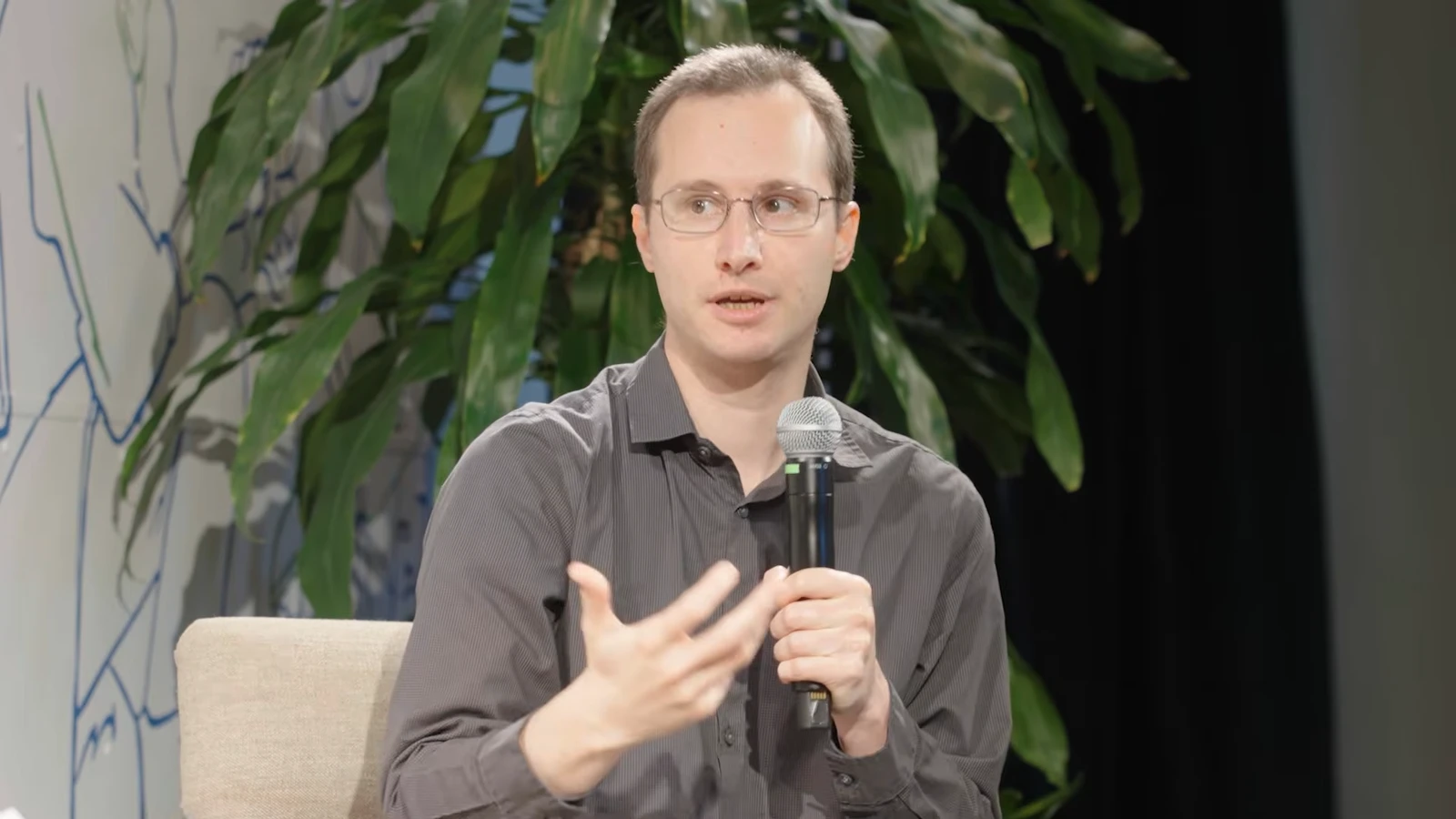
Physical Intelligence is reportedly discussing a funding round of at least $1 billion at a valuation of roughly $20 billion, with Avenir and Lux Capital in talks to lead. Bloomberg reports the financing has not been announced as completed and terms remain under discussion; PI previously raised at an $11.5 billion valuation earlier this year but still has no revenue. PI launched its API beta on October 13, letting developers upload robot data, fine-tune models on PI-managed infrastructure and run hosted inference. Co-founder Sergey Levine argues breadth helps, and that "the most important thing for building foundation models, paradoxically, is not the model itself—it's the data."
Read more → https://www.humanoidsdaily.com/news/physical-intelligence-funding-talks-20-billion-valuation
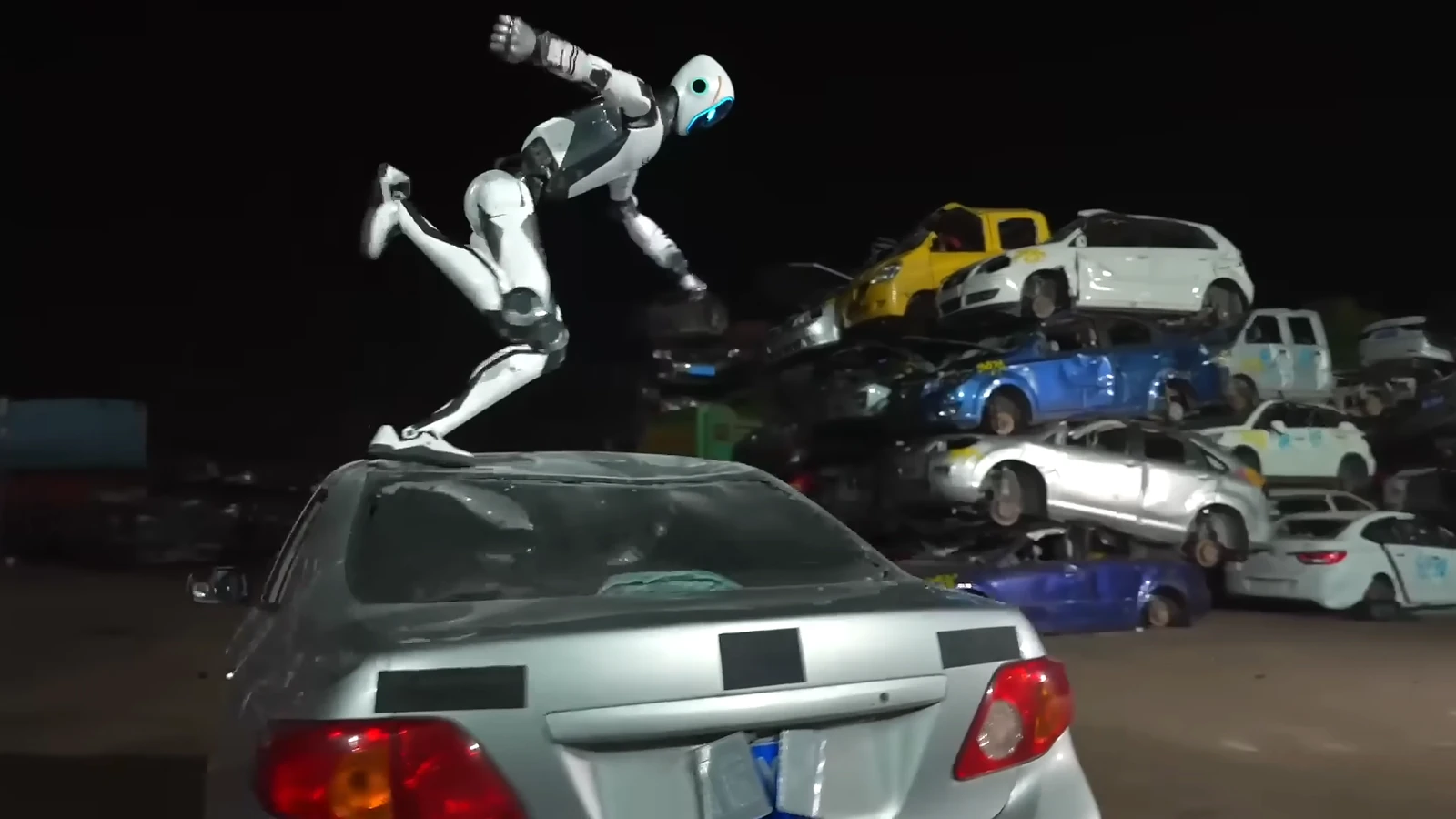
Unitree posted third-quarter revenue of 665 million yuan, up about 70% year-on-year, while net profit attributable to shareholders fell 17.4% to 112.7 million yuan in its first earnings release since its August listing. R&D spending rose 249.6% to 127 million yuan, equal to 19.1% of quarterly revenue and roughly 3.5 times its year-earlier level, with Reuters reporting resources directed toward embodied-intelligence models, computing capacity and research staff. Quarterly profit came in below the 224 million yuan analyst forecast cited by Reuters. For January through September, revenue rose 55.7% to about 1.82 billion yuan while attributable net profit increased 270.5% to 386.7 million yuan, aided by a large one-time share-based payment expense in the prior-year period.
Read more → https://www.humanoidsdaily.com/news/unitree-q3-2026-revenue-growth-rd-profit
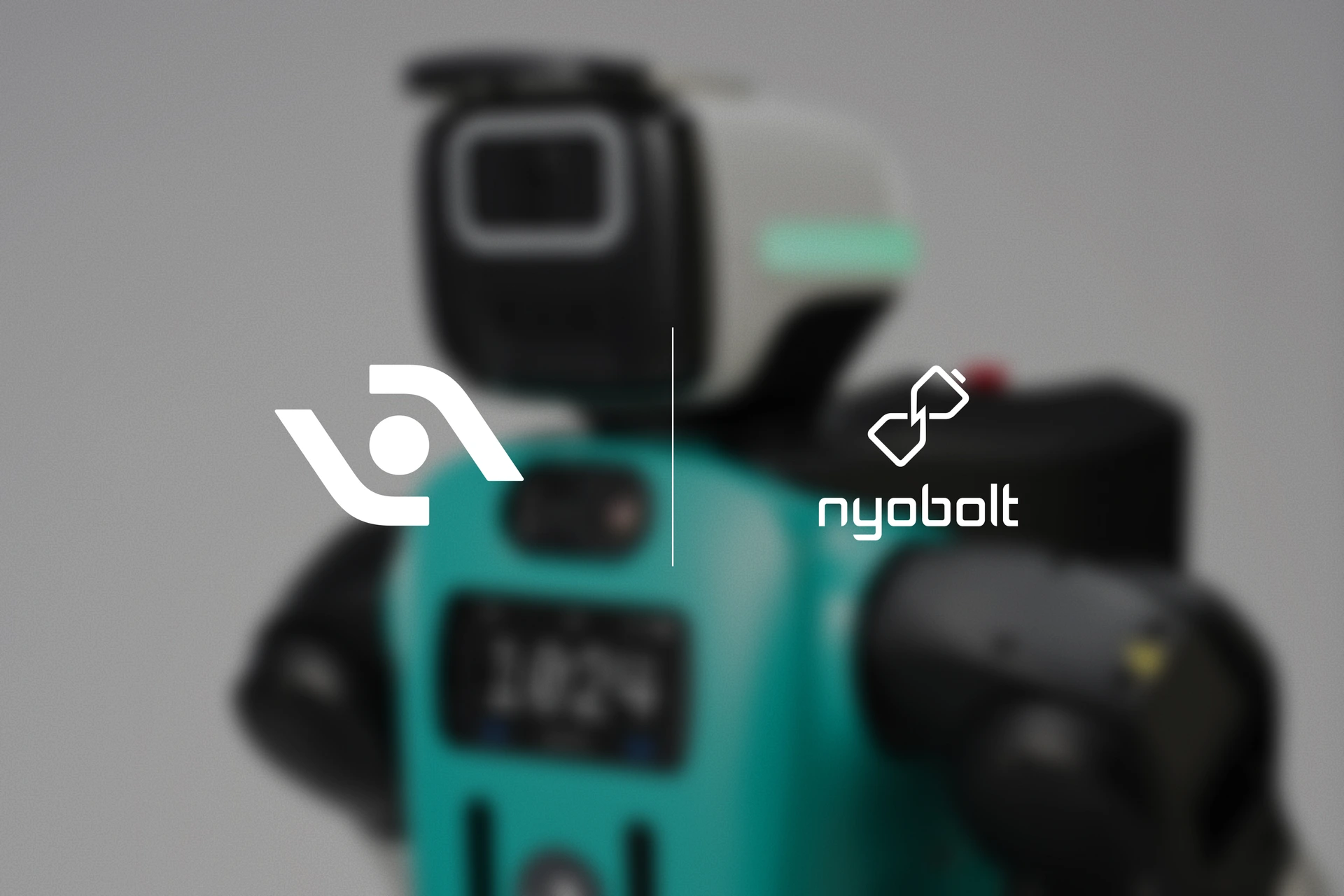
Agility Robotics named Cambridge, UK-based Nyobolt as the battery partner behind Digit 5's nine-minute charging system, targeting more than 20 hours of work in a 24-hour day. The proposed rhythm is 90 minutes of operation followed by nine minutes of charging, with early access expected in the first half of 2027. Agility says the 10:1 run-to-charge ratio, up from Digit 4's 2:1, supports that schedule; pack capacity, charging power and quantified cycle-life results were not disclosed. At its Investor Day, Agility put Digit 5's launch bill of materials at about $150,000 and described a major order that releases robots as individual use cases are demonstrated.
Read more → https://www.humanoidsdaily.com/news/agility-digit-5-nyobolt-nine-minute-charging

ThinkWorld grounds Vision-Language-Action model reasoning in world dynamics so robots can learn from human video rather than only action-labeled demonstrations. Each action is represented as a Chain-of-Dynamics, a sequence of discrete motion tokens capturing intermediate dynamics between the current world and a future state, shared across embodiments. CoD is initialized on action-labeled demonstrations, pre-trained, then strengthened through reinforcement learning with world imagination. The authors argue world-dynamics grounding lets the model tap the broader behavioral and environmental coverage of human video that robot demonstrations lack.
Read more → https://arxiv.org/abs/2610.37666
Small & On-Device Models

Liquid AI released LFM3-1.7B, a 1.7-billion-parameter small model that runs locally on phones and laptops. The model carries 1.7 billion parameters and a 256K-token context window, post-trained for harnesses like Hermes Agent, Pi and OpenClaw. At 4-bit precision it occupies about 1 GB of memory, fitting on any phone or laptop, and is designed for single-GPU fine-tuning across domains, formats and tools. Liquid AI recommends retrieval or search for knowledge-heavy tasks and explicitly warns against using it for agentic coding or complex multi-step reasoning given its small size. The LFM3 family spans base, text, vision, audio, omni and decision variants.
Read more → https://huggingface.co/LiquidAI/LFM3-1.7B

OpenBMB released MiniCPM-OCR 1.0, a 1.3-billion-parameter on-device document-parsing model for text-centric understanding across Chinese and English. It scores 93.68 on Real5-OmniDocBench with leading results on OmniDocBench v1.6, Wild-OmniDocBench and olmOCR-Bench, handling scans, curved pages, photographs, skewed pages and recaptured documents. With DSpark decoding, end-to-end efficiency improves 55%, throughput reaches about 1.49x PaddleOCR-VL-1.6 and 3.62x MinerU2.5 Pro, and it scores 54.7 on OCRBench v2. Deployment ships day one on vLLM, SGLang, llama.cpp and Ollama with quantized variants, multi-chip builds, a pip SDK and an API under Apache-2.0.
Read more → https://huggingface.co/openbmb/MiniCPM-OCR-1.0
Papers & Research

Baidu launched Unlimited OCR 2, a 3.34-billion-parameter OCR model claiming "unlimited-horizon" document parsing via its SR-SWA mechanism. It ships under an MIT license with multilingual support, paired with an arXiv paper titled "Unlimited OCR Works 2". Baidu simultaneously released MarathonDocBench on October 27 as a new benchmark for ultra-long document parsing. Third-party support followed within days: ms-swift added training support on October 28, the model landed on ModelScope and Baidu Cloud on October 27, and a Hugging Face demo Space went live the same week.
Read more → https://huggingface.co/baidu/Unlimited-OCR-2
That's Edition 055. The frontier moved twice in one day — a new number one, and a new definition of what the number means.