In this edition
- Frontier & Text Models (4)
- Image & Vision (1)
- Video & World Models (2)
- Audio, Voice & Music (2)
- Robots & Embodied AI (4)
- Small & On-Device Models (2)
- Papers & Research (2)
- News & Business (1)
The open-weights gap is being rebuilt from the top rather than closed. Moonshot's Kimi K3.1 Pro ships 2.8 trillion parameters and a one-million-token context as open weights, a 65-billion-parameter preview from Ricursive Intelligence outscores rivals up to 975B on terminal tasks, and MIT showed that GPT-6 Astra can rewrite another network's weights without training it at all. On the evidence side, Anthropic's FlashProve turns "which model actually answered me" into a cryptographic claim, and a new 45-task AWS benchmark finds frontier agents fail mostly by misjudging scope rather than by lacking knowledge. Elsewhere Meta built a humanoid with Fourier in three months, Reward AI's OM-1 climbs onto a Cybertruck tailgate for a parcel, and the eighteen items below cover the rest.
Frontier & Text Models
 Kimi K3.1 Pro puts 2.8 trillion parameters behind a one-million-token context.
Moonshot AI released the open-weight, natively multimodal agentic model on 2 November 2026 as the first in the K3.1 series. It is a mixture-of-experts with 104B activated parameters across 93 layers, 896 experts with 16 selected and 2 shared per token, and a 160K vocabulary. Context length is 1,048,576 tokens. Moonshot post-trained it from Kimi K3 with large-scale joint reinforcement learning across hundreds of downstream domains and reports substantial gains in coding, 3D creation, financial research and factual accuracy.
Read more → https://huggingface.co/moonshotai/Kimi-K3.1-Pro
Ripple-65B is a 65B open language model that outscores rivals up to 975B on terminal tasks. Ricursive Intelligence released Ripple-65B Preview on 4 November 2026 under Apache 2.0, a 65-billion-parameter dense Transformer pretrained on 12 trillion tokens with up to 1M context length. It scores 80.52 on TerminalBench 2.1, ahead of Reflection Beam 501B at 80.1, Meta Muse Spark Open 816B at 76.4, Thinking Machines Inkling 975B at 63.8, and NVIDIA Nemotron 3 Ultra 550B at 56.4. BF16, NVFP4 and DFlash2 variants are published. Read more → https://huggingface.co/ricursiveAI/Ripple-65B-Preview
 OpenAI's GPT-6 Astra can read and rewrite another model's weights without training it.
MIT researchers described "Weight-Space Programming" in a blog on 4 November 2026, showing Astra analysing and deliberately modifying other models' internal weights with no gradient training. It identified which of four games a network had been trained to play and matched the training language of small language models, without access to training data or the ability to run them. From rules and source code alone it generated weights for three simple games; in Breakout its model averaged 517 points against 25 for a baseline trained over 100 million rounds. For 9x9 Go it wrote a roughly 1.5-million-parameter network that, given 50 test iterations of up to 128 practice games each, beat a comparably sized model trained on roughly 20 million games.
Read more → https://the-decoder.com/gpt-6-astra-sees-the-matrix-and-reprograms-other-ai-models-directly-through-their-weights/
 Anthropic's FlashProve can prove which model answered without revealing its weights.
Anthropic released the open-source research prototype on 4 November 2026, using zkSNARK proofs: the provider fingerprints the model weights and ships a compact proof with each response showing that this model produced this output, revealing nothing about the weights. On a single H100 it generates proofs at roughly 110 tokens per second for Meta's 400-billion-parameter Llama 4 Maverick, with each proof about 19 megabytes and verifying in 17 seconds on a standard CPU at 70x to 95x overhead. The only comparable open-source system previously took over 14 hours for 1,000 tokens and produced a 93.6-gigabyte proof. Limits: contexts up to 1,024 tokens only, architecture is not hidden, and it works only when the model picks the single most likely next token rather than sampling; code and Lean proofs are on GitHub under Apache 2.0.
Read more → https://the-decoder.com/anthropics-new-prototype-proves-which-model-wrote-an-ai-response-without-exposing-its-weights/
Image & Vision
 Image generation now produces GIFs: a prompt or a photo becomes an animation.
On 4 November 2026 OpenAI rolled out GIF creation in ChatGPT, powered by its new Images 2.6 model, to all ChatGPT and Codex users on web, desktop and mobile. Users generate an animated GIF from a text prompt or an uploaded photo, then adjust animation speed or edit individual frames; the demo prompt "Can you make a gif of a cat dancing?" produces several slight variations strung together flipbook-style. OpenAI says the consistency holds well enough to keep a character recognisable across frames, which earlier models could not do. OpenAI also ships API models GPT-Image-2.6 "Flare" for efficiency and "Sunburst" for quality, and says users now generate well over four billion images per week via ChatGPT and the API, one billion more than in September.
Read more → https://the-decoder.com/chatgpt-can-now-turn-text-prompts-and-photos-into-animated-gifs-with-openais-images-2-6-model/
Video & World Models
 A video generation model turns out to be a universal action learner.
DreamX, submitted to arXiv on 3 November 2026 as 2611.05377, repurposes a pretrained video diffusion model as a universal latent action learner, extracting compact latent actions from its spatiotemporal features and compressing each latent video frame 300 times, from 1,200 tokens down to 4. Because it leans on the video model's generative prior, the latent actions capture action-relevant dynamics disentangled from visual appearance, giving a shared action interface across human and robot embodiments, environments and action parameterisations. It is the strongest latent action model on LARY-Bench, and the same latent space supports any-to-any video transfer and zero-shot action transfer between embodiments.
Read more → https://arxiv.org/abs/2611.05377
 Kling's researchers say video generation has stopped being a rendering problem.
In a report submitted to arXiv on 3 November 2026 as 2611.04916, the Kling team argues the bottleneck in video generation has shifted from rendering to semantic control, and describes Kling-MLLM, a shared multimodal foundation model unifying image, video, audio, synchronised audio-video and interleaved inputs, specialised for each downstream module. Because a diffusion transformer is trained on far fewer samples than a language model, they treat captioning as a semantic contract that maximises description density, and extend it to reference-grounded captioning that makes reference bindings explicit. Prompt enhancement is derived from captions of compelling videos and refined with text-level and generator-in-the-loop reinforcement learning, while an agentic variant refines the story and retrieves examples. They also report that a reliable text encoder comes from perceptual training rather than from stronger language ability.
Read more → https://arxiv.org/abs/2611.04916
Audio, Voice & Music
 Abacus.AI's 4B speech model answers with calibrated probabilities instead of prose.
Smaug-Decisions is a 4-billion-parameter decision model from Abacus.AI, a fine-tune of Google's Gemma 4 E4B-it created 2 November 2026, that answers a typed question about audio, an image or text with a calibrated probability per option in one forward pass, generating no text. On Earshot, Abacus's 6,671-item audio decision set, it scores 60.1 against 59.4 for Gemini 4 Argon and 50.5 for Gemini 3.8 Flash, and is better calibrated than both, with expected calibration error 0.069 versus 0.123 and 0.204. On the public Jev Decision Index it scores 57.9 on images and 56.6 on text, the best Gemma 4 E4B on both. Released under Apache 2.0.
Read more → https://huggingface.co/abacusai/Smaug-Decisions
 A 744M speech model makes audio decisions in 10 milliseconds on an iPhone.
Smaug-Audio-Decisions-0.7B is Abacus.AI's fast audio decision tier, a fine-tune of Google's EmbeddingGemma 2 with 744 million parameters including the audio tower, released under Apache 2.0. It answers a typed question about a clip with a calibrated probability per option in one forward pass, running on a GPU, a Mac or fully offline on an iPhone. On the same 6,671-item Earshot set it scores 53.0, ahead of Gemini 3.8 Flash at 50.5 and the 3B AudioJev at 43.6. Placed in front of the larger Smaug-Decisions model as a confidence-gated cascade, it matches that model's 60.1 accuracy at 130 milliseconds instead of 210.
Read more → https://huggingface.co/abacusai/Smaug-Audio-Decisions-0.7B
Robots & Embodied AI
 A robot world model trained on 30,110 hours of demonstrations becomes a simulator.
PrimeSim, submitted to arXiv on 3 November 2026 as 2611.04870, is an action-conditioned, multiview world model that acts as a simulator for robots. The authors argue it must follow commanded actions, stay consistent across camera views and sustain coherent long-horizon rollouts. They midtrain a pretrained video generator on 30,110 hours of robot demonstrations across 22 platforms, add a unified cross-embodiment action representation and frame-aligned dual-path conditioning, then apply view-aware interleaved attention and a fast-video, slow-memory posttraining stage that turns the bidirectional generator into an efficient autoregressive simulator.
Read more → https://arxiv.org/abs/2611.04870
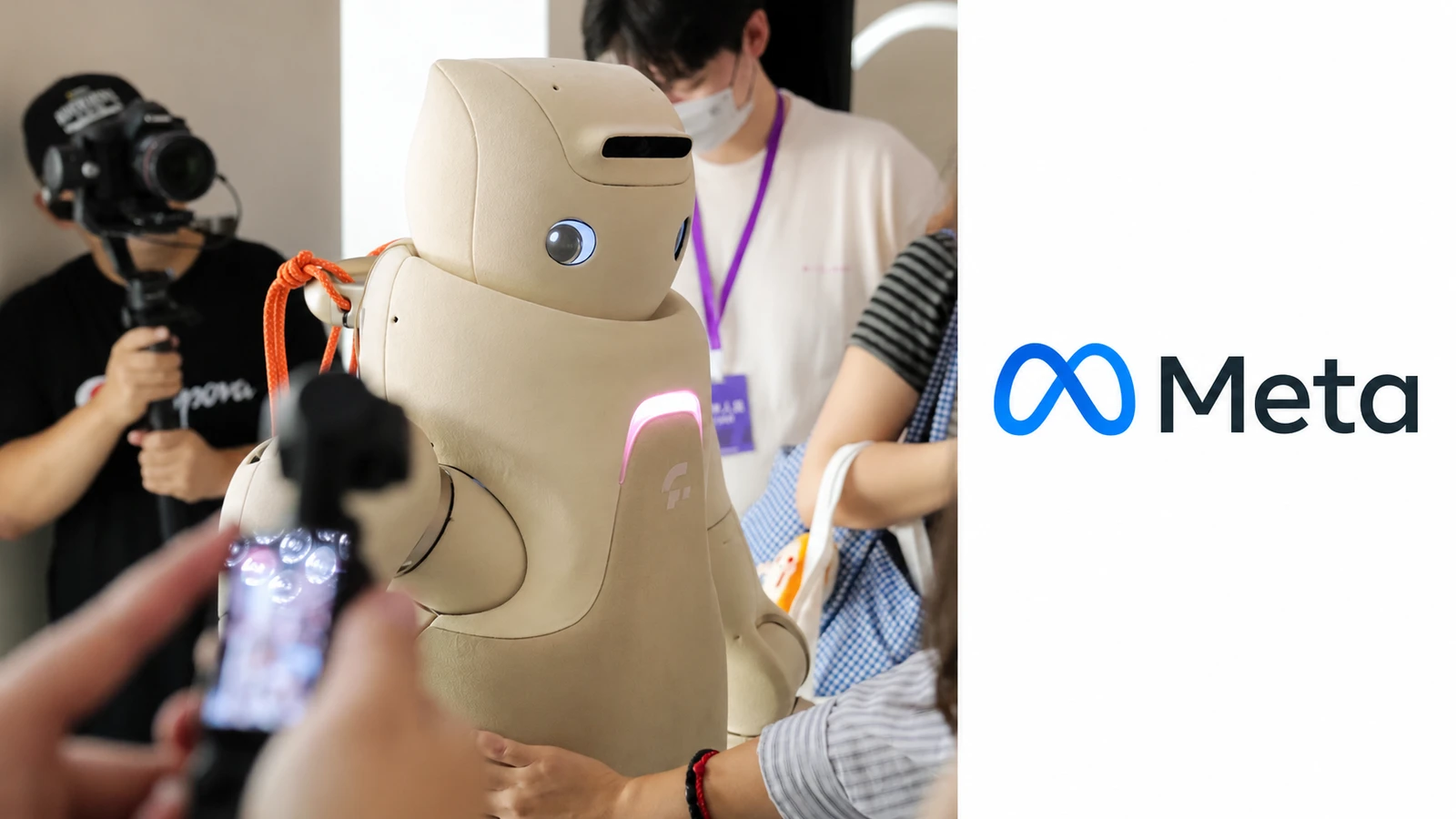 Meta built a humanoid with Fourier in three months, and a second one is already underway.
Meta built a humanoid prototype with Shanghai-based Fourier and is developing a second version, according to an Information report by Jyoti Mann on 31 October 2026 covered by Humanoids Daily on 1 November. The robot, known internally as Max, was built in three months; work on Max 2 began in September, and it stands about 1.5 metres tall, weighs roughly 48 kilograms and uses NVIDIA Jetson Thor computing, with five-fingered hands that can pick up small bottles and toys, chest-mounted speakers and a face that displays expressions. Meta's requirements emphasise voice recognition, gestures, eye contact and communicating the robot's own state; robotics product vice president Li-Chen Miller spent almost two months at Fourier's Shanghai factory, and the collaboration culminated in an internal demonstration at a robotics summit in late August. Meta says the work is internal research with no plans to sell these units.
Read more → https://www.humanoidsdaily.com/news/meta-fourier-max-humanoid-prototype
 1X is testing home integrations with spare robot heads before the bodies ship.
On 2 November 2026 Humanoids Daily reported a 41-second clip shared by 1X's Dar Sleeper in which a NEO head sits on a living-room mantelpiece above a stack of books; a man addresses it as "Dexter" and asks it to pick something to watch, after which the television wakes, navigates its interface and starts playing The Lord of the Rings: The Fellowship of the Ring. Sleeper wrote that teammates who do not have NEO robots yet are using factory-defect heads to get ahead of integrating their houses. There is no robot body and no remote; the clip does not explain how the TV is controlled, and 1X has announced no customer release for the integration.
Read more → https://www.humanoidsdaily.com/news/1x-neo-head-dexter-tv-home-integration
Reward AI's humanoid delivers parcels, climbs stairs and opens the fridge. Reward AI published an OM-1 demonstration video on 27 October 2026, reported by Humanoids Daily on 28 October, showing last-mile delivery, package picking on stairs at 00:28, mopping at 00:43, sock picking on stairs at 00:51 and refrigerator opening at 01:06. The company presents the demonstrations as fully autonomous and running at normal speed; one clip shows the humanoid climbing onto a Tesla Cybertruck's open tailgate to retrieve a parcel. OM-1's central claim is learning manipulation from human demonstrations, with a separate control layer trained in simulation to execute actions on robots. Reward AI emerged from stealth in September. Read more → https://www.humanoidsdaily.com/news/reward-ai-om1-delivery-stairs-household-demo
Small & On-Device Models
A 4B on-device model writes Three.js scenes and exports GLB assets for Godot. Qwen3.5-4B-GLB-3D-Coder is an independent CCORE preview built on Qwen/Qwen3.5-4B, licensed Apache 2.0 and explicitly not an official Qwen release. The 4-billion-parameter coding model generates standalone Three.js HTML and JavaScript scenes with GLB export, for use in editors such as Godot. GGUF builds at Q4_K_M and Q8_0 are published, and the author replaced both checkpoints on 2 November 2026 and again on 5 November 2026 with better generation quality, warning users to delete older downloads. A community developer has built a playable 3D RPG demo using assets the model produced. Read more → https://huggingface.co/ccore/Qwen3.5-4B-GLB-3D-Coder
DiffuSpace's 35B preview activates 3B parameters per token, small model cost at a 128K context. Clover-35B-A3B-Preview is the first model released by DiffuSpace, created 24 October 2026 under Apache 2.0. It combines a 35-billion-parameter mixture-of-experts backbone with roughly 3 billion active parameters per token, block diffusion generation and a 128K context window. The text-only model is derived from Qwen3.6-35B-A3B, retaining its hybrid Gated DeltaNet and full-attention MoE backbone with 40 layers, 256 routed experts, top-8 token routing and one shared expert per layer. DiffuSpace reports state-of-the-art performance among open-source diffusion language models at release, on the results in its launch blog. Read more → https://huggingface.co/Diffuspace/Clover-35B-A3B-Preview
Papers & Research
A new open benchmark puts 45 real AWS tasks in front of frontier agents. CloudOpsBench 1.0, released 4 November 2026, is an open-source benchmark built by experienced DevOps engineers under Ang Chen at the University of Michigan, covering fixing services, removing resources, restricting access rights, rolling out updates and decommissioning projects on AWS. Claude Fable 5.1 solved 60 percent of tasks and GPT-6 Astra 53 percent, with no model completing every task. About 80 percent of failures are reasoning failures — agents misjudge task scope, fail to check all relevant services, or stop too early — while roughly 20 percent are wrong actions, some irreversible. Every task runs identically in the real AWS cloud and in an emulator; GCP, Azure and OCI extensions are planned under Apache 2.0. Read more → https://the-decoder.com/new-open-source-benchmark-reveals-reasoning-as-the-biggest-bottleneck-for-ai-in-cloud-operations/
 A 374,401-run open benchmark maps how to route between 452 model configurations.
Route Anything, submitted to arXiv on 3 November 2026 as 2611.05275, is a unified framework for studying model and policy routing across general-purpose AI systems. The authors argue against expecting one model to master every capability and instead orchestrate a heterogeneous ecosystem of specialised models, tools and policies. They build an omni-modal trajectory matrix spanning 25 benchmarks across language understanding, image, video and speech generation, coding and workplace agents, and robotic manipulation, comprising 374,401 scored runs from 452 candidate configurations. They also develop a theoretical account of optimal routing under quality-cost trade-offs and of how the information available to a router bounds its attainable performance.
Read more → https://arxiv.org/abs/2611.05275
News & Business
Codex's diff tooling now has a new parent company. On 4 November 2026 the company behind Codex agreed to buy Pierre Computer Company, the startup behind Code Storage and several open-source tools whose libraries already power the coding agent. "Trees" handles fast project file navigation, "Diffs" displays code changes and lets users fix bugs inside the diff view, and "Highlights" is a real-time syntax highlighter that works as a developer types or an agent generates code, while Code Storage stores code and tracks history through Git. The stated rationale is making Git workflows work better when people and agents write code side by side, at a time when agents run many tasks in parallel; the buyer already runs Pando, its own version control backend built for both. Pierre's open-source projects will stay open source, and the deal still needs regulatory approval. Read more → https://the-decoder.com/openai-acquires-pierre-computer-company-to-make-git-keep-up-with-ai-coding-agents/
After Intelligence is a daily read on the frontier, the robots, and the research behind both. Reply to this mail if something here is wrong — corrections run in the next edition.