In this edition
- Frontier & Text Models (3)
- Recursive Self-Improvement — Research (1)
- Video & World Models (3)
- Audio, Voice & Music (2)
- Robots & Embodied AI (4)
- Small & On-Device Models (2)
- Papers & Research (2)
- News & Business (1)
Google shipped its fourth new Gemini 4 model in four weeks and priced it above the rest of the family, Apple released a two-step video diffusion model that renders 480p fast enough to steer, and Boston Dynamics found a customer for Atlas outside automotive: a semiconductor fab. Also in this edition: Microsoft put seven in-house models in front of OpenAI's lineup at Ignite, Tencent packed a 1M-token context into 12B active parameters, and two humanoids learned to carry furniture as a team without a network connection.
Frontier & Text Models

Google released Gemini 4 Neon, the fourth new Gemini 4 model in four weeks, at $3 per million input and $15 per million output tokens. That sits above the introductory $2/$10 rate for Gemini 4 Carbon and Argon, which doubles to $4/$20 on December 1, and twice the $1.50/$7.50 of Gemini 4 Hydrogen. Neon carries a context window of about one million tokens and can produce up to one million output tokens. It handles text, images, video, audio and PDFs, with Computer Use, code execution, file search and grounding through Google Search and Maps, but no image or audio generation. The Decoder reads that as Google positioning Neon against Claude Opus or GPT-6 Sol rather than the cheaper tiers.
Read more → https://the-decoder.com/google-ships-gemini-4-neon-its-fourth-new-gemini-model-in-a-month/

Microsoft used its Ignite conference to release seven in-house models aimed at OpenAI's and Anthropic's price points, led by a coding model it says nearly matches GPT-6.1 Sol and Claude Opus 5.5. MAI Code 2 closes most of the gap on Microsoft's internal benchmarks at a fraction of the cost, while MAI Cyber 2 Flash edges past GPT-6 Astra on the CyberGym-E2E vulnerability test. The batch also includes the image model MAI Image 2.7, the speech model MAI Realtime 1, and Decision 1.1, a Gemma-based routing model. Microsoft will additionally let enterprise customers fine-tune selected model weights with their own data inside Azure. The company frames the whole lineup around always-on agents, where token spend compounds around the clock.

Tencent's Hunyuan Hy4-flash carries 220 billion total parameters, 64 billion of them Engram parameters, while activating just 12 billion per token. The mixture-of-experts model supports a context window of 1,048,576 tokens and uses identity Hyper-Connections to move information between layers. Tencent pairs that with speculative decoding it describes as running at low, constant cost. The result is a frontier-adjacent open model whose compute bill is set by the active slice rather than the full weight count.
Read more → https://huggingface.co/tencent/Hy4-flash
Recursive Self-Improvement — Research

Self-Improvement Memory gives a harness optimizer a written record of its own past edits, so recursive self-improvement can continue when the benchmark or the underlying policy model changes. Instead of storing the evolved harness alone, the method groups edits by the recurring harness problem they address and records each one's rationale, predicted outcome, observed outcome and evaluation context. New attempts extend that history rather than restarting from the current artifact. Across four domains, the approach finished with higher scores than continuing from the harness alone or from root-cause notes alone.
Read more → https://arxiv.org/abs/2611.18856
Video & World Models

Google DeepMind's Project Genie update takes Genie 4 out of research preview and opens its interactive world model to Google AI Ultra subscribers. Users can reshape a running scene by typing — changing weather, characters or storylines — and Genie 4 generates native real-time sound that adapts to what is on screen. The older Genie 3 also gets longer sessions of up to three minutes, 360-degree panorama support and chainable worlds. A new agent builds worlds from spoken descriptions, and a community gallery lets users share and remix each other's creations. Everything generated carries a SynthID watermark and passes safety checks; Google AI Pro members can join a waitlist.

Apple released FastFrames, a family of autoregressive video generation models that render 480p at interactive latency in two diffusion steps. The two checkpoints are FastFrames-S at 1.3B parameters and FastFrames-L at 14B. Apple also shipped an optimized version of LingBot 1.3B that it says runs 16 times faster than the official model, with fluid camera-conditioned control. The pitch is a video model fast enough to respond to input while it renders, rather than one that produces a clip after a wait. Code, weights and a latency profiling harness are public.
Read more → https://huggingface.co/apple/FastFrames-L

Code World Model 2.0 splits video generation in two: an upstream engine keeps the world state and emits structural proxies, and InclusionAI's Invoker-Render turns those proxies plus one reference image into pixels. The renderer is a causal streaming DiT that accepts semantic maps, sparse 3D boxes, subject masks, shaded geometry, or boxes with skeletons, so control granularity can change mid-session. A fixed appearance anchor and a bounded history window let a session run as long as proxy frames keep arriving. The inference stack is built on MiniMax-H3, SGLang and SGLang-Omni, and the weights accompany the paper.
Read more → https://huggingface.co/inclusionAI/invoker-render-1.0
Audio, Voice & Music

AssemblyAI released STT 3.7 as three separate transcription models: one for live conversations, one tuned for voice agents, and one for recorded audio. All three handle 32 languages in a single stream with automatic detection, and the realtime models add live speaker labels. AssemblyAI is positioning the set on accuracy and latency for real voice workloads rather than on benchmark averages, and the voice-agent variant is tuned specifically for the short, accented, overlapping speech that callers actually produce. Existing API keys work in the playground without a new signup.
Read more → https://www.assemblyai.com/blog/introducing-assemblyai-stt-3-7

Marimba turns a frozen 0.6B ASR model into a set of typed speech decisions — is the term present, has the speaker finished, what language is this — without training a new recognizer. Lexical questions are answered by zero-shot scoring of ASR transcripts, while non-lexical ones use a question-conditioned head and a separate layer-18 turn-end readout; language identification reuses the ASR model's own language scores. Decoder AUROC lands at 0.80 to 0.92 on private conversational test sets and 0.92 to 0.97 on public read speech, with 0.93 four-way accuracy on Speech Commands. A personal-information detector built on the same features reaches item-level F1 of 0.904 on synthetic Brazilian Portuguese speech.
Read more → https://arxiv.org/abs/2611.18330
Robots & Embodied AI
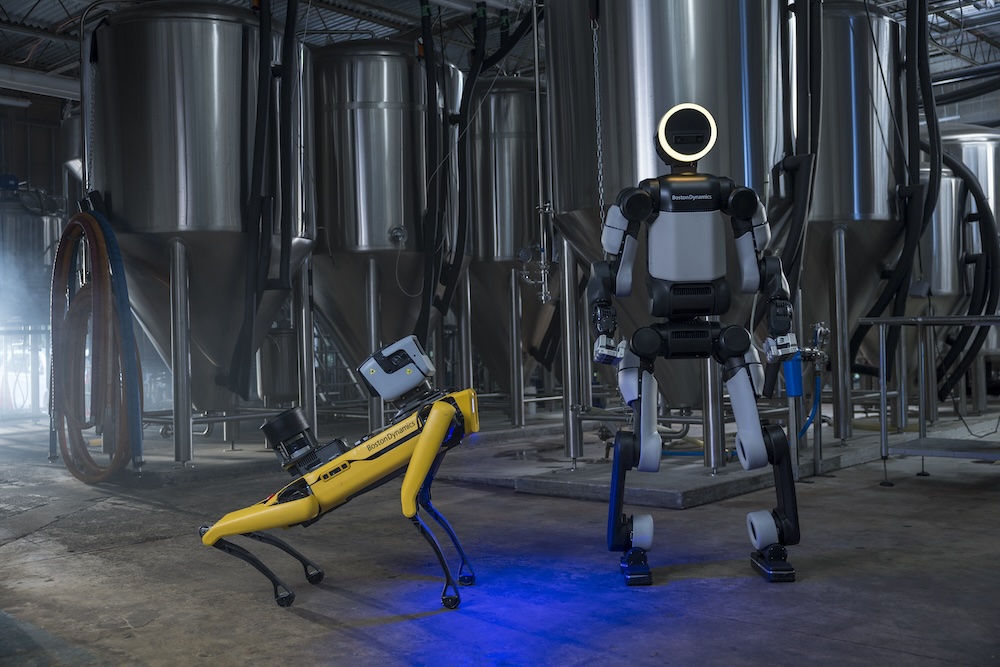
Boston Dynamics' Atlas humanoid has its first customer outside the automotive industry: GlobalFoundries will test the robot on semiconductor manufacturing tasks starting in early 2027. GlobalFoundries already runs Boston Dynamics' Spot quadruped for industrial inspection, and the two companies are expanding that footprint across its manufacturing network. Since April 2026, two Spot robots at the Singapore facility have travelled nearly 900 kilometres and completed more than 90,000 inspections in sub-fab areas at a 99 percent mission success rate. Neither company disclosed how many Atlas units will be involved, which facilities will host them, or what the first tasks will be.
Read more → https://www.therobotreport.com/boston-dynamics-atlas-humanoid-lands-first-non-automotive-trial/
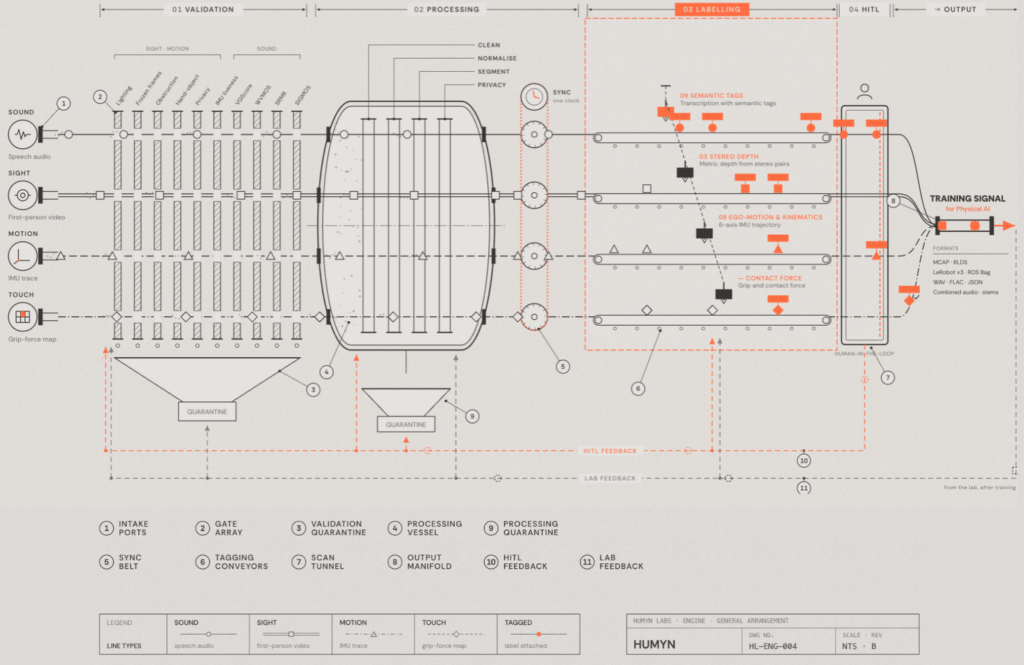
Humyn Labs raised $47 million in Series A funding to collect the real-world data that robots are missing, and says it passed $50 million in annualized revenue within six months of operating. The round includes $26 million in equity led by Accel, with Prosus Ventures, BeeGlobal, Finserv Intelligence through Bajaj Finance, Dallas Venture Capital, Lighthouse Canton, Jump Trading and angel investor Anita Pramoda participating. The company runs data capture and enrichment operations across more than 20 countries for frontier AI labs, robotics companies and world-model developers. Its founders argue the bottleneck is no longer simulation but the gap between what happens in a lab and what happens on a factory floor.
Read more → https://www.therobotreport.com/humyn-labs-raises-47m-to-collect-real-world-data-for-robotics/
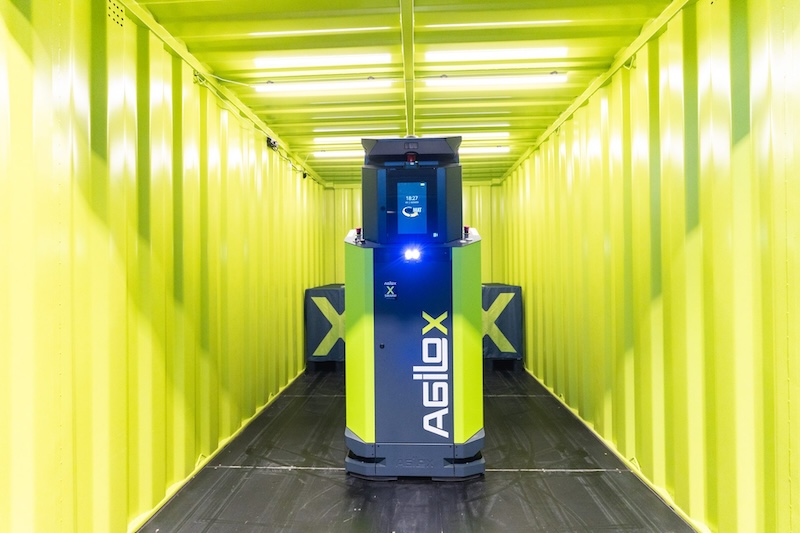
Rockwell Automation signed a definitive agreement to acquire AGILOX, an Austrian builder of autonomous mobile robots, in a deal that more than doubles the size of its AMR business. AGILOX has deployed more than 2,500 robots since it was founded in 2017 and employs more than 250 people across Europe, North America and China, serving automotive, logistics, food and beverage, and pharmaceutical customers. Rockwell will fold the company into its Intelligent Devices segment alongside OTTO Motors, pairing OTTO's North American base with AGILOX's European customer list. Financial terms were not disclosed; the deal is expected to close in the second quarter of Rockwell's fiscal 2027, subject to regulatory approval, and marks an exit for Carlyle, which took a majority growth stake in 2021 and says AGILOX has quadrupled revenue since.
Read more → https://www.therobotreport.com/rockwell-automation-acquiring-mobile-robot-maker-agilox/

Two humanoids carry a couch together in Heave-Ho, a decentralized framework that coordinates whole-body manipulation across a team of robots without any network link between them. At the low level, a multi-agent post-training step adapts a humanoid foundation tracking model to physically coupled interaction, so each robot plans from its own local observations. At the high level, a vision-language planner pairs with a speech-based leader-follower mechanism to keep the team synchronized. Trained on two identical humanoids, the system scales to teams of up to ten robots, with speech carrying the coordination signal that a shared network normally would.
Read more → https://arxiv.org/abs/2611.22275
Small & On-Device Models

AI Singapore's SEA-LION v5 adds three small model sizes for Southeast Asian languages, including two that run on-device. Gemma-SEA-LION-v5-E2B is built on Gemma 4 E2B, carries 2.3 billion effective parameters (5.1 billion with embeddings), takes text, image and audio input, and has a 128K-token context with thinking mode on by default. Nemotron-SEA-LION-v5-E4B derives from NVIDIA's Nemotron 3.5 Bolt E4B at 8 billion parameters (4 billion effective) with a 64K context and reasoning enabled by default. A 9B Qwen-based tier completes the set, giving the region a family that spans phone-class to server-class deployment while staying tuned for local languages rather than English benchmarks.
Read more → https://huggingface.co/aisingapore/Gemma-SEA-LION-v5-E2B

A 2.68-billion-parameter speech recognizer now runs locally from a single GGUF file, after ggml-org converted Higgs Audio v3 STT for llama.cpp. The model pairs a Whisper-Large-v3 encoder with a Qwen3 decoder and ships under a custom architecture, so the conversion is not a formality. It loads with llama serve -hf ggml-org/higgs-audio-v3-stt-GGUF or inside the Llama app, with the converter and the llama.cpp pull request both public. BosonAI notes that published accuracy figures for the underlying checkpoint predate a refreshed fine-tuning set and should be read from the Open ASR Leaderboard instead.
Read more → https://huggingface.co/ggml-org/higgs-audio-v3-stt-GGUF
Papers & Research

The K2-Horizon technical report releases six fully open models from a 0.9B dense model up to a 375B-A23B mixture-of-experts, and two architectural changes do most of the work. Mixture-of-Value Attention applies MoE to the attention value projections, and softplus attention gating replaces the usual gate with a more flexible formulation. The 36B-A4B model uses both and nearly matches a 32B dense model trained on the same data while activating 4 billion of its 36 billion parameters per token. The team also introduces Uno, lossless diffusion adapters that accelerate decoding by up to 2.2 times without a separate draft model, and the release follows the LLM360 definition of open source.
Read more → https://arxiv.org/abs/2611.21003

π⁴ recovers dense geometry, camera poses and metric scale from uncalibrated images in the wild, then tracks how everything in the scene moves. A single photo, an unordered collection, or a video sequence all work as input; multi-image inputs additionally yield 2D and 3D point tracks plus masks for moving objects. The model couples a geometry branch with a geometry-conditioned motion branch that predicts image-space correspondences and lifts them into 3D using the reconstructed target-view geometry. The full geometry-and-motion system holds roughly 0.5 billion parameters — less than half the size of most baselines — and posts the best overall average rank in geometry evaluation across the benchmarks tested.
Read more → https://arxiv.org/abs/2611.23144
News & Business

Hugging Face now routes language-model requests through OpenRouter, picking a provider per call by price, speed and reliability, with automatic fallback during outages. Developers steer the choice with model suffixes and session headers, and separate bring-your-own API keys for model providers are being retired because Hugging Face bills directly without a markup. Existing code keeps working unchanged. The backdrop is a pricing shift: OpenRouter reports that open-weight models now account for more than 71 percent of tokens among its most-used models, since they cost roughly a quarter of what proprietary options charge on average.
That is 18 items across frontier models, video and world models, audio, robotics, small and on-device models, research papers, and the business of AI. If a link is paywalled or blocked, the source line above it names the primary document to search for.